Drive to Succeed
Not all variable-frequency drives are the same—knowing the application and drive options ensures that specs are on the mark
By ERIC N. WOLF, P.E., Senior Electrical Engineer Lockwood Greene Engineers Inc. Indianapolis -- Consulting-Specifying Engineer, 4/1/2001
Variable-frequency drives, also referred to as VFDs or drives, are commonly used in industrial applications for process equipment and heating, ventilating and air-conditioning (HVAC). However, not all VFDs are the same. It is important to know the application and to specify the right type with the correct options in order to achieve the best results. VFDs are an engineered product and a good specification ensures that the VFD matches the job.
First of all, it is important to size the VFD correctly to match the type of load that is to be controlled. Second, the designer must specify options on the VFD that limit the harmful effects of harmonics on the electrical system. Third, the correct enclosure must be selected for the environment in which the VFD is to be located. Finally, the engineer must decide how the VFD is to be controlled.
Load typeMatching the VFD to the application requires knowledge of what motor load type is used on the facility's equipment. Four basic load types should be considered: constant torque, variable torque, constant horsepower and high inertia.
Examples of constant-torque loads are hoists, conveyors, drill presses, positive-displacement pumps and some extruders and mixers. The torque requirement for these loads is constant throughout their range of speed and, therefore, independent of speed.
Examples of variable-torque loads include fans, blowers, propellers and centrifugal pumps. The torque requirement for these loads is proportional to their speed, increasing with speed.
Constant-horsepower loads are found in certain machine tools that operate over wide ranges of speed. Also, some mixers, extruders and center-driven winders are constant-horsepower loads. The torque requirement for these loads is inversely proportional to the speed of the load, increasing as speed decreases.
Equipment types with high-inertia or impact loads are crushers, stamping or punch presses and some conveyors, cranes and hoists. The torque requirement for these loads is intermittent and is not a function of speed. This type of load typically requires high momentary values of torque during operation.
The type of load to be controlled by the VFD is vital information because the power rating of the drive is dependent not only on motor horsepower and amperage, but also on load characteristics. There aren't separate types of drives for the four types of loads; the drive is the same, but its power rating is adjusted. A VFD with a higher power rating is required for constant-torque, constant-horsepower and high-inertia loads, as compared to one required for a variable-torque load of the same horsepower.
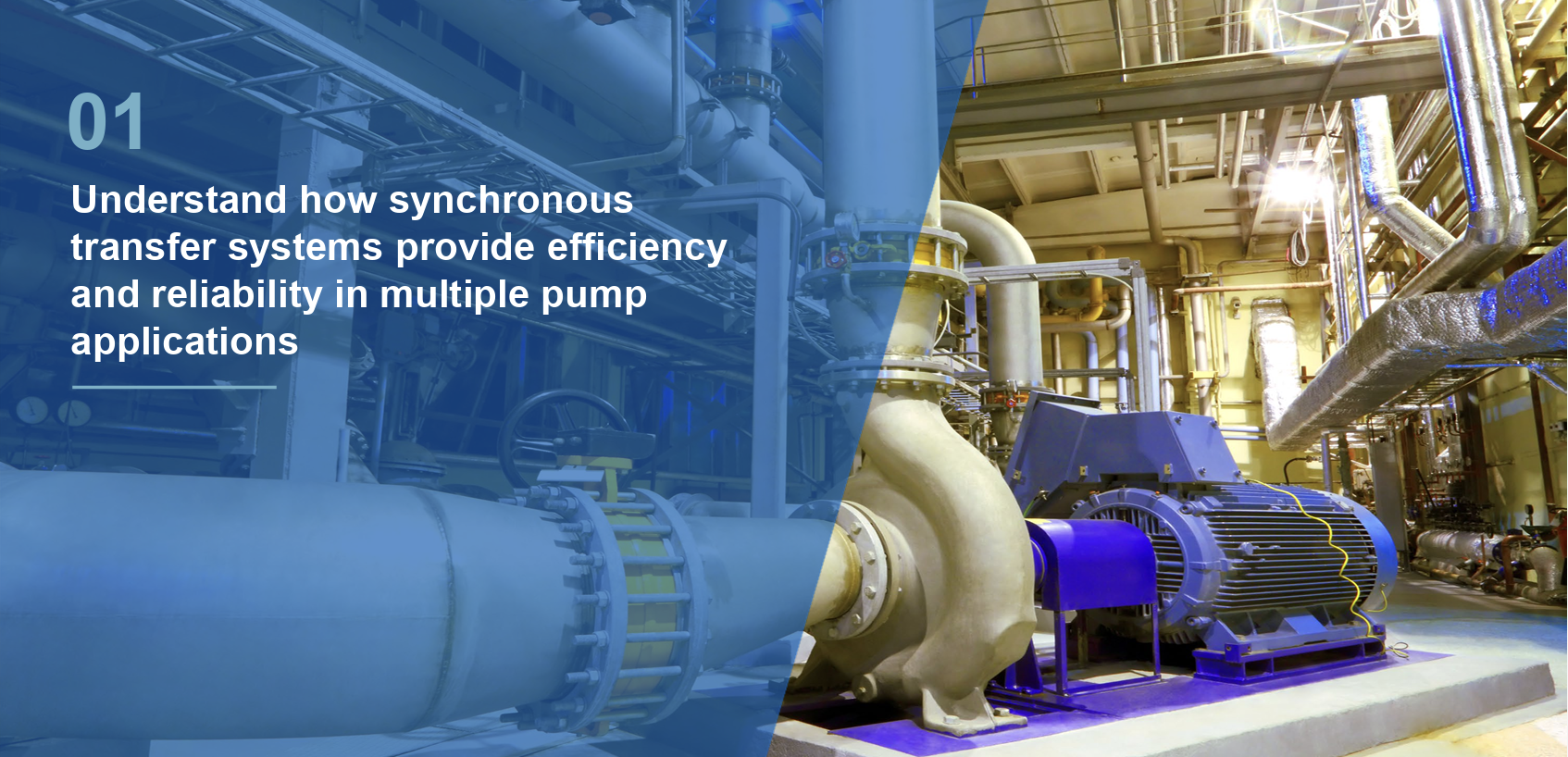
For fans and pumps in industrial plants, the motor load type is typically variable torque. Most pumps in industrial applications are centrifugal, including those for chilled water, tower water, potable water and wastewater. Fans used in cooling towers and for ventilation are also variable-torque loads.
Consulting and staff engineers should check the nameplates, manuals, pump/fan curves and certified drawings for a facility's equipment to determine torque-load characteristics and write the specification accordingly. The manufacturer needs to know this information to properly size the drive and ensure that it functions as expected. According to Terrell Ebright, manager with Ron Ray & Associates, an Indianapolis-based VFD manufacturer's representative, a common mistake that specifiers make is to only provide the horsepower rating of the load with no other information. Ebright states that horsepower alone can be deceiving, and that other information—such as complete motor nameplate data and pump/fan curves—are critical to selecting the right drive for the application.
Limiting harmonicsA second major issue is the specification of VFD options that limit the harmful effects of harmonics on electrical systems to which drives are connected.
VFDs are a source of harmonics if not properly applied. The harmonics are generated from the initial conversion or rectification within the VFD of the incoming AC voltage to DC voltage; this DC voltage is then inverted back into an AC-voltage waveform of varying magnitude and frequency. Harmonics are harmful to the motor driven by the VFD because they cause additional heating to occur, which can lead to premature motor failure. Harmonics are also harmful to the rest of the electrical system, causing overheating in transformers and nuisance tripping of circuit breakers. In addition, harmonics are amplified by resonance in power-factor-correction capacitors, worsening the harmful effects on the electrical system.
Line and load reactors are used to reduce harmonics generated by VFDs (see "Battling Harmonics with Line and Load Reactors," below). Line reactors are installed on the input of the drive; load reactors are installed on the output, and they are the most economical solutions for reducing the effects of harmonics produced by drives. A drawback with line and load reactors is that they decrease overall drive efficiency.
Other solutions, such as 12-pulse or 18-pulse drives, practically eliminate more harmful lower-order harmonics because of their higher pulse rates; the drawback is that these drives require phase-shifting transformers and additional drive components, which increase overall cost and space requirements.
EnclosuresThe third major consideration in writing drive specifications is selecting the correct enclosure options for the VFD's environment. First, National Electrical Manufacturers Association (NEMA) or International Electrotechnical Commission (IEC) ratings should be determined for the enclosure application. Second, the engineer should consider whether an integral disconnect switch is required with the drive.
Standard NEMA and IEC enclosure configurations offered by VFD manufacturers typically include:
- NEMA 1 (IP21 and IP23) andNEMA 12 (IP54, IP55 and IP65). The NEMA 1 rating is available with filters for ventilation openings to prevent the entry of dust, but better dust protection is offered by the NEMA 12 enclosures.
- NEMA 4 (IP66) enclosures are offered depending upon the size of the drive, and are typically built on a custom basis. These models require either a cabinet-mounted air-conditioning unit or a heat exchanger for closed-loop cooling. Another method of cooling the enclosure is to install ventilation ducting—supply and exhaust, with a blower—from a clean area for open-loop cooling.
VFDs in NEMA 4 enclosures are typically found in washdown areas of food-processing plants and in wastewater-treatment plants. An additional cooling apparatus is required on these enclosures because of their watertight ratings, which prevent the use of ventilation openings. Heat generated within the enclosures would cause drive overheating and damage without mechanical cooling—unless the drive is derated, which is a costly alternative.
- Integral disconnect. Engineers should specify an integral disconnect switch for the enclosure if one is desired. This arrangement is similar to that of a combination motor starter, where a disconnect switch and a motor contactor are both within the same enclosure. The disconnect switch can either be a nonfusible, fusible or circuit-breaker type; operating handles are typically through-the-door or flange-mounted types.
The final major consideration is how VFDs are to be controlled: manual operation, programmable-logic controller (PLC), distributed-control system (DCS) or a combination.
If drives are controlled by manual operation only, hand-control devices are needed: start pushbutton, stop pushbutton, jog pushbutton and speed potentiometer. Many manufacturers offer electronic keypads with built-in control pushbuttons for start/stop and speed increase/decrease pushbuttons for changing the speed.
Operator preference should determine the specification. Some end-users find the keypads confusing and difficult to operate, according to William Johnson, a utilities engineer at Eli Lilly and Co., Indianapolis; his staff prefers hardwired hand-control devices. One reason is that the keypads are not standardized among manufacturers. If several different brands of drives are found in a facility, the consulting engineer may recommend hardwired pushbuttons and speed pots for operator convenience. One disadvantage of speed pots, however, is that the speed function is easily tampered with; another disadvantage is that they wear out more quickly than other components.
If VFDs are to be controlled by PLC or DCS, the following control devices are required: hand-off-auto (HOA) switch, start pushbutton, stop pushbutton, jog pushbutton—if desired—and a speed pot. These control devices can be located at the drive or at the motor in a separate enclosure, or both.
In the "hand" mode, VFD operation is the same as in a manual-control configuration. In the "auto" mode, the PLC or DCS controls drive operation: To start or stop the drive, the PLC or DCS energizes or de-energizes an intermediate relay, closing or opening a contact to the drive start/stop input. The start and stop contact operation from the PLC or DCS must be maintained in this control scheme: If the PLC or DCS output is momentary, additional relays are required to create a holding circuit to maintain the start contact to the drive.
While drives are running in auto mode, speed is controlled by an analog control-signal output on the PLC or DCS, which is an input to the drive. If the PLC or DCS needs to know a drive's current output while it is running, a second analog control signal is input to the controls from the VFD. For both of these analog signals, the engineer must specify the type of signal, which is most commonly 4 - 20 milliamps (mA). Other standard signals include 0 - 10V, 2 - 10V and 0 - 20mA, and most drives accommodate a variety of control signals.
Another common method of interfacing with a PLC or DCS is through a network module , which allows the drives to communicate through a single network cable rather than the multiple cables needed for the auto mode. For discrete and analog signals, wiring includes six lines for discrete start/stop, run-status and fault-status contact signals, as well as two twisted shielded pairs for analog speed control and current output. Typically, analog cables are run in a separate conduit, adding to installation costs. With a network module, only a single conduit and network cable is needed, reducing installation costs.
For network-module control schemes, specifiers must choose a communications protocol to interface with PLCs or DCS installations. Common protocols include DeviceNet, Profibus, Fieldbus and Modbus-Plus. The modules can add $1,000 to drive costs but may save more in installation costs.
Driven to succeedWhen specifying a VFD, it must be sized correctly for the load type and have the correct enclosure, line and load reactors and control and I/O options. If these issues are carefully considered, chances are the devices will help drive the process, HVAC or other installation to unqualified success.
- Cutler-Hammer, "Adjustable Frequency Drives Application Guide," publication No. TD.08H.17.T.E., January 2000.
- John A. Houdek, "Load Reactors: Increase VFD System Performance & Reliability," MTE Corp., 1999, p. 1.
- Square D, "Adjustable Frequency Controllers Application Guide," product-data bulletin SC100 R5/95, May 1995.
- Mahesh M. Swamy Ph.D., "Harmonic Reduction Using Broad Band Harmonic Filters," MTE Corp., 1999.
|