Data center design is increasingly shaped by evolving energy efficiency and safety codes, requiring engineers to balance performance optimization with regulatory compliance.
Codes and standards insights
- A growing reliance on ASHRAE 90.4 and the International Energy Conservation Code reflects a shift toward data-center-specific energy compliance metrics.
- Rapid advancements in technologies such as lithium-ion battery storage are driving increased integration of fire protection standards like NFPA 855.
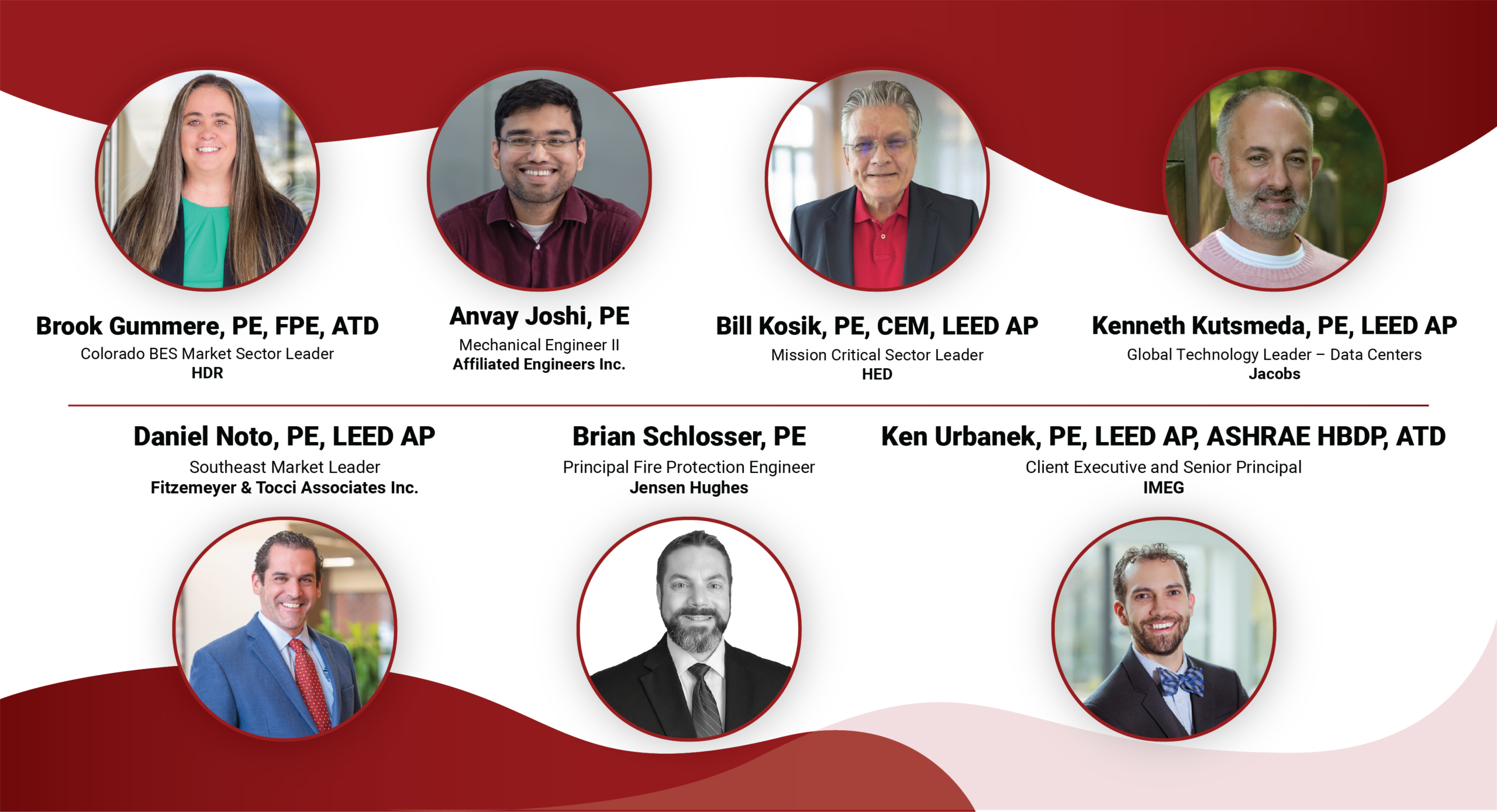
Respondents:
- Brook Gummere, PE, FPE, ATD, Colorado BES Market Sector Leader, HDR, Denver
- Anvay Joshi, PE, Mechanical Engineer II, Affiliated Engineers Inc., Madison, Wisconsin
- Bill Kosik, PE, CEM, LEED AP, Mission Critical Sector Leader, HED, Chicago
- Daniel Noto, PE, LEED AP, Southeast Market Leader, Fitzemeyer & Tocci Associates Inc., Alpharetta, Georgia
- Brian Schlosser, PE, Principal Fire Protection Engineer, Jensen Hughes, Columbia, Maryland
- Ken Urbanek, PE, LEED AP, ASHRAE HBDP, ATD, Client Executive and Senior Principal, IMEG, Denver
Which codes and standards should engineers be most aware of during the data center design process?
Brook Gummere: A wide range of codes and standards guide our data center design process, yet the most influential are local building and energy codes that adopt the International Energy Conservation Code (IECC) as their baseline reference. One of the most important standards for engineers to understand is ASHRAE Standard 90.4: Energy Standard for Data Centers, which establishes minimum energy efficiency requirements specifically for data centers. Unlike some broader metrics, ASHRAE 90.4 evaluates performance using the mechanical load component (MLC), a metric tailored exclusively to data centers and not applicable to other building types.
It is important to note that local jurisdictions may adopt updated MLC values that must be followed in lieu of those published in ASHRAE 90.4, making it essential to verify the exact requirements in effect for each project. In addition to energy standards, data center projects are increasingly shaped by codes related to evolving technologies — especially energy storage systems such as lithium-ion batteries.
While these systems offer significant operational benefits, they also introduce fire safety considerations that must be addressed through compliant design. NFPA 855: Standard for the Installation of Stationary Energy Storage Systems is a key reference engineers should understand, as it influences decisions related to uninterruptible power supply (UPS) battery room size, fire resistance ratings and required fire suppression systems.
Anvay Joshi: Most codes used for data centers, such as the International Building Code (IBC), International Mechanical Code, IECC and ASHRAE Standard 90.1: Energy Standard for Buildings Except Low-Rise Residential Buildings are also used in other sectors. ASHRAE 90.4, however, is a data center-specific standard referenced in IECC. ASHRAE 90.4 pertains to mechanical and electrical load component values. It considers kilowatt consumption at four different loading percentages and then demonstrates compliance with the values listed in the standard. Lastly, for some guidelines, various articles published by the Open Compute Project and the ASHRAE Technical Committee (TC9.9) could be used to further someone’s knowledge base.
Bill Kosik: From an energy efficiency perspective, the IECC has specific requirements for data center energy efficiency. The code includes a compliance path that stipulates using ASHRAE 90.4. The main requirement of the compliance path includes calculating energy consumption of the data center power (electrical load component, ELC) and cooling systems (MLC). If the calculated energy is below the thresholds listed in ASHRAE 90.4 or IECC, the systems meet the ASHRAE 90.4 standard and comply with the code.
Brian Schlosser: The IBC often serves as the basis for designing data centers. Though not directly referenced by the IBC, NFPA 75: Standard for the Fire Protection of Information Technology Equipment and NFPA 76: Standard for the Fire Protection of Telecommunication Facilities are often used for design of data centers as an industry best practice.
Project stakeholders should also be aware of the various requirements applicable to data centers that are found in NFPA 70: National Electrical Code. Battery energy storage systems are typically regulated by either the International Fire Code or NFPA 855.
Ken Urbanek: One to highlight is the recent development of ASHRAE 90.4. This has been out for a few years and we are now seeing it being desired by clients and enforced by building departments. It takes a more advanced approach to energy efficiency in data centers beyond traditional power usage effectiveness (PUE).
Additionally, we are seeing numerous changes both in model codes and local amendments relating to UPS that use lithium-ion batteries. These changes have been primarily focused on fire codes in response to the fire potential associated with these batteries. We are seeing limits on quantity and location of these batteries, but this is very dependent on the local authority having jurisdiction (AHJ).
How are reliability and redundancy requirements shaping code compliance in data center designs?
Ken Urbanek: We don’t see this shaping code compliance too often. We are seeing some impact on the energy efficiency codes when working on high-uptime designs where extra parallel components can drive up PUE due to added mechanical, electrical and plumbing (MEP) systems’ energy use.
Bill Kosik: As mentioned previously, ELC and MLC must be determined to demonstrate that the power and cooling systems comply with the code. ASHRAE has defined how the calculations must be done, including the redundancy level of the power and cooling systems. Because ASHRAE Standard 90.4 applies to different types and sizes of data centers, the methodology was developed for all types of data centers.
What are some best practices to ensure that such buildings meet and exceed codes and standards?
Daniel Noto: I’ve always felt that “designing to code” means you’re designing to the lowest level of design possible. One should design for optimum performance as well as future demands. This way, when code or industry changes occur — and they will — the current design can adjust more easily to those changes.
Ken Urbanek: Understanding the required energy code early in the design process and evaluating system performance are important to ensure design intent achieves the required energy performance goals.
Brook Gummere: It is critical to have team members who consistently monitor emerging updates to codes and understand their impact on designs. At HDR, we rely on internal subject matter experts who are deeply familiar with complex code requirements; our colleagues conduct design reviews and engage directly with AHJs to clarify expectations.
Many new data center campuses are being built in rural or remote areas where local officials often rely on engineers and architects to help stakeholders understand the complex systems. In locations where plan review is not required before construction, we hire third-party reviewers to assess the drawings for life-safety and code compliance, safeguarding both the client and the community.
Bill Kosik: This solely depends on where the data center is located and what codes must be followed. Depending on the specific code item, it might be more beneficial to go beyond the requirements of the code. An example of this is chiller energy efficiency. More recent codes generally have more stringent energy efficiency requirements. However, manufacturers are building chillers that are more efficient than the code minimum requirements.
How are codes, standards or guidelines for energy efficiency impacting the design of data centers?
Bill Kosik: As data center design engineers, we will always be looking for optimization strategies including energy consumption, energy and operational cost and major equipment lead time. Those factors can be weighted depending on the overall goals of the data center developer/owner. The weighting will vary depending on the location and data center type.
Brook Gummere: ASHRAE 90.4 requires that a data center’s mechanical system use less power than a certain percentage of the total information technology load depending on the climate zone the data center is located in. ASHRAE 90.4 also requires engineers to evaluate part-load performance, ensuring systems operate efficiently in varying conditions.
These requirements are driving the adoption of effective economizer or “free cooling” strategies that leverage both the local climate and part-load operation. We also help municipalities navigate the balance between energy and water conservation. In the Southwest U.S., we are noticing a movement to air-cooled chillers versus evaporative cooling towers, which saves millions of gallons per year. However, there is an energy penalty during summer months.
Ken Urbanek: We are seeing deployment of more efficient MEP system designs and components. Data-center-specific magnetic chiller compressors are a great example on the component side. These chillers are engineered specifically for this market by all the major chiller vendors and this is a new approach in the industry.
What new or updated code, standard, guideline, organization or association do you feel will change the way such projects are designed, bid out or built?
Bill Kosik: ASHRAE and The Green Grid generally have the greatest focus on data center design. ASHRAE releases ANSI-approved standards that are used as a basis or referenced by model building codes such as the IBC. The Green Grid is comprised of experts in the data center industry and has produced many technical white papers and analyses on different aspects of data center planning, design and operation.
Can you provide examples of innovative approaches you’ve taken to meet or exceed codes and standards in data center design?
Ken Urbanek: We feel the best way to significantly move the needle on energy efficiency is to capture waste heat and use it in adjacent facilities. This can be university and health care campuses or perhaps neighborhoods designed around district energy systems that use heat pumps. This effect is greater when data centers are deployed in colder climates with higher heating degree days, where adjacent facilities have more heating demand. These cold climates also can enhance cooling performance of the data centers.
What are some of the biggest challenges when considering code compliance and designing or working with existing buildings?
Ken Urbanek: Existing buildings can be a challenge. Modern high-density data centers have a need for extensive vertical height and MEP spaces for components and travel. It can be done, but it requires thorough coordination. Additionally, adjacent outdoor spaces will be required for heat rejection and for generators. Deploying high-density data centers within existing buildings should be done when there are specific needs for a given location that only an existing building can provide.
Brook Gummere: One of the biggest challenges in achieving code compliance in existing buildings is the high pace of technological advancement with which data centers are advancing compared to the much slower cycle of code development and adoption. This is especially true in jurisdictions that may not adopt the most recent code version during every code cycle.
In renovation projects, overall building performance may not be used to show energy code compliance because existing equipment or systems are included in the new project scope. As a result, engineers must navigate outdated code language, limited equipment classifications and mismatches between modern system capabilities and older compliance frameworks.
These challenges become even more pronounced when modifying older industrial buildings for new uses. Certain upgrades can trigger additional requirements such as the Americans with Disabilities Act access improvements or restroom updates, depending on the building’s age and layout. Space constraints may also limit heat-rejection equipment placement, pushing mechanical systems to the roof — often requiring structural reinforcement.
In some regions, seismic analysis and potential upgrades add further cost and complexity. For these reasons, a thorough building assessment before purchase is crucial to understanding necessary modifications and ensuring the facility can realistically be brought up to current code standards.