To boost sustainability at modern AI data centers, engineers are contemplating strategies such as liquid cooling, heat recovery and using more wind and solar energy.
Sustainability insights
- Hyperscale and high-performance computing data centers are increasingly targeting LEED Gold certification and carbon reduction goals along with traditional Uptime Institute reliability standards.
- Engineers are using economizers, liquid cooling and heat recovery to improve energy efficiency and lower emissions.
Respondents:
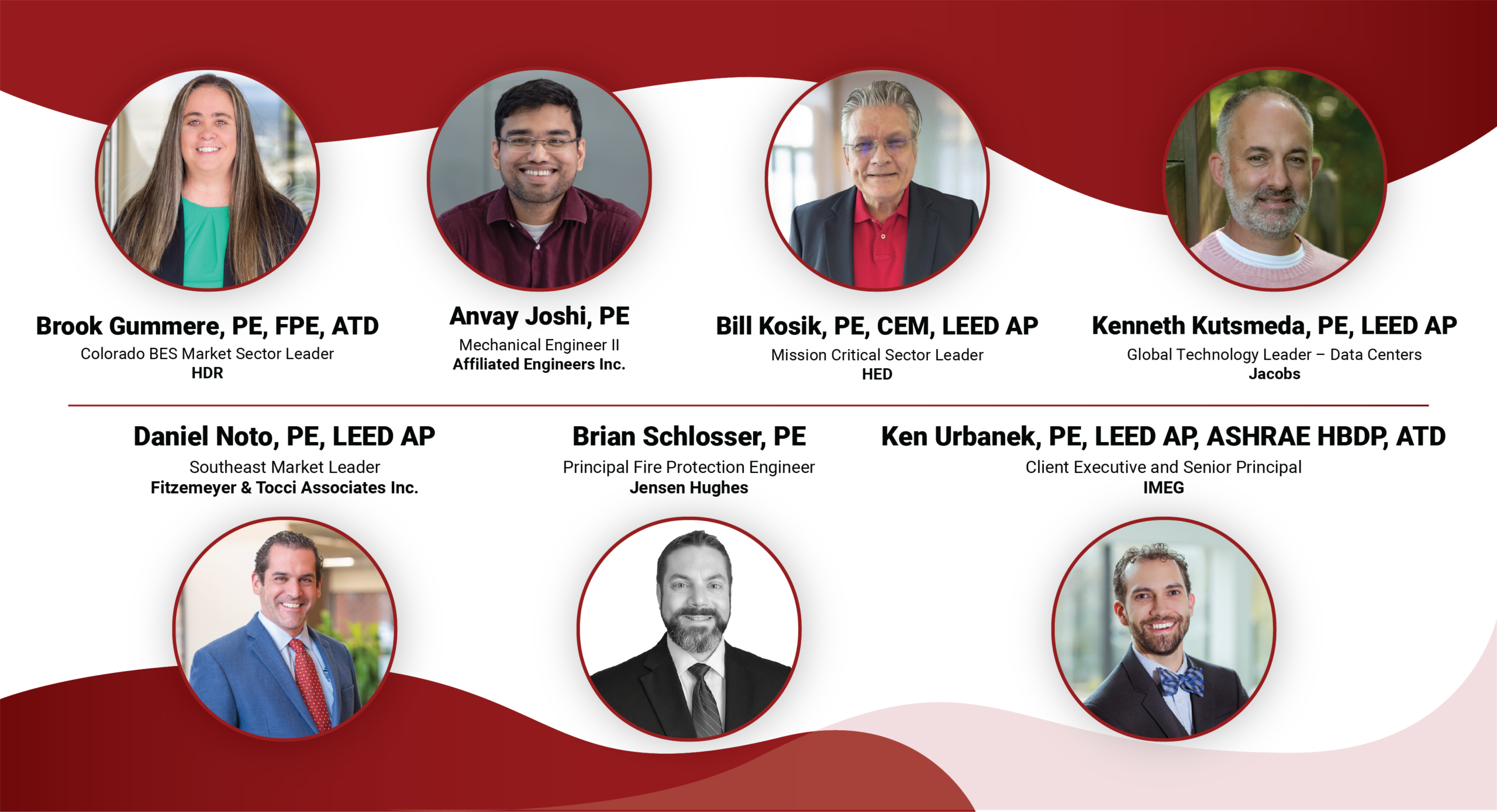
- Brook Gummere, PE, FPE, ATD, Colorado BES Market Sector Leader, HDR, Denver
- Bill Kosik, PE, CEM, LEED AP, Mission Critical Sector Leader, HED, Chicago
- Ken Urbanek, PE, LEED AP, ASHRAE HBDP, ATD, Client Executive and Senior Principal, IMEG, Denver
What level of performance are you being asked to achieve, such as Uptime Institute tier guidelines, WELL Building Standards, U.S. Green Building Council LEED certification, net zero energy or other guidelines?
Brook Gummere: Several of our hyperscale clients pursue LEED Gold and strive to reduce their embodied carbon footprint as part of broader sustainability goals. These clients are also some of the largest purchasers of renewable energy, often investing directly in large solar and wind projects to secure a long-term clean energy supply for their campuses. While land adjacent to the data center campuses is not always available, we can help build these projects where land is available and the environment is conducive to harnessing wind and solar power.
Ken Urbanek: We use Uptime Institute tier standards to set a baseline, but many clients have variations on those specification requirements. We often see LEED certification as well, especially on high-performance computing data centers associated with higher education campuses.
What unusual systems or features are being requested to make such projects more energy efficient?
Ken Urbanek: Extended temperatures on the technical cooling temperature range allow for extended economizer operation. To do this, we sometimes have two water systems — a lower-temperature chilled water serving computer room air handling units, rear door coolers and other components and a higher-temperature system servicing the direct liquid cooling components. When doing this, it is important to deploy direct expansion dedicated outside air systems for space dehumidification without the requirement to drive chilled water temperatures lower.
How are owners and design teams addressing carbon reduction goals in data center projects?
Bill Kosik: Another factor in water use is how the source energy is generated. While this analysis is not typically conducted for the data center and site, reducing energy use in the data center can reduce water consumption and carbon dioxide (CO2) emissions at the power generating facility. There are hundreds of large-scale power generation plants across the United States. The water uses and CO2 emissions vary for each plant depending on the age, fuel mix, size and location. In some cases, it makes sense to use more water for the data center cooling system, which reduces water and CO2 emissions at the power plant. Looking at the big picture requires an interdisciplinary approach and an understanding of how best to optimize the systems.
What types of renewable or alternative energy systems have you recently specified to provide power?
Ken Urbanek: We typically do not see a lot of photovoltaics or wind with our data centers. However, this has been evaluated on smaller modular data centers as an experimental request to determine off-grid capabilities. On large data centers, fuel cells present a unique option to consider.
Bill Kosik: Large loads including data centers must have a path to carbon-neutral power generation. In the United States, the Department of Energy and Energy Information Administration estimate that based on actual demand and in-service timeframes, renewable energy and nuclear power will become the dominant source of electricity production by 2035 to 2040. The analyses show that over the next decade there will be an increase in natural gas power generation, mainly supplying electricity to data centers and other industrial and manufacturing operations. Unfortunately, this will result in an increase in CO2 emissions. But as renewable energy (hydro, wind and solar) plants come online, the need for natural gas generation facilities will be reduced.
How has the demand for heat recovery technology influenced the design for these kinds of projects?
Ken Urbanek: Any time we can use that low-grade heat, we should recover it and use it. The key here is locating data centers adjacent to facilities that need this heat to facilitate high-efficiency heat pump systems on district energy.