In this Q&A, engineers discuss the most important automation trends for modern data centers.
Automation insights
- Automation is expanding beyond traditional controls to dynamically manage power and cooling in response to real-time computing loads, improving performance while optimizing power usage effectiveness.
- Digital twins and predictive analytics are transforming operations by enabling condition-based maintenance, early fault detection and fully simulated decision-making before changes are deployed.
Respondents:
- Brook Gummere, PE, FPE, ATD, Colorado BES Market Sector Leader, HDR, Denver
- Kenneth Kutsmeda, PE, LEED AP, Global Technology Leader – Data Centers, Jacobs, Philadelphia
- Ken Urbanek, PE, LEED AP, ASHRAE HBDP, ATD, Client Executive and Senior Principal, IMEG, Denver
From your experience, what systems within data centers are benefiting from automation that previously might not have?
Ken Urbanek: Power monitoring and response tied to computing demands — the idea of knowing how to ramp and respond to large-scale changes in computing demands — is benefitting from automation, as is temperature optimization for power usage effectiveness (PUE).
How is building information modeling (BIM) being used in data center design? Describe the project.
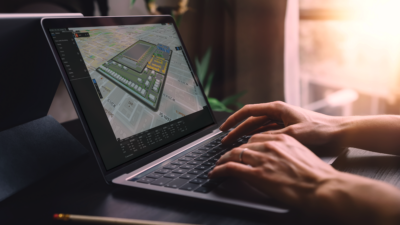
Brook Gummere: BIM is evolving from a design-centric tool into an essential part of long-term data center operations. While BIM has traditionally been used to assist teams with creating constructible design documents, we are now seeing these models leveraged throughout the facility lifecycle. Operations teams increasingly rely on BIM to track equipment, parts, maintenance schedules and inventory. To support this shift, we have a dedicated team that helps our clients integrate BIM into their operations and maintenance plans.
Ken Urbanek: Speed to market is typically the number one goal of most data center projects. BIM is critical to this accelerated workflow. Concept engineering drawings can quickly be handed off to trade partners for Level of Development 400 fabrication modeling. This can resolve conflicts early and lead to offsite fabrication parallel to certain design efforts.
Are you seeing increased use of digital twins or predictive analytics for real-time monitoring, commissioning and long-term operations in data centers?
Ken Urbanek: Yes, and this continues to increase in response to the ever-changing demands of modern data centers.
Kenneth Kutsmeda: Yes, the use of digital twins (model-based operational planning) and real-time predictive analytics (smart grid) are becoming essential as facilities grow in scale, complexity and power density. Smart grid deployments enable continuous, high-resolution monitoring of electrical and mechanical assets. Sensors, intelligent relays and advanced metering provide data on equipment health, loading, thermal conditions and transient behavior. This level of visibility is critical for identifying early-stage equipment degradation, abnormal operating patterns and failure modes that could lead to extended outages. By detecting issues before they escalate, operators can shift from reactive maintenance to predictive and condition-based maintenance, improving uptime and extending asset life.
Digital twins are a high-fidelity virtual model of the data center’s electrical and mechanical systems. The digital twin ingests real operational data and allows engineers and operators to simulate equipment modifications, test alternative operating strategies, evaluate failure scenarios and analyze system behavior under new load profiles or environmental conditions. This capability enables teams to fully validate proposed changes before implementing them in the live facility, reducing risk and improving decision quality. It also supports long-term planning by revealing how the facility will perform as workloads evolve and power densities increase.
How are artificial intelligence (AI)-driven, high-density computing environments changing control strategies for cooling, airflow management and power monitoring?
Ken Urbanek: Significantly. The first AI systems we worked on, back in 2023, used active rear-door coolers as density was typically less than 60 to 70 kilowatts (kW) per rack. For the most part, this is at the top end of the rear-door cooler range and at the top end of an air-based solution. As rack densities increased beyond this level, direct liquid cooling with direct-to-chip cold plates became necessary. We are now seeing the typical rack with 80% liquid cooling and 20% air-based cooling.
However, that is changing with an industry goal to continue to move more of the load to liquid cooling; the benefit is better computing performance while also driving up cooling medium temperatures. Warmer cooling temperatures often mean greater potential for a water side economizer, i.e., free cooling. In some cases, depending on ambient conditions, free cooling could be applied to more than 90% of the operational hours thus improving the PUE of the data center.
In what way is the need for more smart technology and features in such buildings affecting your work on these projects?
Ken Urbanek: I believe it is driving engineers to have even greater insight into the detailed computing operations.