Advertisement
FREE subscription
Email
Print
Reprint
Learn RSS

VFDs In Tune with 90.1

By Geoff Weisenberger, Production/Web Editor -- Consulting-Specifying Engineer, 7/1/2004

The benefits of variable-frequency drives have long been apparent. When it comes to increasing, decreasing or maintaining electrical motor speed, VFDs can provide precise control and ensure that the motor uses only the energy required.

"If you're not changing the speed of the motor in your fan, then you have to vary the airflow via mechanical or some other means, and it's just not economical to do that," says Thomas Lowery, HVAC eastern regional sales manager, ABB, Inc., New Berlin, Wis.

Lowery thinks that motor control should be one of the most important considerations when designing a mechanical system, as motors consume the majority of electrical energy in a facility. Given the importance of motors, engineers should make a concerted effort to work toward meeting government-mandated energy efficiency standards.

ANSI/ASHRAE/IESNA Standard 90.1, Energy Standard for Buildings Except Low-Rise Residential Buildings, is the most well-known and broadly accepted standard. On July 15, 2004, as mandated by the U.S. Dept. of Energy (DOE), states must verify that their energy codes meet or exceed the requirements of the 1999 edition of the standard.

Standard 90.1 is designed to minimize energy consumption without sacrificing building occupant comfort or productivity. In regards to motors, it states that individual variable-air-volume (VAV) fans with 30-hp motors and larger need to be run by an electrical or mechanical VFD; be a vane-axial fan with variable pitch blades; or have other controls or devices that result in fan motor demand of no more than 30% of design wattage at 50% of design air volume, when static pressure set points equal one-third of the total design static pressure, based on OEM-certified fan data.

Lowery says that VFDs are the best option because of their flexibility; they are customizable to meet the needs of single-motor HVAC applications such as fans, pumps, dampers, compressors and cooling towers. Additionally, these drives cover a wide range of powers and voltages and can be installed right out of the box for most applications.

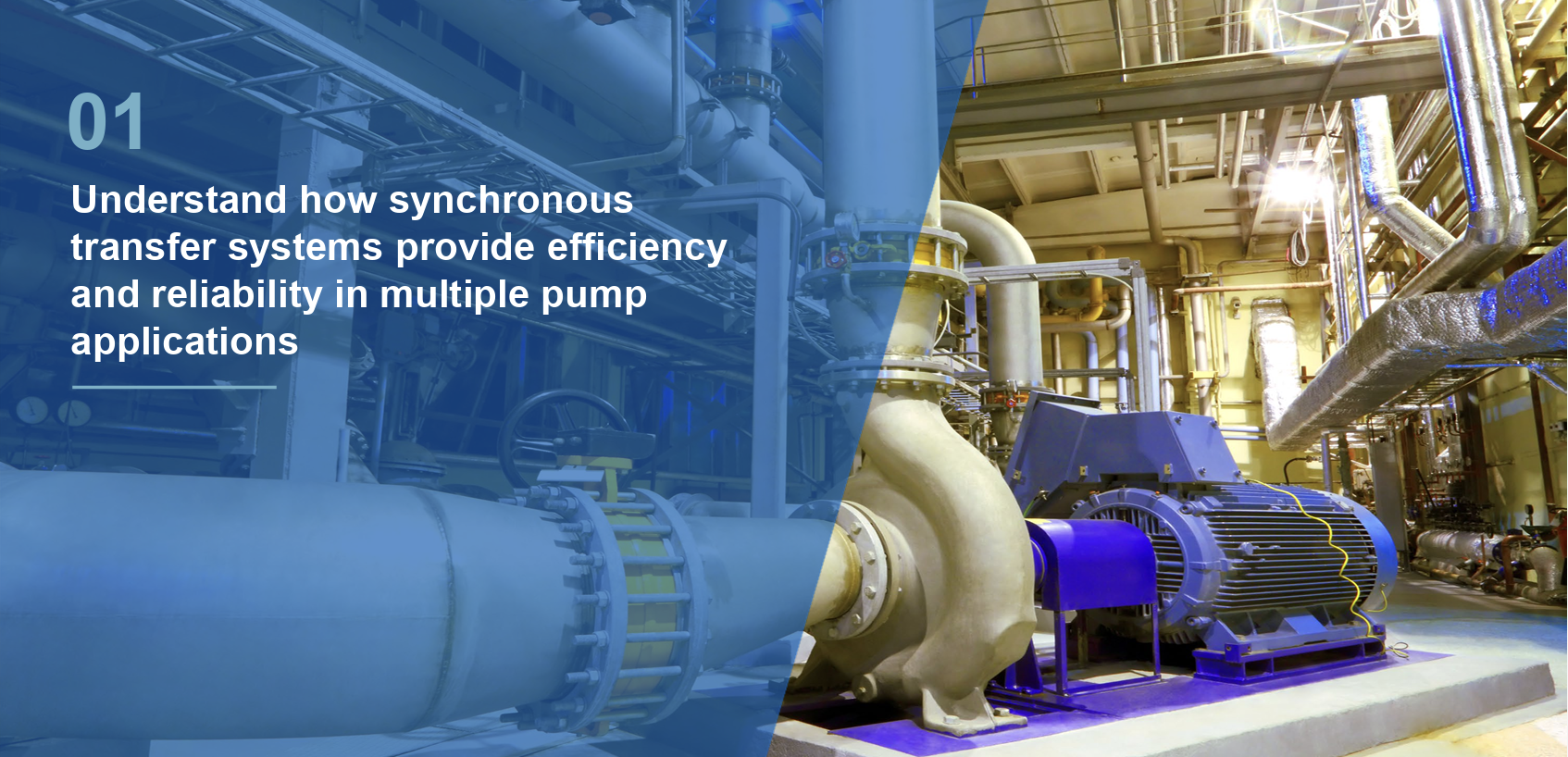
Besides ventilation, Lowery notes that pumps are another area where VFDs can assist with meeting 90.1 requirements. The standard mandates that pump systems must achieve flow rates down to 50% of design where total system power is 10 hp or higher. In order to meet this requirement, the system has to be designed to reduce flow, says Lowery. There are really only two methods of doing so—valves or drives—and one method clearly wins out in his eyes. "Valves are nowhere near as precise for controlling flow rates, nor are they as efficient," he says, adding that other benefits of using VFDs in pump applications include less vibration and noise, the elimination of power surges during startup, longer pump seal life, reduced impeller wear and cavitation prevention. However, he does caution that as a pump is slowed down, the lift or static pressure drops off as a square function.

Lowery's overall message is clear: When it comes to meeting or exceeding ASHRAE 90.1 energy-efficiency requirements in pump and HVAC applications, look to VFDs.


VFD advantages

  • Flexibility
  • Can be customized to meet the needs of single-motor HVAC applications
  • Coverage of a wide range of powers and voltages
  • Can be installed right out of the box for most applications
Email
Print
Reprint
Learn RSS

Talkback

We would love your feedback!

Post a comment

» VIEW ALL TALKBACK THREADS

Related Content

Related Content


By This Author


SPONSORED LINKS

 
Advertisement
Sponsored Links

More Content

  • Blogs

Blogs

  • Michael Ivanovich
    Give and Take

    August 8, 2008
    Rollercoaster Energy Prices vs. Conservation Momentum
    The roller coaster of oil prices did something quite amazing this year: It went up long enough to ca...
    More
  • Michael Ivanovich
    Give and Take

    July 18, 2008
    Gore: "Go solar or die." Walk the Talk, Take 1
    In a speech at an energy conference in Washington, D.C., Nobel laureate, Academy award winning filmm...
    More
  • » VIEW ALL BLOGS RSS
Advertisements


NEWSLETTERS
Plug in and get the latest CSE news, trends and industry updates delivered directly to your inbox!

Green Scene
CSE Codes & Standards
CSE NewsWatch
CSE Fire and Life Safety Solutions
CSE Business of Engineering Management Report
CSE Electrical Solutions
CSE HVAC Solutions
Pure Power
CSE Product Showcase
©2008 Reed Business Information, a division of Reed Elsevier Inc. All rights reserved.
Use of this Web site is subject to its Terms of Use | Privacy Policy
Please visit these other Reed Business sites