Advertisement
FREE subscription
Email
Print
Reprint
Learn RSS

Beam Me Up, Scotty ... Or is it Down?

XM Radio—a futuristic digital satellite broadcast center emerges from the core of a 19th-century printing plant to beam entertainment to 21st-century commuters nationwide

By Barbara Horwitz, Associate Editor -- Consulting-Specifying Engineer, 12/1/2002

We're all familiar with AM and FM radio. Now, "XM" digital satellite radio—being touted as the biggest advancement in radio technology in decades—has hit the airwaves, with thousands of subscribers signing up nationwide. A big part of XM's success can be attributed to the completion of its highly secured, mission-critical digital broadcast center in Washington, D.C.

Not only was this one-of-a-kind facility designed to house dozens of high-tech broadcast studios—82 to be exact—and 40,000 sq. ft. of programming space, it had to be done within the confines of a structure that was originally a printing plant built before 1900. This feat was pulled off by Arlington, Va.-based GHT Limited—earning the M/E/P firm a CSE ARC Award.

First of its kind

As is the case with many marquee projects, schedule was an issue. In order to qualify for certain tax incentives, the client, XM Satellite Radio, was in a race against a U.S. Congress-mandated deadline to be on the air within 18 months of contracting GHT to design its broadcast operations and corporate headquarters, which would also include 45,000 sq. ft. of office space. This concern was eased somewhat by the fact that the former printing plant could structurally support the heavy loads required by the studios and technical areas. Furthermore, the facility's high ceilings and large floor plates provided flexibility—and gave the design team room to work. However, the condensed time frame meant the building would have to be executed as a design-build project.

"Even before we had the architecture squared away, we were ordering equipment," recalls Rodney Simpson, the firm's senior principal and lead electrical designer on the project.

Materials staging and delivery, however, revealed a major weakness of the antiquated structure: When equipment arrived, it all had to travel through one loading dock door. As a result, essentially 60,000 sq. ft. of high-tech space had to be retrofitted one piece at a time as equipment slowly made its way through the door and around beams and structures that served the purposes of the old printing plant.

Furthermore, because satellite radio is such a new technology, no facility of this magnitude and technical requirements was available as a benchmark.

"All the equipment that went in the computer room had never been configured before," notes Simpson. "So it was hard to figure out the air conditioning and power requirements, especially since the design engineers only thought they knew what their equipment was going to require."

Self-sufficient

So, just how much juice does it take to power 57,130 sq. ft. of technical broadcast space and its accompanying office area? At this 21st century broadcast center, the answer is 3.2 MVA—of which the facility can generate 3 MVA on-site, with an additional 1 MVA of backup power. Furthermore, at N+1 redundancy—providing 99.999% reliability—two 750-kVA UPS units back up the studio and broadcast antennas, and two 500-kVA UPS units serve as emergency backup for office operations.

Besides a robust power system, the on-site generation measures qualified the facility to earn a generous energy credit from the local utility through participation in a load curtailment program. According to Simpson, the utility reserves the right to ask XM Satellite Radio to go off the grid up to six times in a year for up to five hours at a time. Further, if the utility's requests exceed these parameters, the operation may qualify for additional credits.

In the instances where they do go off the grid, the facility can operate for a full 24 hours. And as long as the on-site diesel fuel is resupplied, the system can power the facility indefinitely.

There are plenty of commercial reasons for such a robust backup power system, as well as for its security features—bullet-proof glass, blast-resistant walls, x-ray equipment and a high-end surveillance system—but there's also an important civic factor: Due to the advanced technological capabilities of satellite radio, which can theoretically broadcast to U.S. armed forces stationed around the world, the federal government sees it is an invaluable resource in an emergency or crisis.

Fire, water and air

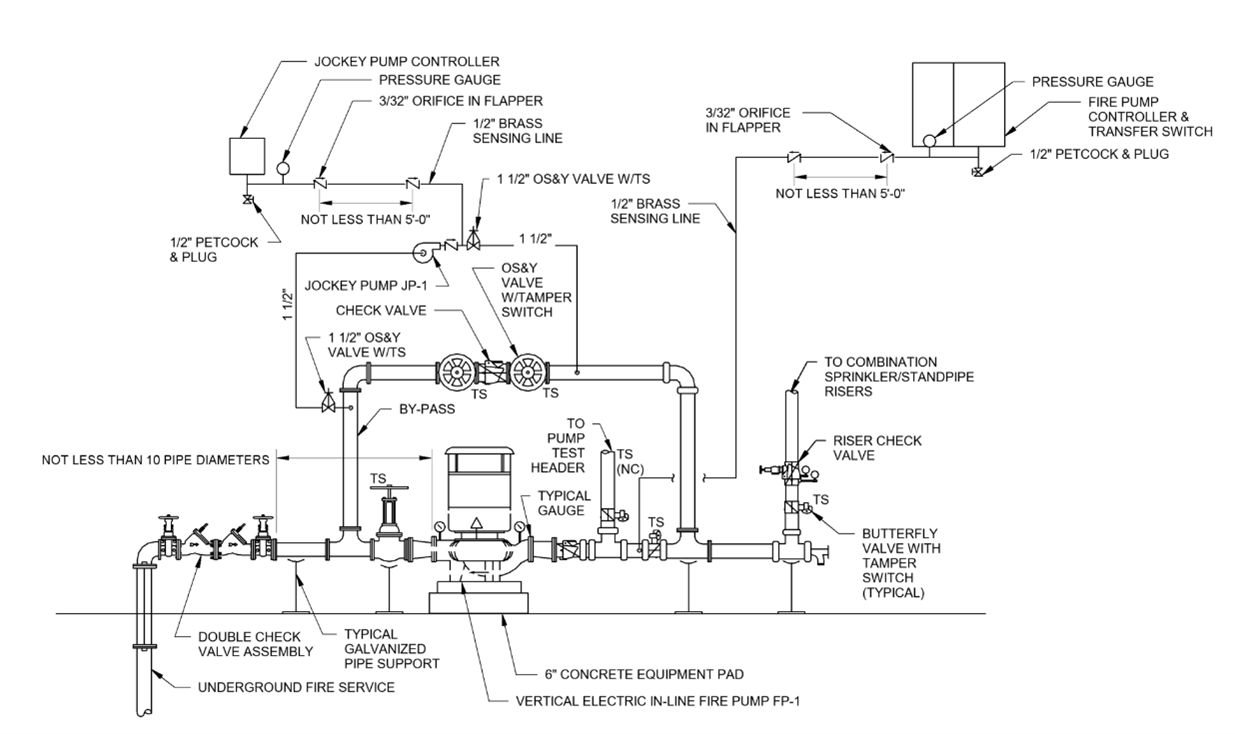
Another mission-critical feature of the facility is its fire-protection system. In order to minimize downtime and protect expensive broadcast equipment, GHT engineers specified a pre-action, dry-pipe sprinkler system with smoke detectors installed every 200 sq. ft.

"What's unique about the system is you could dislocate a sprinkler head and it wouldn't trigger the system because it's heat activated," explains Kenton McNabb, the lead fire protection and plumbing designer on the project.

A particular fire protection challenge was installing the gas nozzles of the FM200 fire suppression system in a 30-person performance studio without impacting the architecture or acoustics, adds McNabb.

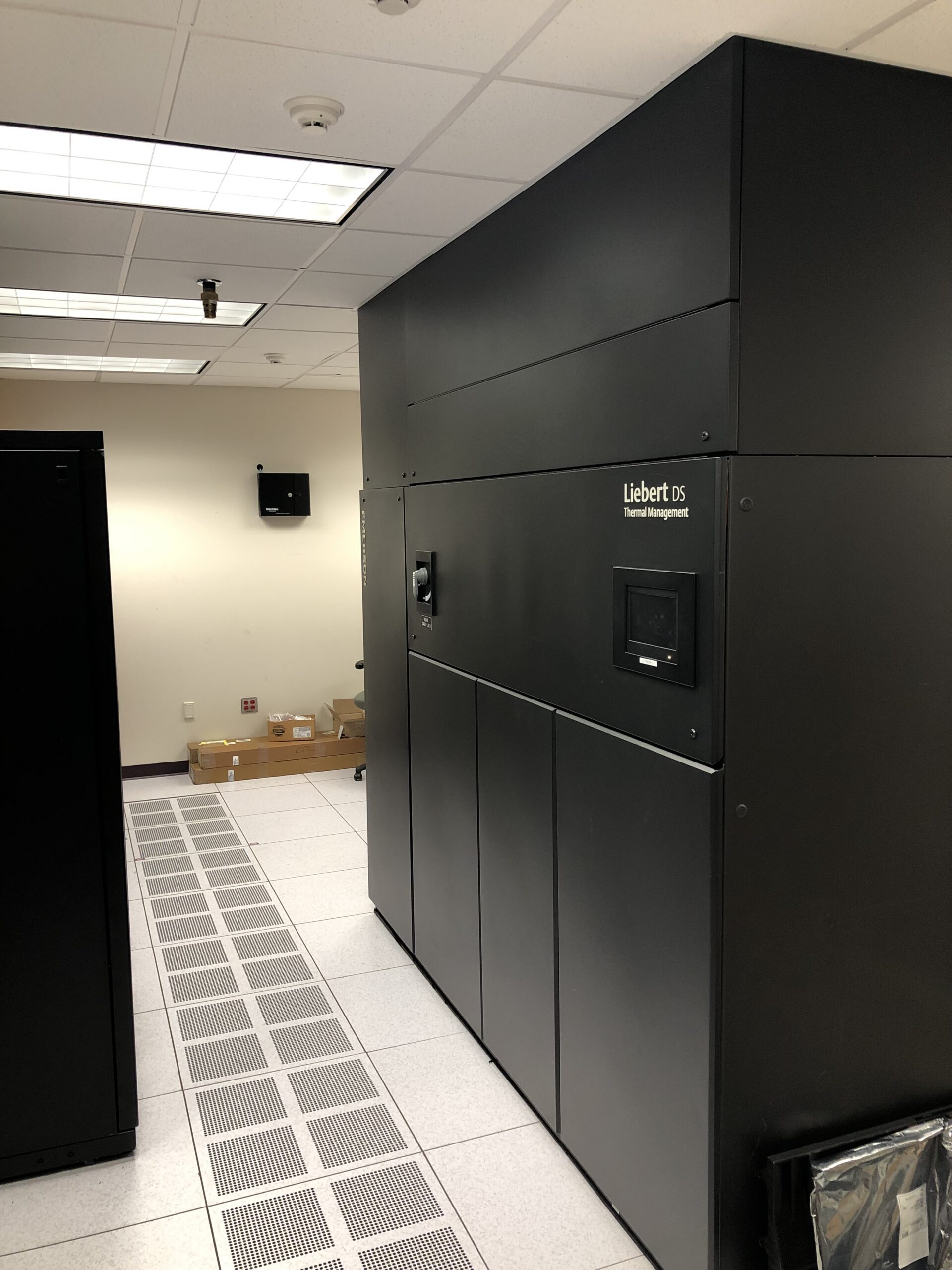
Similarly, sound requirements dictated strict parameters for the HVAC system. Specifically, the system had to be designed to achieve a low sound rating of NC-25. Consequently, a 100-ton, built-up rooftop system was specified, delivering air at a slow-moving, constant volume, producing an actual acoustic rating of NC-20

"We dump a lot of air, but it's only at 20 feet per second," says Simpson. "It sort of rolls out of the diffusers."

Furthermore, each studio was installed with its own hot-water coil to provide individualized thermostat control.

In the zone

As far as heating the office area, which is surrounded by 10-ft.- to 12-ft.-high glass windows around the building's perimeter, it wasn't a straightforward job, says Chaim Kanner, the project's lead mechanical designer. To accommodate the glass curtainwall, hot-water baseboard heaters with zoned control were chosen.

The zoned HVAC scheme, however, presented other benefits, especially for the office area, which was architecturally designed as an open space to foster collaboration and creativity. To add to the charm, some of the original brick walls were left exposed, as was the ductwork, cable trays and sprinkler systems that occupy the office's high ceiling areas. Another architectural element that required an engineering spin was circulation zones that essentially function as internal "streets."

One particularly innovative passageway re-creates the effect of a radio dial being tuned to a number of stations. Plexiglass dome speakers direct sound within a 6-ft. diameter. As a result, a person strolling down the hallway hears a different broadcast as they pass each speaker.

Keeping track of the sound quality for all 100 stations is a big job that requires an appropriate command post. The "Captain Kirk" chair in the master control room is fitted with full facility monitoring capabilities provided by a comprehensive supervisory control and data acquisition system. According to Simpson, any mechanical or electrical system can be called up and viewed on large plasma screens. The master chair itself sits under a custom-built linear diffuser which conditions the space, and colored LEDs light up the surrounding floor space for effect.

Of course, XM Satellite Radio subscribers won't benefit—at least, not directly—from the fancy AC and lights, but they will have access to 70 music channels and 30 other options offering news, talk radio, sports and entertainment—all of it made possible by a superior engineering job on the part of GHT under the direction of President Paul O'Brien, P.E.

But their work is not complete. Now that XM Satellite Radio's in-house employees have increased from 30 to more than 500 people, and its subscriber list has exceeded 150,000, GHT is already preparing for an expansion of the facility in 2003.


Project team

Architect: Studios Architecture

G.C.: James G. Davis Construction

Str. Engr.: Rathberger/Goss Assocs.

Acoustical Engr.: Shen Milsom & Wilke

Cooperative D.C. Code Officials a 'Pleasure'

Contending with code officials—especially where unique or unusual projects are concerned—is often the norm, but it was rather the opposite for the engineers of GHT Limited, Arlington, Va., in designing XM Satellite Radio's unusual broadcast facility.

Because the facility resides in a depressed neighborhood, D.C. officials had a vested interest in encouraging development. Consequently, code enforcement officials cooperated extensively, according to GHT's Rodney Simpson.

For example, the local code officials weren't accustomed to special egress and sprinkler systems, "but they expedited their learning curve and were willing to work with us," he says.

Of course, converting an old 1900s-era printing plant into a high-tech facility with completely different needs presented another set of challenges. The city , again, was accommodating and grandfathered a number of existing conditions. In fact, variances were reviewed and approved expeditiously as were plan reviews. "It was a pleasure working with the city to deliver a high-tech building of the future," says Simpson.

Email
Print
Reprint
Learn RSS

Talkback

We would love your feedback!

Post a comment

» VIEW ALL TALKBACK THREADS

Related Content

Related Content


By This Author


SPONSORED LINKS

 
Advertisement
Sponsored Links

More Content

  • Blogs

Blogs


Sorry, no blogs are active for this topic.

» VIEW ALL BLOGS RSS

Advertisements


NEWSLETTERS
Plug in and get the latest CSE news, trends and industry updates delivered directly to your inbox!

Green Scene
CSE Codes & Standards
CSE NewsWatch
CSE Fire and Life Safety Solutions
CSE Business of Engineering Management Report
CSE Electrical Solutions
CSE HVAC Solutions
Pure Power
CSE Product Showcase
©2008 Reed Business Information, a division of Reed Elsevier Inc. All rights reserved.
Use of this Web site is subject to its Terms of Use | Privacy Policy
Please visit these other Reed Business sites