As more building owners aim for net-zero goals and regulations restrict fossil fuel heating, HVAC design is quickly moving toward electrification, greater efficiency and intelligent controls.
Learning objectives
- Provide definitions for Scope 1, Scope 2 and Scope 3 emissions, and discuss their relevance to building HVAC systems.
- Differentiate between operational carbon and embodied carbon and identify primary sources of each within the built environment.
- Find effective HVAC control methods such as demand-controlled ventilation, temperature resets, variable speed drives and ASHRAE Guideline 36 sequences, and explain how each approach lowers energy consumption and operational carbon emissions.
Decarbonization insights
- Electrification, high-efficiency HVAC equipment and smart controls can significantly reduce operational carbon emissions in new and existing buildings.
- Low-GWP refrigerants and thermal energy storage provide additional strategies for reducing HVAC carbon impacts and supporting building decarbonization.
In the United States, buildings contribute to 40% of overall carbon emissions. Of this total, 80% arise from electricity consumption, while the remaining portion results from onsite combustion of fossil fuels for heating and additional purposes. California Title 24 Part 6 is leading the way with the implementation of an energy code that focuses on the removal of fossil fuels from new construction and limiting their use in many renovation projects. In the southeastern U.S. where heating requirements are minimal, electric heating is already widely adopted. Moderate and colder regions are experiencing a notable increase for heat pump systems, which offer a highly efficient alternative to traditional electric resistance heating.
Electricity is increasingly viewed as a carbon-free energy option. Buildings that rely on natural gas and other fossil fuels for heating continue to generate carbon emissions, whereas electricity is moving toward low-carbon solutions. Stakeholders are now considering all-electric alternatives for heating and cooling systems in buildings. When paired with renewable or carbon-free electricity sources, an all-electric building is regarded as decarbonized during its operational phase.
Buildings produce both operational and embodied carbon. Embodied carbon refers to greenhouse gas (GHG) emissions from materials and construction throughout the building’s life cycle and those that occur as a one-time emission during construction. Reducing both types is essential for decarbonization.
Scope 1, 2 and 3 emissions
Scope 1 emissions:These are direct emissions from sources that an organization owns or controls. They occur onsite or from company-operated assets. Common examples include fuel combustion in boilers, furnaces or generators; emissions from company-owned vehicles; and leaks of refrigerants from heating, ventilation and air conditioning (HVAC) systems. Because these emissions are produced directly by the organization, they are typically the most straightforward to measure and manage. Reducing Scope 1 emissions often involves improving energy efficiency, switching to cleaner fuels or electrifying equipment.
Scope 2 emissions: These emissions are indirect emissions associated with the generation of purchased energy, primarily electricity, but also steam, heating or cooling. Although these emissions physically occur at power plants, they are attributed to the organization because they result from its energy consumption. For many commercial buildings and businesses, Scope 2 emissions represent a significant portion of their carbon footprint. The level of emissions depends on the carbon intensity of the local electric grid. Organizations can reduce Scope 2 emissions by improving energy efficiency, purchasing renewable energy or installing onsite renewable systems such as solar panels.
Scope 3 emissions: These emissions are the most comprehensive and often the most challenging to quantify. They include all other indirect emissions that occur across an organization’s value chain, both upstream and downstream. Examples include emissions from the production of purchased materials, transportation and distribution, employee commuting, business travel, waste disposal and the use of sold products. In many cases, Scope 3 emissions account for the largest share of total emissions, especially for companies with extensive supply chains. However, they are also the hardest to control because they involve activities outside the organization’s direct ownership.
Additional carbon sources
The built environment significantly impacts global carbon emissions, spanning activities such as raw materials extraction, construction, operation and demolition of buildings and infrastructure. A comprehensive understanding of carbon sources within this system is crucial for mitigating environmental effects and advancing sustainable development initiatives. Three major sources of carbon in the built environment include:
Embodied carbon in materials: This refers to the carbon emissions generated during production and transportation of building materials such as concrete, steel and glass. The manufacturing process for these materials uses significant amounts of energy, usually sourced from fossil fuels, and activities like cement making emit carbon dioxide (CO2) directly into the atmosphere. The manufacture of HVAC systems is being reviewed as part of the MEP 2040 Commitment, which many mechanical, electrical and plumbing (MEP) firms and supporting organizations are signatories to and which addresses embodied carbon within HVAC systems.
Operational energy use: Buildings produce carbon emissions due to everyday energy use including heating, cooling, lighting and running appliances. When this energy is sourced from fossil fuel-powered electricity or gas systems, it adds substantially to a building’s carbon footprint over time.
Construction and demolition activities: The construction phase involves heavy machinery, transportation systems and onsite energy consumption, each contributing to carbon emissions. Upon the conclusion of a building’s lifecycle, demolition and waste disposal generate additional emissions, particularly when materials are not repurposed or recycled.
Embodied carbon and MEP 2040
The MEP 2040 Commitment is a global initiative by the Carbon Leadership Forum (CLF) to reduce carbon emissions from MEP systems in buildings. It urges MEP engineers and firms to take responsibility for the environmental impact of their work and to pursue a net-zero carbon future. Although participation is voluntary, it emphasizes taking action. Companies that join commit to several important steps: creating a comprehensive carbon reduction plan, selecting refrigerants with low global warming potential (GWP), asking manufacturers for environmental product declarations (EPDs) and collaborating with others in the industry through forums.
The MEP 2040 Commitment includes the following steps and plays an integral part in the reduction of embodied carbon in MEP systems:
- Establish a company plan to reduce operational and embodied carbon across MEP systems on all projects, targeting zero by 2040. Measure and report progress against that plan annually.
- Request low-GWP refrigerant when designing systems to reduce or eliminate GHG emissions from refrigerants.
- Request EPDs in project specifications for MEP system components.
- Participate in quarterly MEP 2040 forums and CLF community discussion groups to share lessons learned and contribute to a growing body of knowledge.
An important feature of the MEP 2040 initiative is its focus on transparency in data and collective effort. Because information on the carbon footprint of MEP systems has traditionally been scarce, the initiative urges companies to exchange insights, keep track of advancements and collaborate to learn from each other.
The MEP 2040 Commitment marks a change in how building systems are planned and assessed. It acknowledges that MEP systems make up a significant portion of a building’s carbon footprint and highlights the important role engineers have in lowering emissions. By bringing the industry together with clear goals and actionable steps, this commitment outlines a path toward buildings that are more sustainable, energy-efficient and capable of coping with climate challenges.
Decarbonization of electrical grid
Decarbonization of the electrical grid is a critical component to address the reduction of operational carbon use within HVAC systems, as electricity generation remains one of the largest sources of GHG emissions. Transitioning the grid from fossil fuel-based systems to low- and zero-carbon energy sources not only reduces emissions but also enables broader decarbonization across HVAC system design.
It is widely recognized that the current electrical grid is not fully decarbonized and it will take some time to reach this goal. Grid decarbonization relies heavily on deploying renewable energy sources like wind, solar and hydropower, which generate electricity without direct carbon emissions. As costs drop, large-scale solar and wind projects are replacing fossil fuel plants, while distributed resources such as rooftop solar let consumers produce clean power locally and reduce dependence on centralized generation.
Another important aspect is the retirement of high-carbon power plants, particularly replacing coal-fired facilities with lower-carbon-emission power plants. Natural gas is sometimes used as a transitional fuel because it emits less carbon than coal, but long-term decarbonization requires minimizing or eliminating all fossil fuel use including natural gas.
ASHRAE Task Force for Building Decarbonization
The ASHRAE Task Force for Building Decarbonization (TFBD) developed a useful guideline titled the “Grid-Interactive Building for Decarbonization: Design Operation Resource Guide,” which provides information on how to maximize carbon reduction through a building’s interaction with the electric power grid to reduce overall demand and GHG emissions. TFBD offers many seminars on this topic.
In addition to ASHRAE, the U.S. Environmental Protection Agency (EPA) created the Emissions & Generation Resource Integrated Database (eGRID) as the leading source of U.S. power data and a primary source of U.S. emission rates for those reporting location-based Scope 2 emissions. An eGRID subregion refers to a designated geographic area within the United States, as defined by the EPA, that encompasses a segment of the electric grid characterized by unique power generation and emission profiles. These subregions provide an intermediate framework for evaluating electricity data, positioned between the broader North American Electric Reliability Corporation regions and more granular balancing authorities.
Key aspects of eGRID subregions include:
- Emission factors: These are used to calculate emission rates for GHGs (CO2, methane, nitrous oxide) and pollutants (NOx, SO2).
- Utility and GHG reporting: These are the recommended geographical units for estimating Scope 2 GHG emissions from purchased electricity in corporate, institutional and regional inventories.
- Composition: There are 26 distinct subregions covering the U.S., each with its own resource mix, the combination of fuels (coal, gas, nuclear, renewables) used to produce electricity in that area.
- Boundary definition: Subregions are designed to reflect the regional mix of power plants that supply electricity to that area, limiting the impact of power imports/exports.
With this information, design engineers can better understand the current GHG emissions of the electrical grid serving the facility.
HVAC decarbonization strategies
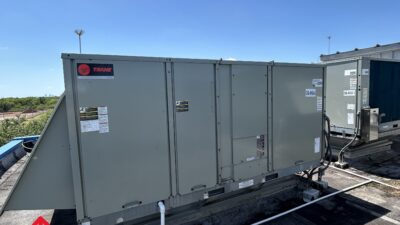
Both simple and complex strategies are widely available to reduce carbon use in new and existing HVAC systems. One of the most effective strategies is the electrification of heating systems, moving away from traditional fossil fuel-burning equipment for heating needs. This is often achieved using single-zone packaged heat pump systems, which can transfer heat from an outdoor air stream. As an example, many of the larger K-12 school districts in California are employing the use of heat pump technology within their standard designs. More broadly in California, the energy code is dictating the use of heat pump technology on many new construction and renovation projects.
Another important approach is incorporating high-performance HVAC equipment. A large focus has been the use of variable refrigerant flow systems, dedicated outdoor air systems (DOAS), decentralized heat pump technology, energy recovery systems and high-efficiency chillers and boilers, which consume significantly less energy than older equipment. For example, DOAS systems with energy recovery are on the rise in certain climates to reduce energy consumption associated with heating and cooling ventilation air to a space. Other recent examples of high-efficiency HVAC equipment include the following:
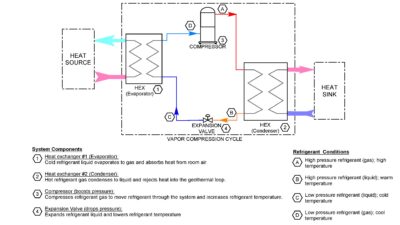
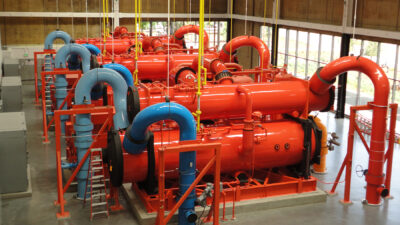
- Heat recovery chillers or heat pump chillers: The use of both air-cooled and water-cooled equipment has enabled this technology to produce low-temperature heating hot water and chilled water in unison, enabling removal of traditional natural gas-fired boilers within a facility.
- Low-temperature heating water systems: Low-temperature heating water systems, less than 130°F, have been used in practice for decades. When used in tandem with heat recovery equipment, this is a powerful way to heat a building.
- Energy recovery systems: The use of energy recovery in HVAC systems is a standard approach to reduce the overall carbon footprint of a building. Many manufacturers are incorporating either wheel type or plate type heat exchangers into standard equipment designs.
- Chilled beam technology: Both active and passive chilled beam technology is on the rise and is being incorporated with other technologies described above to provide chilled water, heating water and ventilation air to building spaces.
With the growth of ASHRAE Guideline 36: High Performance Sequences of Operation for HVAC Systems and specific building automation system requirements within the codes, various control system strategies are reducing the energy consumption of HVAC systems:
- Demand-controlled ventilation (DCV): Instead of providing a constant amount of ventilation regardless of occupancy, DCV systems adjust airflow based on real-time conditions, often using CO2 sensors. This reduces unnecessary heating and cooling of outdoor air, lowering energy use without compromising indoor air quality.
- Occupancy sensors: Passive infrared occupancy sensors reset room temperature setpoints and ventilation rates based on occupancy conditions. These typically feature an occupied mode, standby mode and unoccupied mode setpoint.
- Discharge air temperature reset: Reset of the discharge air temperature is based on a series of factors and reacts more efficiently to the building load.
- Variable speed drives (VSDs): Using VSDs to react to actual load conditions enables a continued reduction in energy use.
- Variable water temperature: Modifying the water temperature delivered based on load requirements reduces energy losses within piping systems.
- Use of high-performance control sequences: ASHRAE Guideline 36 provides a series of high-performance and standard control sequences that can be used within building design to save energy.
Low-GWP refrigerants
The use of low-GWP refrigerants is another important strategy to reduce the carbon footprint of HVAC systems, a result of the American Innovation and Manufacturing Act of 2020 (AIM Act) enacted on December 27, 2020. The AIM Act tasked the EPA with phasing down the production and consumption of certain hydrofluorocarbons, including those used in refrigerants such as R-410A. At that time, the current HVAC industry refrigerant, R-410A, was deemed a contributor to global warming.
The transition to low-GWP refrigerants in the HVAC and refrigeration industry has been making headlines as the EPA deadline for most HVAC products to conform to the new refrigerant regulation was January 1, 2025. With this deadline past, use of A2L low-GWP refrigerants in HVAC designs has become more common.
Thermal energy storage systems
Incorporating thermal energy storage systems is another strategy to reduce the carbon impact of HVAC systems. These systems store energy such as chilled water or ice during periods of low demand and then use it later for cooling or heating. This water or ice is either stored within large thermal tanks or a series of smaller tanks. These systems often produce ice or chilled water during times when energy demands are low, such as overnight hours.
This helps shift energy use away from peak periods when electricity may be more carbon-intensive, reducing overall emissions and easing strain on the grid. This strategy is also used within geothermal bore field applications where heat is either rejected to the ground during cooling or removed from the ground during heating season.
Decarbonization of existing HVAC systems
While the strategies noted above are ideal for new construction, many can be applied to existing buildings. Some high benefit items that should be evaluated when completing a renovation or retrofit project include the following:
- Adding insulation to existing walls
- Sealing air leaks
- Replacing windows
- Updating lighting to LED fixtures
- Upgrading building control systems
- Installing occupancy sensors
- Employing renewable energy systems
These tactics combined with HVAC system upgrades will yield a reduction in carbon emissions, which is the goal of a decarbonization project.
Reducing carbon emissions from HVAC systems requires a combination of strategies, including electrification, efficiency improvements, smart controls and better building design. By integrating these approaches, both new and existing buildings can significantly lower their carbon footprint while maintaining comfort and performance.