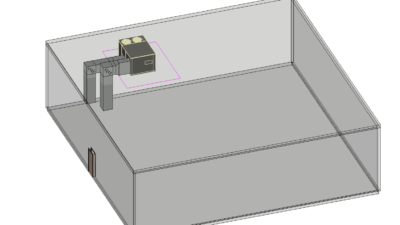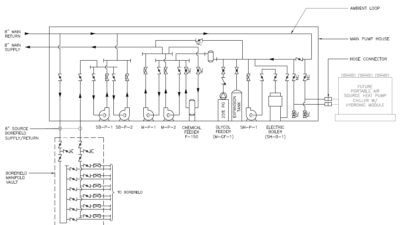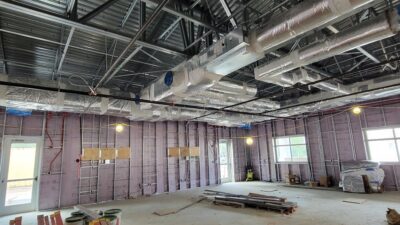
Ambitious steam conversion projects are underway across the country, including the UC Berkeley Clean Energy Campus Utility Improvement Project.

Ambitious steam conversion projects are already underway across the country. One example is the University of California, Berkeley Clean Energy Campus (CEC) Utility Improvement Project. This long-term transition project aims to reduce total campus carbon emissions by approximately 60% by decommissioning a 70-year-old natural gas cogeneration plant and its deteriorating steam distribution network. UC Berkeley will replace this with a low-temperature hot water system and a modern heat recovery plant to meet these aggressive carbon goals.
UC system and campus decarbonization requirements
Driven by the University of California Board of Regents’ requirement for campuses to reduce their carbon impact, the CEC project addresses stringent institutional decarbonization and reliability mandates.
The existing fossil-fuel-reliant cogeneration plant and its underground steam distribution lines have reached the end of their useful lives, currently experiencing nearly 20% water loss and up to 37% thermal energy loss during distribution.
To meet future environmental and operational needs, the university’s phased decarbonization strategy mandates a complete transition from steam to an all-electric microgrid. Phase 1 (2026 to 2030) targets a 60% reduction in total campus greenhouse gas emissions by directly converting the 30 most energy-intensive research and laboratory buildings.
Centralized electrification and thermal storage
The legacy steam system is being replaced by an all-electric, low-temperature water network. At the core of this transition is a new electrified heating and cooling plant (EHCP).
The EHCP uses heat recovery chillers — specifically water-to-water heat pumps — that provide simultaneous heating and cooling by capturing waste heat from the cooling process. To support grid resiliency, peak-load shaving and independent microgrid capabilities during utility outages, a thermal energy storage tank serves as a thermal battery, allowing the plant to optimize operational sequences and offset carbon based on the electrical grid’s carbon intensity.
During Phase 1 (2026 to 2030), this infrastructure will connect to 30 of the most energy-intensive laboratory buildings. Existing steam radiators, heat exchangers and piping within the buildings will be replaced to accept heating hot water. For specific research facilities requiring high-temperature process steam (such as sterilization autoclaves), the buildings will be equipped with localized electric steam generators so they can continue to serve those specific processes while the campus steam plant is wound down.
Clear roadmap to decarbonization
The convergence of regulatory pressures, environmental, social and governance commitments, advances in heat pump technology and the falling cost of renewable electricity has created conditions in which the transition to low-temperature hydronic systems is not only environmentally necessary but increasingly financially rational. It is more feasible than ever to transition a legacy 20th century steam system into a high-performance 21st century heating plant.
The roadmap is clear. Optimize the existing system to reduce waste and establish baselines. Hybridize strategically by electrifying loads that can be separated from the central steam plant. Finally, convert fully to low-temperature hot water served by heat pumps when the technical and financial conditions are right. Steam conversion is not a single project. It is a program, typically spanning 5 to 15 years for a large facility or campus system. Further, it is an achievable program with the right tools, which are now widely available.