Virginia Tech’s Innovation Campus Academic Building 1 shows how a rainwater harvesting system, combined with all-electric plumbing strategies, can reduce potable water use.
A popular method of reusing stormwater is collecting it for flushing fixtures within buildings. The following case study explores how Virginia Tech’s Innovation Campus Academic Building 1 (VT ICAB-1) uses this method to minimize domestic potable use on flushing fixtures.
VT ICAB-1 is designed to meet Alexandria, Virginia’s, districtwide environmental sustainability goals and Virginia Tech’s guiding principles for their 21st century campus. The systems in this building emphasize low-carbon electrified design with no onsite natural gas emissions. This is achieved by leveraging other types of building systems to increase overall sustainability.

One of those sustainable strategies is a rainwater reclamation system. The site has a central 50,000-gallon storage cistern that is buried in the courtyard of the facility site, which collects water from approximately 35,000 square feet of a traditional roof and 12,000 square feet of a green roof, which can be reused for flushing fixtures within the facility.
Reusing rainwater for sustainable plumbing design
To ensure this strategy is sustainable, an analysis was conducted that looked at the proposed cistern size, the number of full-time employees and the number of students who intended to use the facility. With the U.S. Green Building Council LEED calculations, project designers were able to provide an estimated annual water use of the flush valve fixtures at approximately 390,000 gallons in annual demand. Along with the cistern size and precipitation history of Alexandria, the analysis confirmed that approximately 98% of the total flushing demand would be met with a projected annual savings of domestic potable water at approximately 380,000 gallons of water.
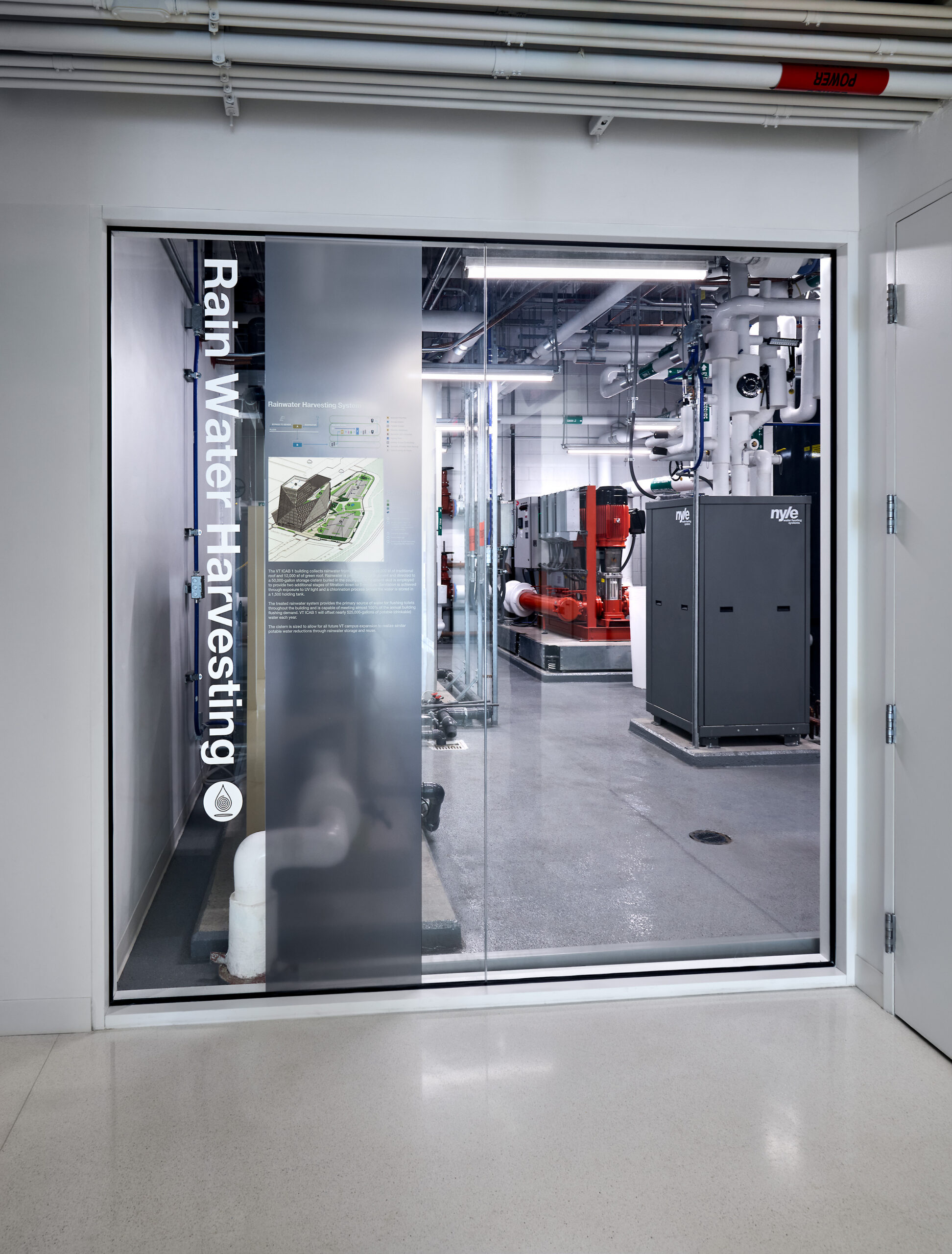
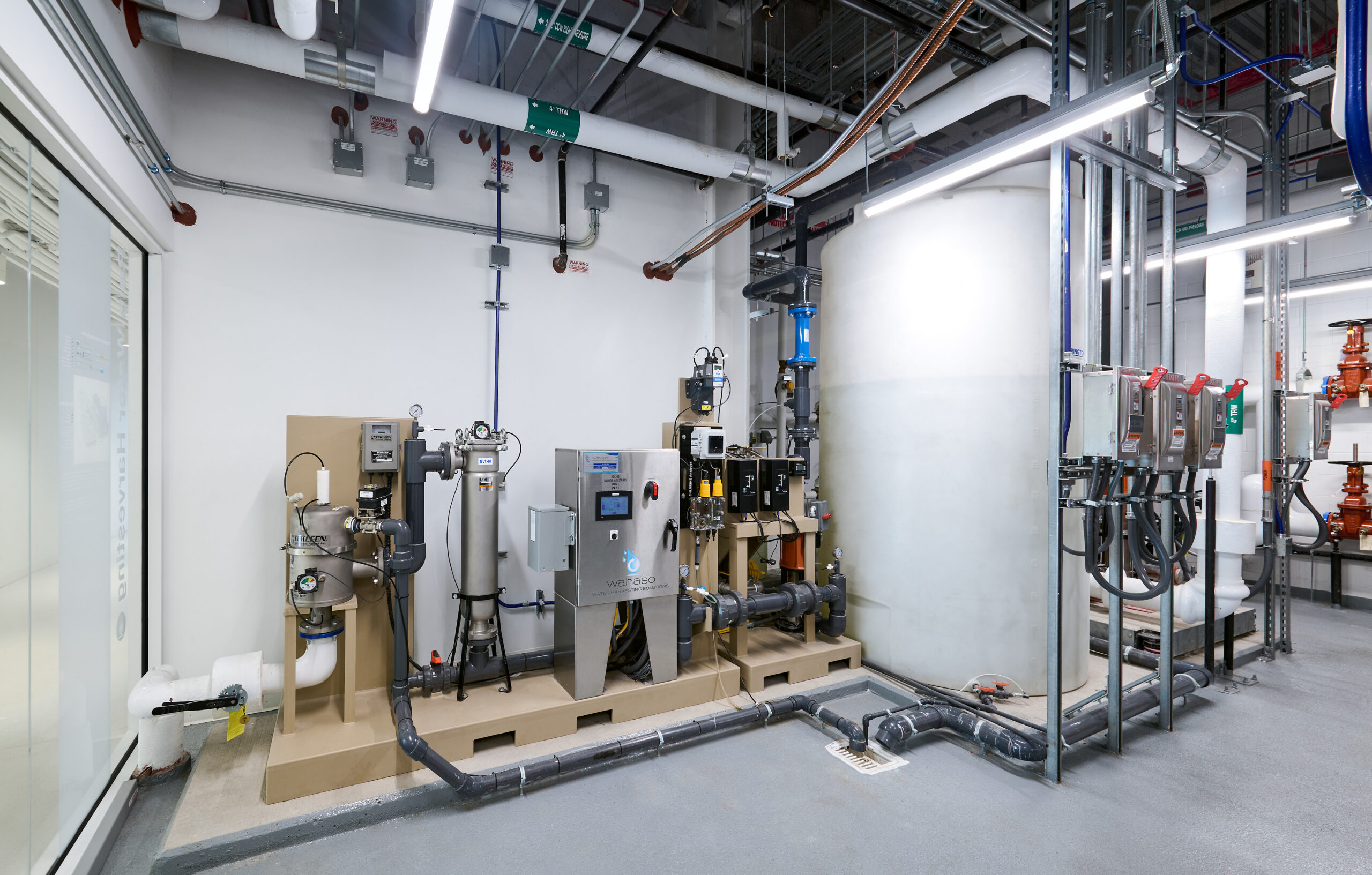
In this design, storm drain piping within the building was connected and routed toward the storage cistern. From the building cistern, the VT ICAB-1 pulls from that storage via a transfer pump skid that is planned to serve the ICAB-1 and two future buildings to be built on the site. The reclaimed rainwater harvesting system then filters the captured water through exposure to ultraviolet lights and a chlorination process (see Figures 4 and 5).
This water is then stored in another tank where it can be distributed via a booster pump to a building piping system as the primary source of water for flushing toilets and urinals. In the 2% scenario in which the cistern cannot supply the full demand of the toilets and urinals, a solenoid valve opens to allow domestic water through an indirect (air gap) connection into the storage tank to ensure enough water to meet the flushing demand.
Another sustainable plumbing design strategy implemented within the VT ICAB-1 facility is the use of water source heat pumps with storage tanks with electrical resistance (swing tanks) for domestic water heating to minimize electrical use on domestic water equipment. This approach also eliminates any use of natural gas for plumbing equipment. For the site, infrastructure has been placed for a future sanitary waste energy exchange system. When future buildings are constructed, the sanitary waste system will then be reused for heating, ventilation and air conditioning purposes.
A building’s plumbing systems are often the main user of single-pass water, with domestic lines bringing it in and sanitary taking it away. Implementing sustainable water use reduction strategies on plumbing systems is just one of many steps needed to ensure preservation of natural resources.
Showcasing the equipment that comprises these systems and making them a conversation piece or tour stop in buildings can go a long way in promoting sustainability practices. For example, the VT ICAB-1 facility allows visitors to view sustainability practices in action within the plumbing equipment room and rainwater harvesting system.