This case study explores a thermal energy network using geothermal, waste heat recovery and sewage heat recovery to support low-carbon heating and cooling.

In December 2024, National Grid submitted a proposal for the KeySpan Energy Delivery New York (KEDNY) thermal energy network to the New York Public Service Commission as part of the Utility Thermal Energy Network and Jobs Act (UTENJA). UTENJA aims to support thermal energy networks and promote new jobs in the decarbonization sector for residents.
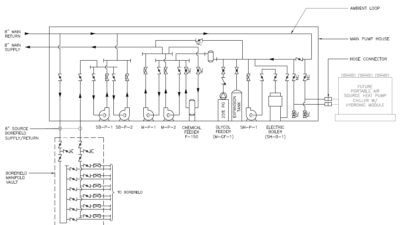
The project proposes to construct a one-pipe ambient loop to serve the heating and cooling loads for multiple commercial customers and a residential housing development in Brooklyn, New York. The ambient loop would be served by a variety of thermal energy sources, including a geothermal heat exchange borefield, waste heat recovery from a supermarket refrigerant system and sewage waste heat recovery. Due to limited space available for additional boreholes, sewage waste heat recovery was included to provide additional low-carbon heat injection and heat rejection.

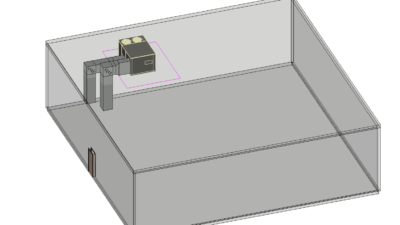
A closed-loop SHARC system was proposed to transfer heat between the ambient loop and wastewater from the residential building (see Figure 1). The residential building has two sanitary lines leaving the building, which would be combined into a 12,000-gallon on-site storage tank. The wastewater would be pumped from the holding tank through a skid that includes a macerator to grind the solids in the wastewater before entering a heat exchanger.
The heat exchanger transfers heat between the wastewater and ambient loop. After passing through the heat exchanger, wastewater would be directed back through the sanitary line, where it connects into the main sewer line in the street and is transported to the wastewater treatment facility.
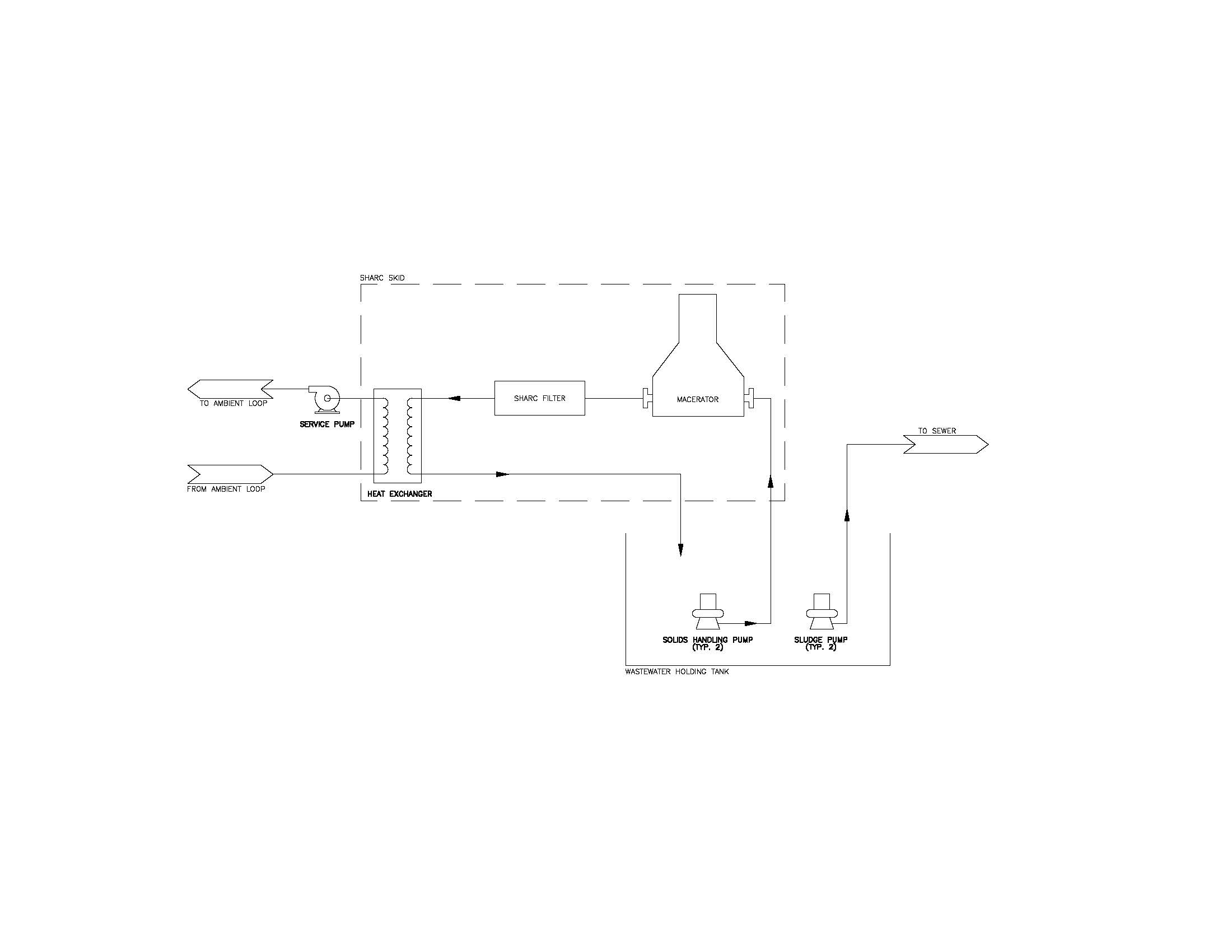
The ambient loop is designed to operate within a temperature range of 40°F to 80°F, and the temperature of the sanitary flow leaving the residential building was assumed to be 68°F. When the temperature of the sanitary flow is warmer than the ambient loop, heat is injected into the ambient loop from the wastewater. Conversely, when the temperature of the sanitary flow is cooler than the ambient loop, heat is rejected from the ambient loop into the wastewater.
The SHARC system’s capacity was limited by the available space inside the building to locate the equipment and the quantity of sanitary flow leaving the building. The project site is near an existing wastewater resource recovery facility and had considered the possibility of using this larger wastewater source.
However, this option was ultimately discarded due to the length of distribution piping required to connect to the system and the need to cross a major throughfare within the area. This option would also require coordination and approval from the New York Department of Environmental Protection, as they owned the wastewater infrastructure in question.