Advertisement
FREE subscription
Email
Print
Reprint
Learn RSS

Hitting the Mark: A Primer on Fire Pumps

By Lisa Bossert, P.E., Office Manager Schirmer Engineering, Charlotte, N.C. -- Consulting-Specifying Engineer, 4/1/2001

Water-based fire-suppression systems rely on an adequate water supply for proper operation, and fire pumps are often required to increase available water pressure. Engineers should always consider the following basic issues when writing specifications.

Demand and Supply

1. Sprinkler- and standpipe-system water demand.

  • Verify that the system water demand is calculated back to the water-supply source. This considers the effects of elevation differences and includes all the friction losses due to the flow through pipes, fittings, valves and backflow-prevention devices.
  • Check that the system calculations include inside and outside hose allowances per National Fire Protection Association (NFPA) Standards 13 and 14.
  • Verify the minimum pressure required at the top of standpipes by the authority having jurisdiction (AHJ).
  • Include an acceptable safety factor in the water demand. Good engineering practice is to add 5 to 10 psi, while some AHJs require a 10-percent safety factor.

2. Water supply.

  • Make sure that a current water-flow test was performed and compare it to past tests to determine if the water supply has experienced any major degradations.
  • Verify that the water-flow test results include adjustments for seasonal fluctuations.
Specifying the proper pump

3. Pump selection.

  • Check NFPA 20 for minimum pipe diameters and limitations for suction pipe and valves.
  • Verify that the combined pump and water-supply discharge pressures do not exceed the maximum pressure ratings and listings of system components.
  • Verify that the selected pump meets the pressure requirements for 0-percent, 100-percent and 150-percent flow, as required by NFPA 20.

4. Pump-driver selection.

  • Ensure that the electrical service is able to provide the appropriate start-up voltage for the selected controller, if an electric-motor-driven pump is specified.
  • Coordinate with the project electrical engineer, utility company and controller vendors.
  • Provide a reliable secondary power source and listed automatic transfer switch, if required, that is compatible with the specified electric controller.
  • Provide containment for fuel spills when diesel pump drivers are provided.
Accessorizing

5. Pump accessories.

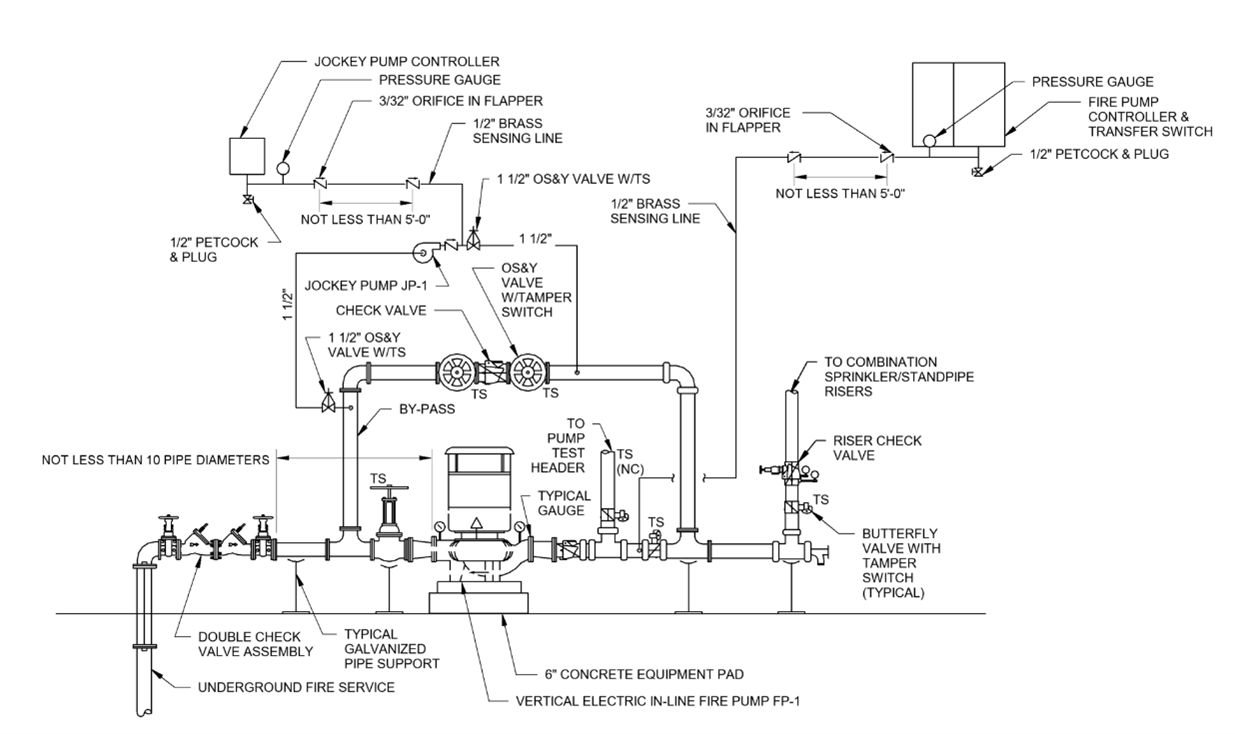
  • A jockey pump—also known as a pressure-maintenance pump—is required on all fire pumps to compensate for minor pressure fluctuations in system pressure.
  • A pressure-relief valve is required on the fire-pump discharge piping if the combined water supply's static pressure plus the fire pump's churn pressure exceeds 175 psig. A pump with a flat performance curve may also address this pressure issue.
  • A circulation relief valve is required for all electric fire pumps to prevent the pump from overheating when it is run with no discharge. The circulation relief valve should be piped to a floor drain.
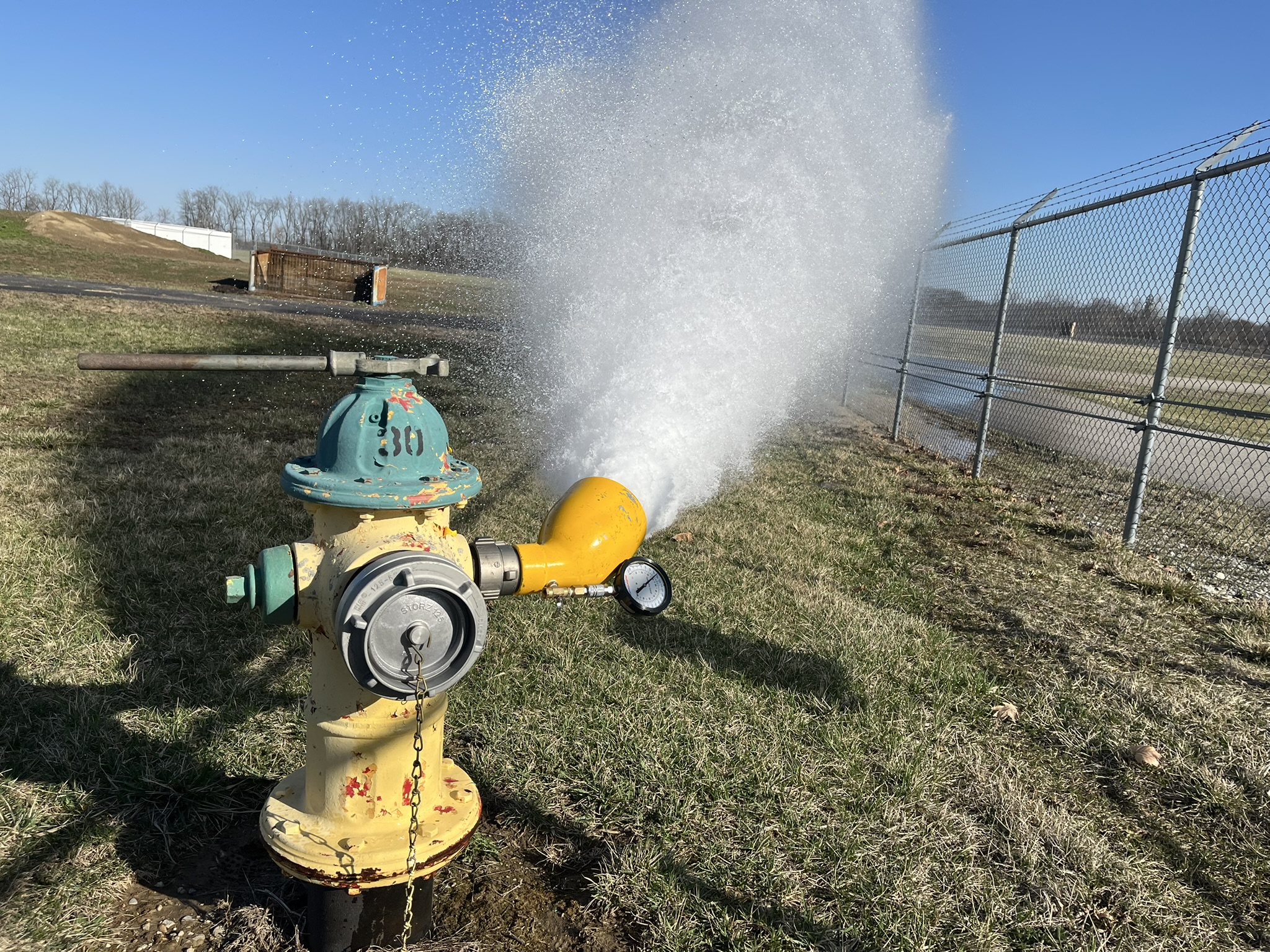
  • A fire-pump test header is required to verify the pump's performance over time. The test header should be located to allow for the connection of test hoses and discharge of water to an area that will not cause property damage.
Benefits of an informed decision

The consequences of improper specification may not be determined until the fire-pump acceptance test, which can result in costly change orders and installation delays. Therefore, specifications should only be written by qualified persons who understand all of the design considerations.

 Sidebar

Five Steps to a Fire Pump Specification

  • Water demand
  • Water supply
  • Pump selection
  • Pump-driver selection
  • Pump accessories
Email
Print
Reprint
Learn RSS

Talkback

Related Content

Related Content


By This Author

There are no other articles written by this author.


SPONSORED LINKS

 
Advertisement
Sponsored Links

More Content

  • Blogs

Blogs


Sorry, no blogs are active for this topic.

» VIEW ALL BLOGS RSS

Advertisements


NEWSLETTERS
Plug in and get the latest CSE news, trends and industry updates delivered directly to your inbox!

Green Scene
CSE Codes & Standards
CSE NewsWatch
CSE Fire and Life Safety Solutions
CSE Business of Engineering Management Report
CSE Electrical Solutions
CSE HVAC Solutions
Pure Power
CSE Product Showcase
©2008 Reed Business Information, a division of Reed Elsevier Inc. All rights reserved.
Use of this Web site is subject to its Terms of Use | Privacy Policy
Please visit these other Reed Business sites

ADVERTISEMENT
You will be redirected to your destination in few seconds.