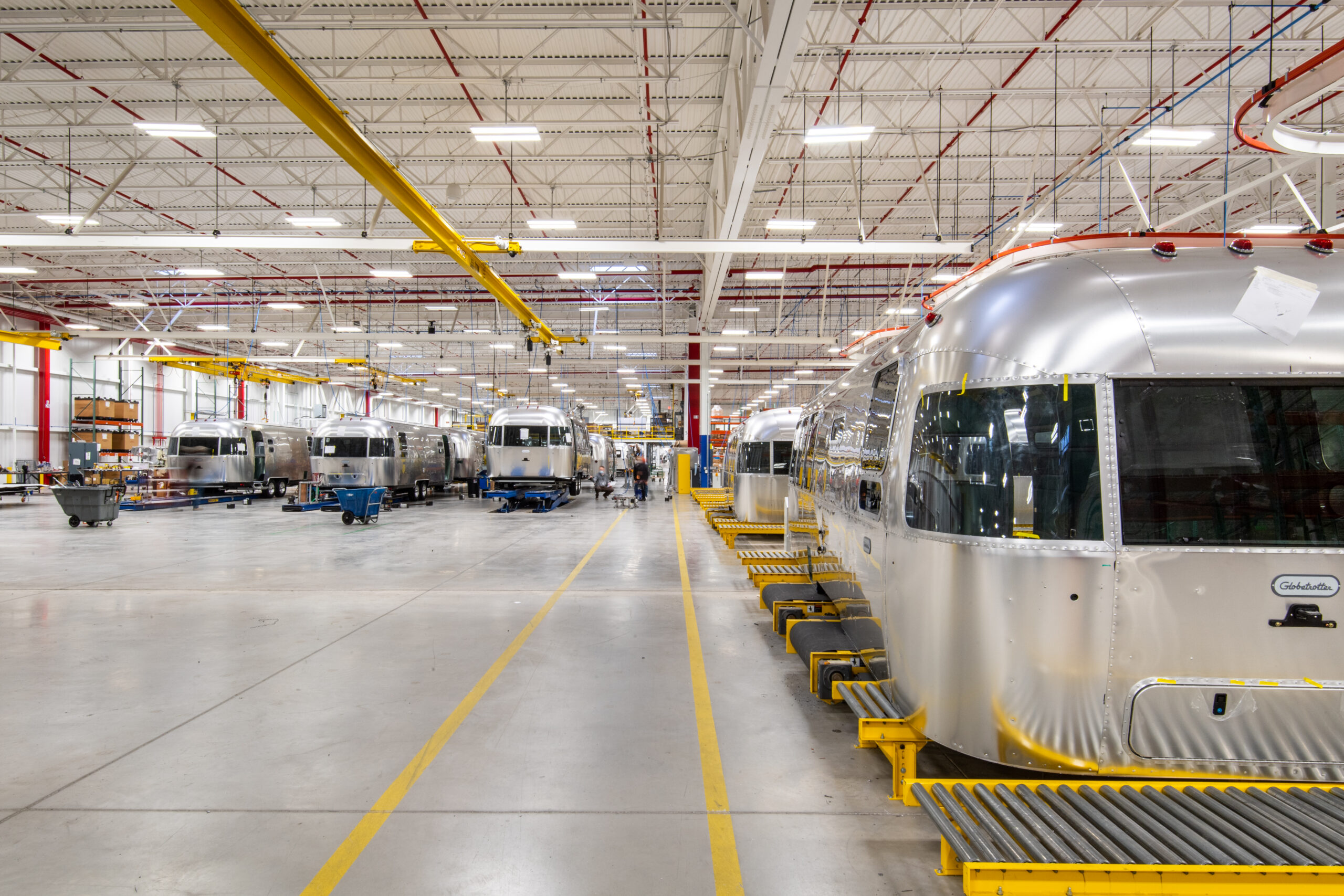
Industrial and manufacturing facilities are increasingly leveraging AI, automation and real-time analytics to improve operational efficiency.
Automation insights
- Predictive maintenance, AI analytics and real-time operational data are helping industrial facilities reduce downtime, optimize energy use and improve process reliability.
- As smart technologies proliferate, engineers are prioritizing integrated controls, robust data infrastructure and cybersecurity to support connected operations.
Respondents:
- Michael P. Walsh, PE, LEED AP, Senior Director of Industrial, IMEG, Cincinnati
- Jacob Weber, PE, Project Engineer, Affiliated Engineers Inc., Madison, Wisconsin
From your experience, what systems within industrial and manufacturing facilities are benefiting from automation that previously might not have?
Michael Walsh: Automation is expanding beyond traditional production lines into areas that were previously more manual or reactive. One key shift is from reactive to predictive maintenance, using data and analytics to anticipate equipment issues before they impact operations. Material handling and intralogistics systems are also becoming more automated, improving efficiency and reducing reliance on manual labor.
In addition, facilities are leveraging automation for real-time energy optimization and quality assurance, including defect detection that is driven by artificial intelligence (AI). There is also growing use of technology to support workforce safety and training, such as wearable monitoring systems and augmented reality tools, helping improve both operational performance and worker engagement.
How are digital twins and real-time operational analytics being used beyond design, particularly for predictive maintenance and process optimization?
Michael Walsh: While full digital twin implementation is still evolving in many industrial projects, we are seeing increased use of real-time operational analytics to support ongoing performance and maintenance. For example, monitoring building systems and energy usage allows owners to identify when systems are operating outside expected parameters, often an early indicator that maintenance or recommissioning is needed.
Looking ahead, these platforms are expected to play a larger role in predictive maintenance and process optimization by combining real-time data with historical trends. As adoption grows, closer integration between design models and operational data will help owners improve reliability, efficiency and overall facility performance.
Jacob Weber: Digital twins tied to real-time analytics are becoming increasingly useful after facility turnover. In industrial facilities, owners are using data such as equipment runtime, temperatures, humidities, vibration monitors, process monitoring, real-time location systems, alarms and utility metering to identify performance drift, determine process chokepoints and implement predictive maintenance strategies. This is valuable for both process and facility equipment. Small changes in facility equipment performance can increase energy usage and needlessly consume central utility plant capacity, while changes in process equipment performance can affect product quality and throughput. Live analytics supporting predictive maintenance can minimize unplanned downtime while reducing maintenance cost and staff burden. Understanding the owner’s data analytics goals upfront helps distinguish necessary data collection from items that may simply create more information to manage.
What smart devices are owners requesting and how are you meeting these needs?
Michael Walsh: Owners are increasingly requesting smart devices that provide real-time visibility into facility and process performance. This includes internet of things sensors that monitor equipment health, energy usage and environmental conditions, allowing operators to make more informed, data-driven decisions.
To meet these needs, engineers are designing systems that can integrate data from multiple sources into centralized dashboards, providing a single view of operations. A key challenge is ensuring interoperability between different platforms and vendors. To address this, some teams are leveraging off-site testing environments to validate system integration before deployment, reducing risk and improving reliability when systems are commissioned in the field.
How has the use of AI impacted the needs or processes in these facilities?
Michael Walsh: The use of AI is enabling facilities to process large volumes of data in real time, supporting both autonomous decision-making and more informed human oversight. In manufacturing environments, this is improving areas such as production output, quality assurance and process optimization, where AI can quickly identify patterns or anomalies that would be difficult to detect manually.
From a facility perspective, this drives the need for more robust data infrastructure, reliable connectivity and integration between systems. As AI adoption increases, engineers are also considering how building systems can support these data-driven operations while maintaining performance, flexibility and cybersecurity.
Jacob Weber: AI is impacting industrial and manufacturing facilities in several ways. Beyond driving market demand for semiconductors and other facility types, AI infrastructure buildout is also affecting the availability of utility infrastructure. Data centers and AI-related projects often rely on the same long-lead equipment needed for industrial and advanced manufacturing facilities, including major electrical equipment, generators, chillers, switchgear and controls components. This is contributing to greater use of early procurement packages and, in some cases, designing systems around what can realistically be procured within the project schedule. AI is also being implemented in facility analytics, predictive maintenance, automated inspection and process optimization. In data-intensive facilities, the importance of reliable data infrastructure, robust controls architecture and cybersecurity protocols continues to grow.
Cybersecurity and hacking are increasing concerns — are you seeing such concerns impacting your work on industrial and manufacturing facilities?
Michael Walsh: Cybersecurity is becoming an increasingly important consideration in industrial facility design, particularly as operational technology and information technology (IT) systems become more integrated. Some owners are already highly focused on these risks, while others require additional education on the potential impacts to business continuity and operations.
Engineers are taking a more proactive role by coordinating closely with IT and cybersecurity teams to incorporate best practices into system design. This includes strategies such as network segmentation, secure system architecture and controlled access to critical systems. By addressing cybersecurity early in the design process, teams can help reduce risk while supporting reliable, data-driven operations.