Engineers play a key role in reducing water use while preserving building performance, equipment reliability, public health and regulatory compliance.
Water insights
- Water restrictions can reduce cooling tower makeup water and affect heat rejection, chiller efficiency, water quality and overall mechanical system reliability, so engineers should focus on minimizing avoidable losses, monitoring makeup and blowdown, maintaining water treatment and avoiding deferred maintenance.
- Plumbing engineers can support conservation through high-efficiency fixtures, metering and connected technologies, leak detection, preventive maintenance and system designs that prevent stagnation, maintain safe hot-water temperatures and protect sanitation and code compliance.
In this conversation, two Matern Professional Engineering experts answer questions on water use reduction, designing with water restrictions in mind, makeup water and a host of other topics. Subject matter experts:
- Jesus Aldana, EI, CHD, HFDP, Matern Professional Engineering
- Aimee Davis, CPDT, Matern Professional Engineering
How can water restrictions affect mechanical systems that rely on water for cooling, heat rejection, humidification or process loads?

Jesus Aldana: Water restrictions can affect mechanical systems by limiting the water needed for cooling, heat rejection, humidification and process loads. When the available supply is reduced, systems can experience reduced cooling capacity, efficiency, water quality and equipment performance.
Take a cooling tower serving a water-cooled chiller plant, for instance. The cooling tower must provide continuous cooling to the facility through evaporation. Because evaporation continuously removes water from the system, makeup water must be added to maintain the required basin level and ensure reliable condenser water circulation.
If water restrictions limit makeup water availability, the cooling tower may not be able to maintain proper operation. This can reduce heat-rejection capacity, increase condenser-water temperatures, lower chiller efficiency and limit the facility’s cooling and dehumidification capacity.
Before reducing water needed for essential cooling, facilities should first address avoidable losses such as leaks, drift, overflow and excessive blowdown.
How can engineers help building/facility teams balance water conservation goals with code requirements, sanitation needs and system performance?

Aimee Davis: Engineers can help balance water conservation goals without sacrificing performance by specifying U.S. Environmental Protection Agency WaterSense-labeled or equivalent high-efficiency plumbing fixtures. One effective option is the use of metering faucets. Modern metering faucets have advanced beyond traditional push-button designs, with many models offering sensor activation and adjustable run-time settings that help reduce water consumption.
Where appropriate, connected fixtures can also help facility managers monitor water use, activation counts and operating trends through a mobile app or web-based dashboard. This information can help teams identify peak and low usage periods, detect unusual activity that may indicate leaks or misuse and make informed decisions about maintenance and fixture settings.
In public spaces, these fixtures can reduce unnecessary water use without compromising hand hygiene or code requirements.
What design or retrofit strategies can help facilities reduce cooling tower makeup water without compromising heat rejection, equipment efficiency or water-treatment performance?
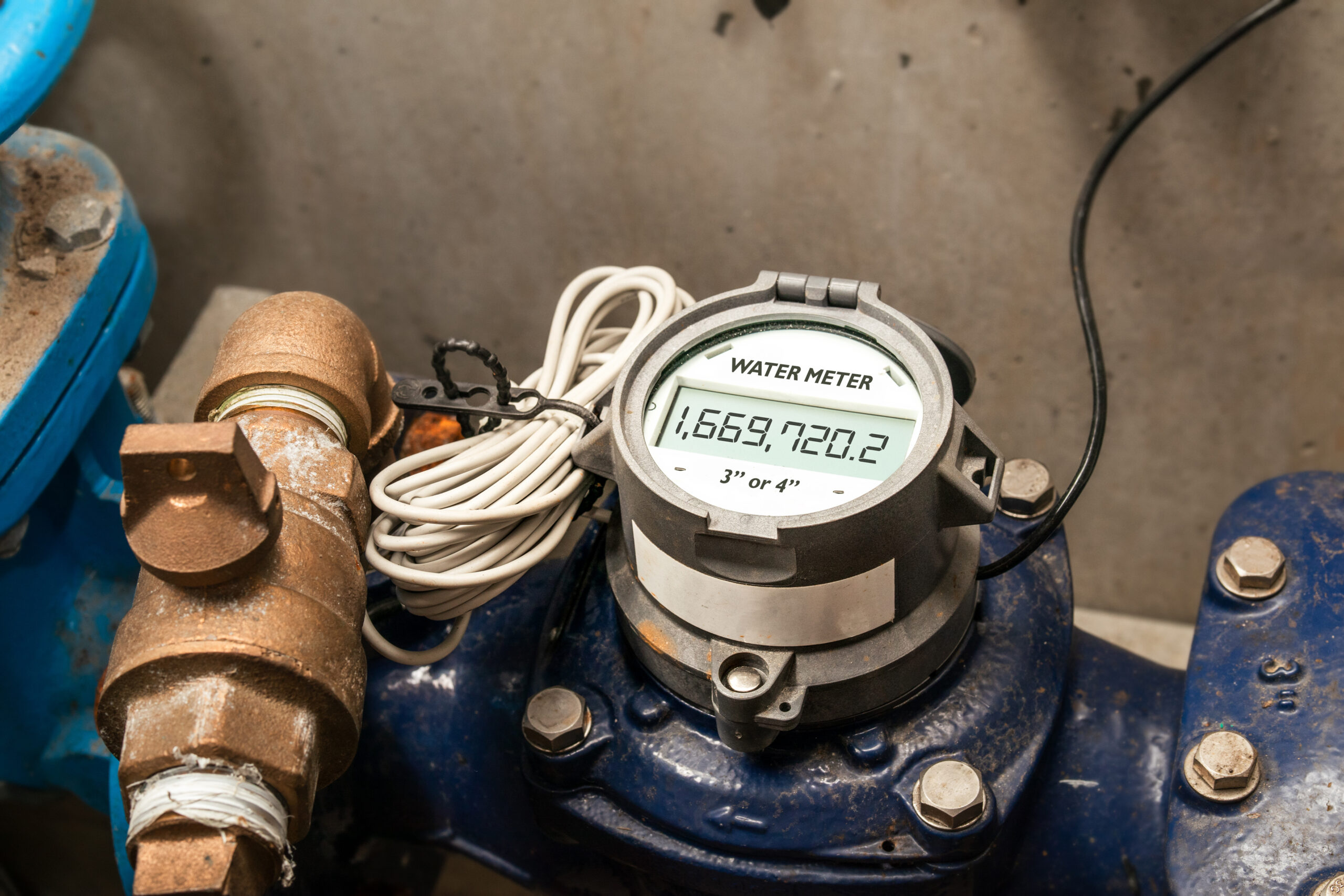
Jesus Aldana: Facilities can reduce cooling-tower makeup water by installing water-measuring devices and improving the controls used to manage makeup and blowdown. Separate flowmeters should be provided for each water line so that facility operators can determine how much water enters the system and how much is discharged. These measurements can also help identify leaks, basin overflow and malfunctioning makeup valves.
A conductivity sensor and automatic blowdown valve can also be used to control mineral concentration in the condenser-water system. As water evaporates, minerals remain in the circulating water, increasing conductivity. Once conductivity reaches the setpoint, the blowdown valve opens to discharge a controlled amount of concentrated water. This helps avoid unnecessary blowdown while maintaining the water chemistry needed for reliable operation.
How should cooling tower cycles of concentration, blowdown control, water treatment and maintenance schedules be evaluated during periods of water restriction?
Jesus Aldana: Maintenance schedules should be reviewed, but essential work should not be postponed solely to save water. The facility should continue activities needed to maintain clean tower basins, proper water distribution, biological control and adequate heat-transfer performance.
During periods of water restriction, cycles of concentration, blowdown, water treatment and maintenance should be reviewed together as a single operating strategy. Facilities may be able to increase cycles of concentration and reduce blowdown, but only within limits supported by the makeup water chemistry and treatment program.
Conductivity-based blowdown control, calibrated sensors and separate makeup and blowdown meters help prevent unnecessary water discharge. Deferring treatment or maintenance can lead to scale, corrosion, biological growth, reduced chiller efficiency and reliability issues.
Where does hidden water waste most commonly occur in nonresidential buildings and how can mechanical and plumbing engineers help facility teams identify those issues before they become compliance concerns?
Aimee Davis: Hidden water waste in nonresidential buildings commonly results from leaking plumbing fixtures, concealed or underground piping, malfunctioning flush valves, cooling towers, irrigation systems and aging mechanical equipment. Because these issues are typically out of sight, they can go undetected for extended periods, leading to substantial water loss and increased operating costs.
The most effective way to minimize hidden water waste is through routine system inspections, water-meter monitoring, leak-detection technology and a strong preventive-maintenance program. Tracking water-consumption trends and investigating unexpected increases can help facility teams identify problems early, reduce unnecessary water use, avoid costly repairs and maintain compliance with water-conservation and building-performance requirements.
How can engineers help owners avoid creating building-performance, health or maintenance problems while trying to comply with local water-use limits?
Aimee Davis: When facility operators push the system to the lowest limits to meet local water restrictions, they unintentionally invite low water quality. The reduced flow can lead to unintended water age, an ideal condition for dangerous pathogen growth.
Plumbing engineers can help reduce health and maintenance risks by designing hot-water systems that maintain safe water temperatures and proper hot-water recirculation. Storing water heaters at 140°F is a common practice to help reduce the risk of Legionella growth. The recirculation system should be properly balanced to support water quality and maintain consistent system temperatures.
Adequate flow rates help minimize water stagnation in the piping, reducing the potential for bacterial growth. In low-use situations, engineers can consider targeted, programmable flushing to limit water age while still only using the necessary water. These design practices, combined with proper system balancing and routine maintenance, help maintain water quality, improve system reliability and support compliance with applicable plumbing and public-health codes.