Strategies aimed at designing more sustainable and energy-efficient office buildings are covered in this Q&A.
Energy use insights
- Energy use and efficiency are increasingly driven by whole-building accountability, with owners relying on advanced metering, tenant engagement and performance tracking to manage energy use across both base building and tenant-controlled systems.
- On-site renewable strategies are expanding beyond rooftops, with building-integrated photovoltaics, parking canopies and emerging technologies such as geothermal and modular wind systems helping maximize clean energy generation on constrained sites.
Respondents:
- Phil Beadle, PE, Senior Mechanical Engineer, HDR, Phoenix
- Thomas J. Fields, PE, LEED AP, HBDP, EBCP, Associate Principal, MG Engineering, D.P.C., New York
- Niki Fox, PE, LEED AP, Principal, Syska Hennessy Group, New York
Describe a project in which electric vehicle charging stations were included. What were the challenges and solutions on this project?
Niki Fox: In a project for a new car dealership, challenges included design early on but with enough flexibility for evolving charging technology, types and levels.
What unusual systems or features are owners requesting to make their office facilities more efficient?
Niki Fox: Incorporating occupancy sensors into the heating, ventilation and air conditioning (HVAC) controls.
What types of sustainable features or concerns might you encounter for office buildings that you wouldn’t on other projects?
Thomas Fields: Building owners are facing new challenges when it comes to reducing energy use. For example, Local Law 97 in New York City looks at the entire building’s energy use, much of which is under tenant control. Owners need additional information and metering to help educate tenants on how to reduce overall usage.
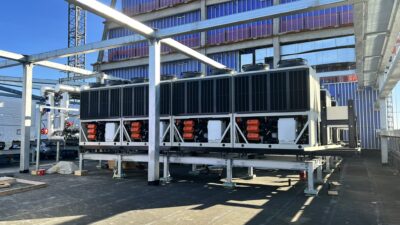
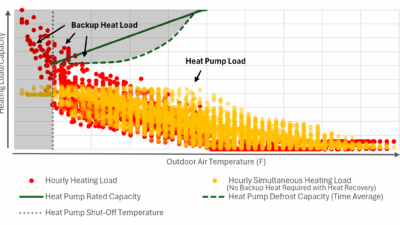
Niki Fox: Hot water heat pumps.
What types of renewable or alternative energy systems have you recently specified to provide power? This may include photovoltaics, wind turbines, etc. Describe the challenges and solutions.
Phil Beadle: While solar photovoltaic (PV) remains the most widely adopted form of on-site renewable energy, we are seeing increasingly creative and impactful applications that go beyond traditional rooftop installations. Building integrated PV is emerging as a compelling solution, where solar panels are seamlessly integrated into the building facade, potentially even mounted vertically on exterior walls. Although this orientation may result in a slight efficiency drop, this unlocks otherwise unused surface area, significantly boosting on-site generation potential and contributing to overall sustainability goals.
When installing in parking lots in the form of canopies or even ground-mount systems with highly reflective surfaces below, the use of bifacial panels has become the standard to capture both direct and reflective sunlight.
Looking ahead, we are closely monitoring development of project-scale deep geothermal systems for power generation, which promise consistent, low carbon energy output. Additionally, modular motionless wind turbine technologies are gaining traction. These systems offer substantial output-to-cost efficiency, while also being easier to incorporate into architectural designs.
Niki Fox: For PV, the challenge is right-sizing for load to prevent the need for batteries or putting power back on the grid.
What are some of the challenges or issues when designing for water use in office buildings?
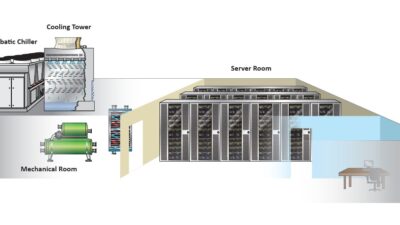
Niki Fox: Cooling tower water usage and treatment.
How has the demand for energy recovery technology influenced the design for these kinds of projects?
Phil Beadle: The multistep process for designing high performance and zero-energy buildings aims to minimize the amount of energy used. One specific workflow we integrate into our planning and design practices is identifying opportunities for utilizing “waste,” specifically thermal energy waste from building heat gains.
To maximize energy efficiency and reduce reliance on electricity or fossil fuels, it is essential to prioritize the reuse of thermal energy waste as State 1 in thermal energy planning. This approach involves:
• Using thermal energy waste streams including exhaust/relief air, envelope losses, wastewater embodied heat and heat gain from equipment, the facility and industrial processes.
• Prioritizing on-site energy recovery within the originating building using air- or water-side recovery devices.
• Exploring off-site energy recovery when on-site reuse is not feasible, by leveraging opportunities beyond the building’s property lines.
• Implementing thermal energy networks to transfer energy from “source” buildings to “sink” buildings.
• Optimizing design for temperature balance, land allocation energy efficiency and decarbonization potential.
High-performance design strategies have been shown to have an impact on the performance of the building and its occupants. What value-add items are you adding to these kinds of facilities to make the buildings perform at a higher and more efficient level?
Phil Beadle: On the passive side, it’s recommended to use data-driven natural ventilation rather than relying on the common, uncoordinated practice of occupants manually opening and closing windows. Data-driven natural ventilation uses climatic and environmental data including temperature, relative humidity, air quality index, wildfire smoke detection and even acoustics data from nearby highways or airports to determine if opening windows would truly enhance indoor environmental quality (IEQ). Unlike indoor air quality (IAQ), IEQ encompasses broader benefits such as thermal comfort, productivity and overall wellness.
When natural ventilation is not feasible due to extreme temperatures or humidity, active systems can support IAQ and occupant health. These include high-efficiency particulate filters, activated charcoal filtration, ultraviolet-C disinfection and bipolar ionization technologies.
These systems are increasingly being marketed and adopted across built environments to maintain healthy indoor conditions when passive strategies are insufficient.
Niki Fox: Dual temperature chiller plants and heat recovery systems.
What level of performance are you being asked to achieve, such as WELL Building Standards, LEED certification, net zero energy, Passive House or other guidelines? Describe a project and its goals, identifying the geographic location of the building.
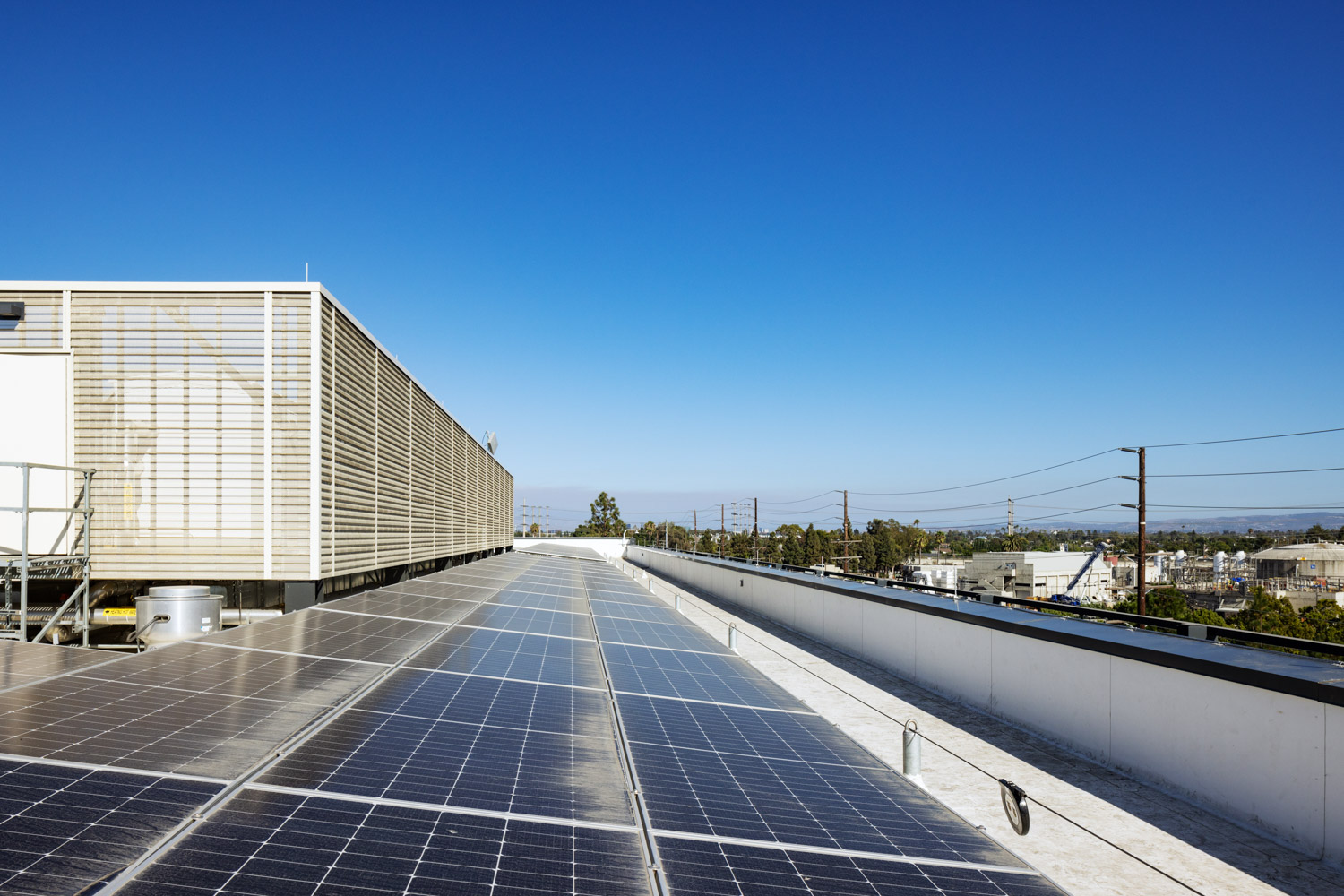
Phil Beadle: Orange County Sanitation District (OC San) Headquarters Building. For the new HQ building, one of the primary sustainable design goals that reflects OC San’s mission, vision and core values is to provide a zero-energy facility and pursue Zero Energy Certification, provided it can be accomplished responsibly and in a cost-effective manner.
Net zero design is achieved through a combination of biogas energy generation from the Central Power Generation System and through PV panels on the building roof and parking canopies. In the design, the biogas generation offsets 60% of the building’s energy use, while PV generates the remaining energy use.
The building’s predicted Energy Use Intensity is 33 due to using a high-performance facade with exterior shading on the south facades and by using very efficient HVAC and lighting systems.
Thomas Fields: We have been involved in many LEED and WELL rated projects. A recent example is an office fit-out project for a nonprofit end user in New York City. As part of their environmental, social and governance requirements, the project needed to be LEED Gold rated. Strategies to achieve this rating included enhanced commissioning, life-cycle impact reductions and energy savings 16% better than comparable baseline.
Niki Fox: LEED Gold.