Thoughtfully designed, task-oriented lighting controls in hospital rooms can support nurses’ nighttime workflows, reduce stress and balance clinical efficiency with patient comfort through intuitive, user-centered design.
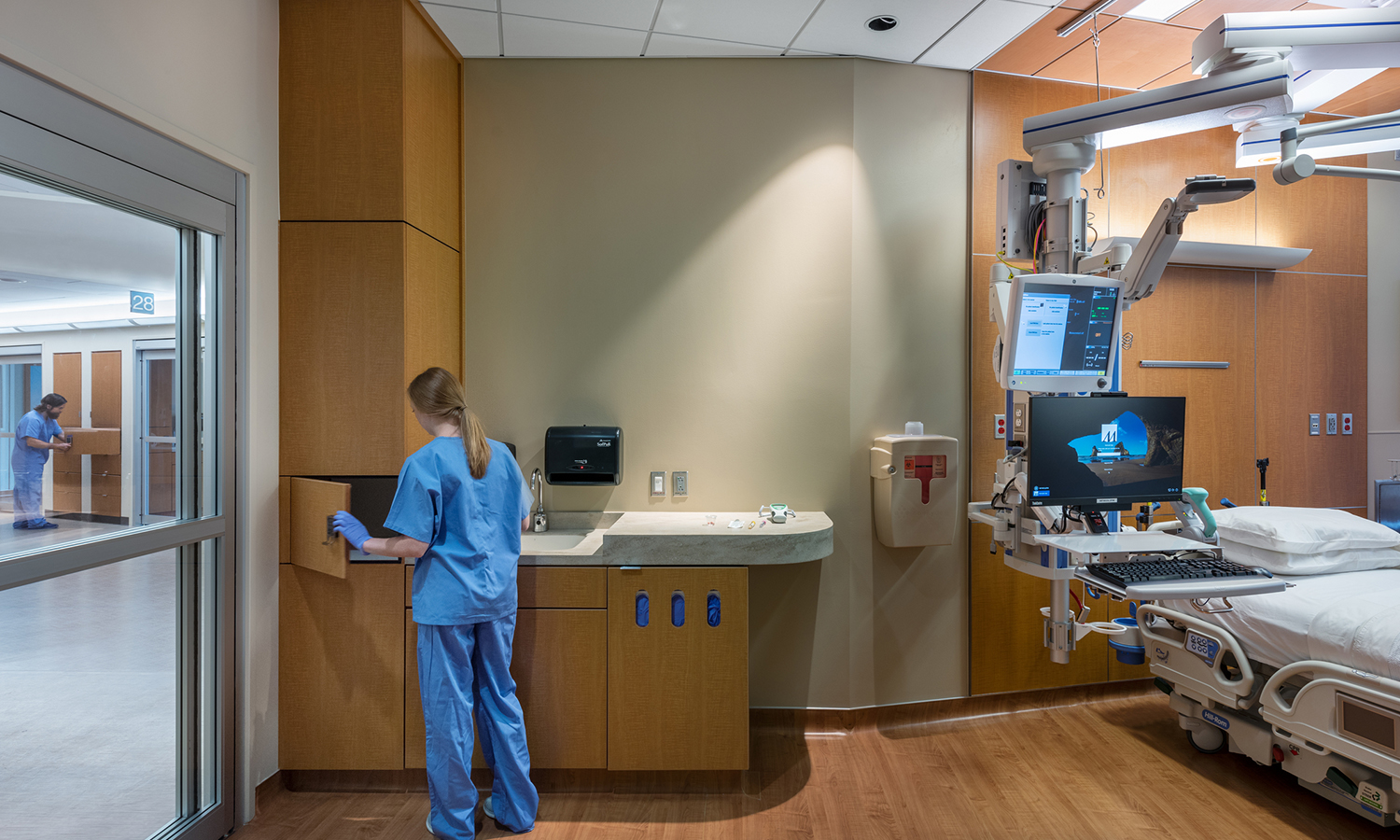
Lighting controls in patient rooms need to accommodate various users. Nursing staff have the most interaction with patients daily and thus would benefit greatly from lighting controls that enhance their ability to perform specific tasks efficiently. By the same token, nursing staff will likely experience the most stress from poor lighting conditions, such as inadequate lighting for performing necessary activities or turning on excessive light that may disrupt patients’ sleep.
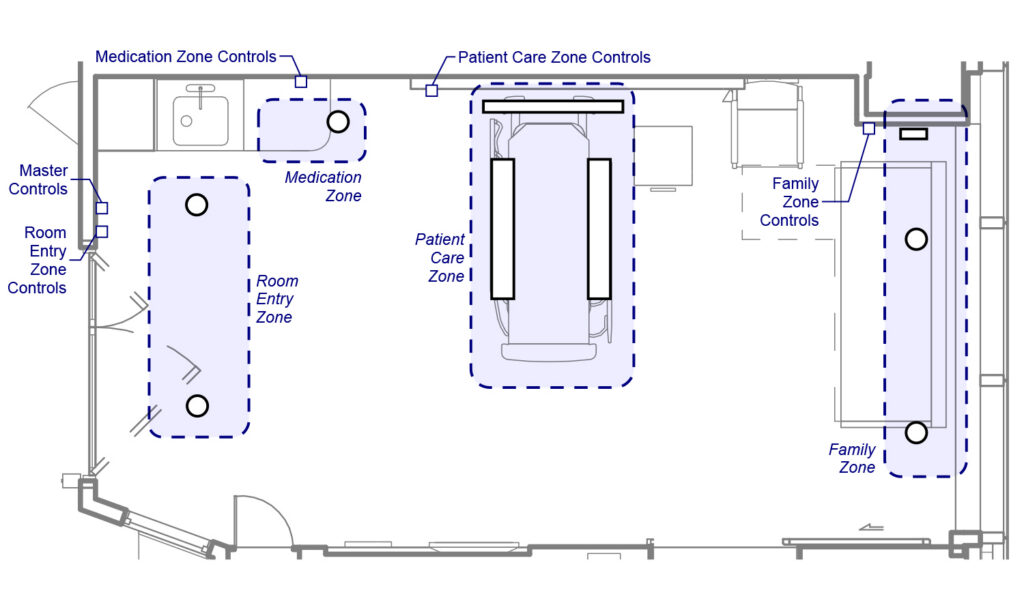
Houston Methodist’s Walter Tower is intentionally designed to enhance patient comfort as well as staff well-being and operational efficiency. Carefully designed task lighting and lighting controls enhance nursing staff’s ability to perform their job effectively. The following scenario considers how lighting controls may be optimized for nighttime nursing tasks in a typical patient room at this facility, where lighting is separately controlled at the room entry, nurse sink and patient bed for ambient and exam lighting.
In this scenario, client-specific requests and best-practice protocols required that the design automatically include several lighting control elements:
- An on/off override switch to turn on/off all lighting from one location at the door entry.
- Raise/lower control from the door entry and patient headwall for select control zones.
- Control of high light levels (100 foot-candle requirement) at the medication zone, separate from the work area, which can be adapted to user preferences in daytime/nighttime settings.
- Patient pillow speaker controls (see Figure 3; omitted on floor plan for simplicity).
Nursing activities can include a variety of tasks, such as checking vital signs, responding promptly to patient calls, assisting with daily living activities and monitoring the patient’s condition. At night, typical tasks present even greater challenges:
- General midnight patient checks.
- Medication administration requiring adequate illumination to check labels, documentation and patient wrist bands.
- Handwashing.
- Visually checking and readjusting the controls of various support machines.
- Responding to an emergency code blue, where all lighting is turned on at full brightness as quickly as possible.
Understanding the lighting control needs of nurses during this timeframe requires that the designer draw on their own health and/or client experiences to put themselves in the nurse’s position and consider how they may function in the space. Once the tasks are identified, the designer can assess how lighting controls can be integrated into the existing space. It can also be very useful to engage with a representative nursing team, to get their experience and wish list, to better inform the design.
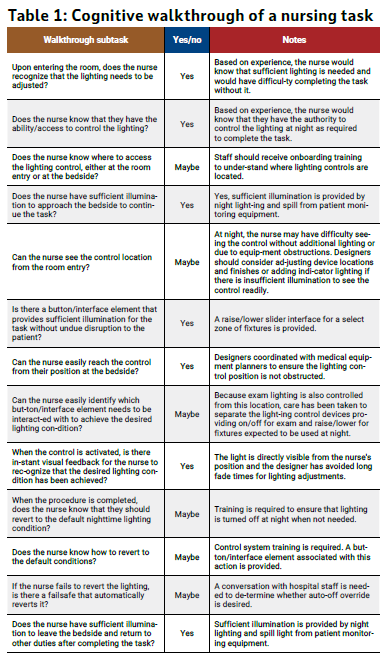
A cognitive walkthrough would then be employed to further analyze the nursing staff’s lighting control needs, along with potential pain points and inefficiencies. Table 1 lists questions that may be addressed based on the nursing staff’s typical tasks and potential ways to optimize lighting controls.
Enhancing usability of lighting controls
As lighting control technology continues to evolve, designers must prioritize intuitive controls that cater to diverse user needs. By keeping the unique needs of each user group top of mind throughout the design process, we can develop solutions that enhance usability without sacrificing functionality.
Ultimately, the goal is to ensure that lighting control systems empower occupants, promoting comfort, well-being and productivity in our built environments. As we move forward, collaboration among designers, manufacturers and end users will be key to achieving lighting solutions that are not just smart but genuinely enriching.