Smart microgrids and smart buildings are central to the transition toward sustainable and resilient communities.
Learning objectives
- Understand the key components and design strategies of smart buildings and smart microgrids, applying innovative research approaches to support multilayer control strategies for enhanced grid resilience in smart microgrid communities
- Understand how smart microgrid communities enhance energy efficiency, resilience and sustainability.
- Recognize relevant building codes and standards and regulatory challenges when deploying smart microgrids.
Smart microgrid insights
- A smart building leverages automation, digital integration and energy-efficient design to minimize emissions and optimize resource use, making it a central component of sustainable urban infrastructure.
- When interconnected through smart microgrids and intelligent energy systems, each smart building becomes part of a resilient network that advances collective energy efficiency and decarbonization goals.
Buildings are among the largest contributors to global carbon dioxide equivalent (CO2e) emissions, with heating, cooling and electricity use in residential and commercial structures accounting for a significant portion of greenhouse gases. Nearly 30% to 40% of global greenhouse gas emissions are caused by buildings.
The evolution of sustainable smart buildings and the transformation of connected communities rely heavily on robust electrical infrastructure. Unlike traditional approaches that primarily addressed automation, transportation and water systems, this article emphasizes the crucial role of electrical systems in shaping smart communities.

Key factors such as smart grids, distributed energy resources (DERs), power quality, demand response and compliance with safety standards form the foundation for developing intelligent and resilient neighborhoods (see Figure 2).
The transition of smart buildings into smart communities marks a significant advancement in sustainable urban development. A smart building is characterized by advanced automation, optimized energy performance and digital integration to enhance comfort and efficiency. When multiple such buildings interconnect through shared infrastructure, they form the basis of a smart microgrid community. This transition extends the benefits of individual optimization to collective resource management and systemic resilience.
Whereas a smart building reduces energy consumption within its own boundaries, a smart microgrid community achieves broader impact through coordinated load balancing and energy sharing. Microgrids facilitate this integration by enabling distributed generation, storage and demand-side flexibility across multiple buildings. Such coordinated systems enhance reliability and allow partial independence from the central power grid during disruptions.
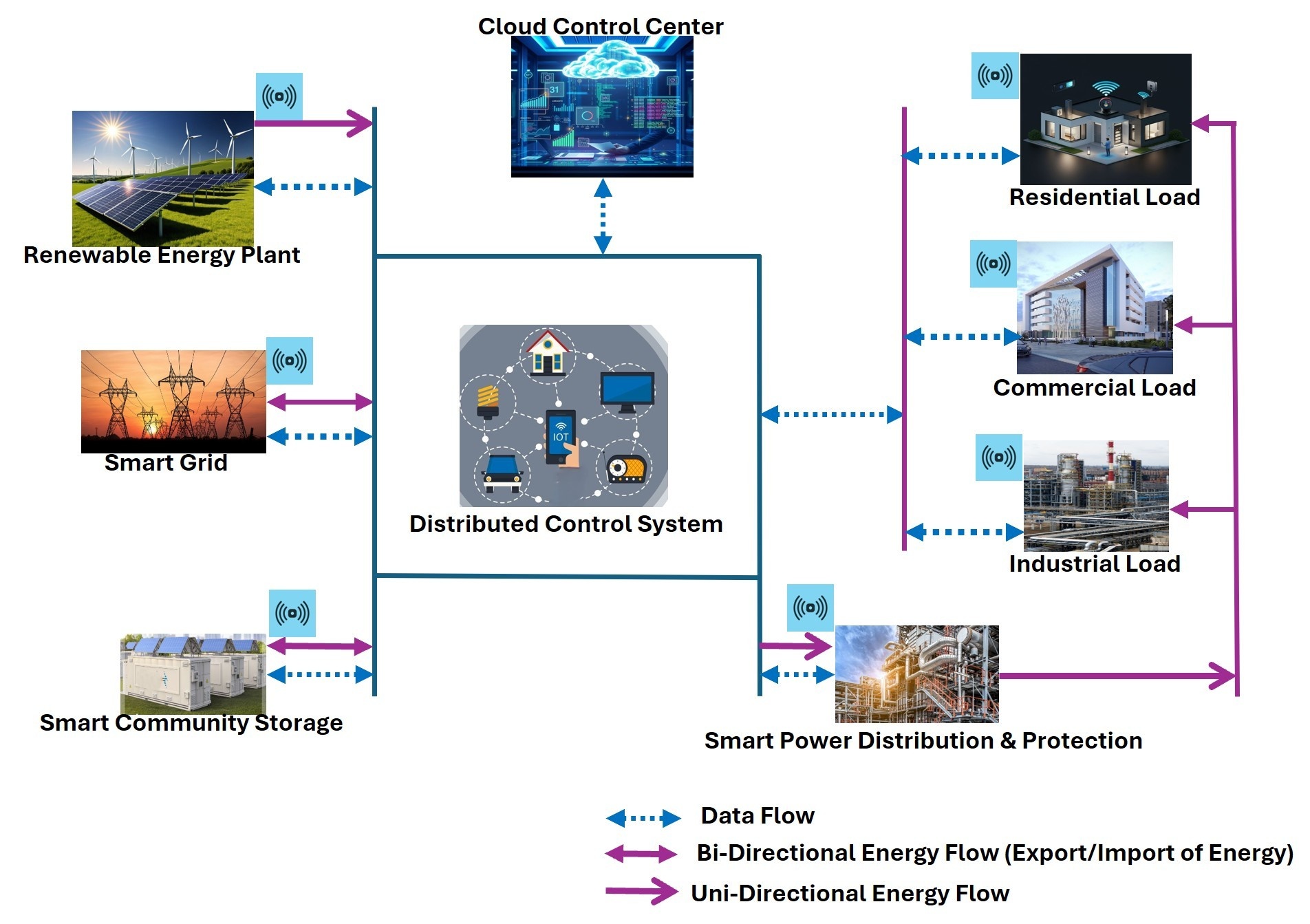
In contrast to isolated improvements, the community model generates synergies that amplify sustainability and cost-effectiveness. This paradigm supports renewable energy integration and accelerates pathways toward carbon neutrality. Ultimately, the convergence of smart buildings and microgrids redefines energy systems, infrastructure and urban resilience.
Microgrids have emerged as an effective solution for delivering electricity to remote or hard-to-reach regions where extending traditional power grid access is often costly and challenging. In developed countries, however, the focus has shifted toward grid-connected smart microgrids, which are increasingly being adopted as a replacement for conventional systems to ensure a reliable and uninterrupted electricity supply, even during faults or grid failures.
These advanced microgrids possess the ability to seamlessly disconnect from the central grid, when necessary, while integrating diverse distributed energy resources with intelligent storage solutions. Through coordination with smart distributed control systems, they can effectively adapt to consumer demands and enhance overall energy resilience.
Elements defining a smart microgrid
A host of systems might support a smart microgrid. They include:
Renewable energy plant: Renewable plants power smart microgrids with clean, decentralized electricity. These systems rely on sources like solar and wind to reduce carbon emissions and promote environmental sustainability. By generating energy locally, renewables enhance grid resilience and minimize transmission losses.
Smart microgrids use intelligent control systems to manage fluctuating supply and demand and renewable sources offer the flexibility needed for this dynamic balancing. While fossil fuel or hydrogen generators can still play an important role in microgrids, particularly in critical infrastructure such as health care facilities, military bases and water treatment plants. They are typically employed as backup or supplementary power sources to ensure reliability and continuous operation.
However, in the context of sustainable smart microgrids, the emphasis remains on maximizing renewable integration and minimizing dependence on carbon-intensive energy sources. As technology evolves, the partnership between smart microgrids and renewable energy will continue to shape a more efficient and sustainable energy future.
Smart power grid: Smart grids enable real-time monitoring, automated control and seamless communication between energy sources and consumers. By integrating advanced sensors and data analytics, smart grids optimize energy distribution and quickly respond to fluctuations in demand. This intelligent infrastructure supports the inclusion of renewable energy and storage systems, making microgrids more adaptable and sustainable. Smart grids also enhance reliability by detecting faults early and rerouting power to prevent outages. As energy systems evolve, the smart power grid stands as a backbone for resilient, decentralized and future-ready microgrid networks.
Smart grids are designed to operate across multiple scales, offering flexibility in deployment and functionality. At the local level, such as a campus, industrial park or residential neighborhood, smart microgrids can manage DER like solar panels, battery storage and electric vehicle chargers. These systems provide localized control, resilience during outages and opportunities for energy cost savings.
At the city level, smart grids coordinate energy flows across diverse districts, integrating utility-scale renewables, managing peak demand and supporting public infrastructure like transit and street lighting. Cities benefit from enhanced grid reliability, real-time fault detection and data-driven energy planning.
On a regional scale, smart grid networks link multiple utilities and jurisdictions, enabling wide-area load balancing, cross-border energy trading and coordinated emergency response. These systems require robust communication protocols, regulatory alignment and investment in digital infrastructure, but they lay the groundwork for a more resilient and sustainable energy ecosystem.
Integrated distributed generation, storage and intelligent control systems: Smart microgrids represent the foundation of sustainable, secure and cost-effective energy systems designed to meet the evolving demands of modern communities. Their architecture emphasizes energy independence and resilience through the integration of distributed renewable resources such as community-scale solar photovoltaic plants, rooftop photovoltaic (PV) systems, wind turbines and small-scale bioenergy units.
To address the intermittent nature of these renewable sources, advanced energy storage technologies, including batteries, supercapacitors and community-level aggregators are employed to balance supply and demand by storing excess energy during low-load periods and releasing it during peak hours. These systems also facilitate load shifting, enabling the redistribution of energy consumption from high-demand to low-demand periods, thereby optimizing grid performance and reducing operational costs.
Intelligent supervisory controls coordinate these processes, prevent over-discharging and extend the operational life of storage assets while maintaining system stability. Complementing these mechanisms, distributed generation, smart storage and adaptive control technologies collectively form the operational backbone of next generation microgrids.
Intelligent power distribution and protection systems ensure efficient energy flow, rapid fault detection and self-healing capabilities across decentralized networks, minimizing downtime and safeguarding infrastructure. Furthermore, the integration of electric vehicles (EVs) introduces a dynamic and flexible element to microgrid energy management.
While large-scale EV charging can pose new load challenges, EVs simultaneously function as distributed storage units through vehicle-to-grid (V2G) and grid-to-vehicle (G2V) technologies. Coordinated, machine learning (ML)-based charging and discharging strategies enhance demand response, support load shifting and maximize renewable energy use.
Together, these integrated systems transform conventional power networks into resilient, intelligent and sustainable energy ecosystems capable of supporting the energy transition toward low-carbon communities.
Distributed control system: Smart distributed control systems (SDCS) are pivotal to the evolution and resilience of smart microgrids. By enabling decentralized decision-making, SDCS allow each component of the microgrid such as solar panels, batteries and loads to operate autonomously while remaining harmonized with the overall grid objectives.
This architecture enhances fault tolerance, reduces latency in response times and ensures seamless integration of renewable energy sources. Real-time data analytics and adaptive control algorithms embedded in SDCS optimize energy flow, balance supply and demand and minimize operational costs. Moreover, their scalability and interoperability make them ideal for expanding microgrid networks across diverse geographic and infrastructural landscapes. In essence, SDCS transform smart microgrids from static energy systems into dynamic, intelligent ecosystems.
Cloud control center: Smart cloud control center with remote asset management and data analytics systems are essential to the efficient operation and scalability of smart microgrids. These technologies enable real-time monitoring and control of DER, ensuring optimal performance and rapid fault detection. By leveraging predictive analytics, operators can anticipate maintenance needs, reduce downtime and extend asset lifespans.
The integration of cloud-based platforms allows for seamless data aggregation across geographically dispersed assets, enhancing decision-making and operational transparency. Furthermore, advanced analytics empower microgrids to dynamically respond to changing energy demands and market conditions. Together, these systems transform smart microgrids into intelligent, adaptive networks capable of delivering reliable and sustainable energy.
Critical building blocks of a smart microgrid community
A smart microgrid community extends this concept by integrating smart buildings, renewable energy systems, energy storage devices and EVs into a coordinated framework. The objective is to ensure uninterrupted power supply even during natural disasters, reduce fossil fuel dependance and enhance grid resilience.
Recent reports in Center for Climate and Energy Solutions highlight that the United States has approximately 692 operational microgrids, contributing less than 0.3% of the nation’s electricity supply.
However, their installed capacity has witnessed steady growth of nearly 11% over the past four years, reflecting an increasing interest in decentralized energy systems. Despite this progress, large scale deployment of microgrids remains constrained by regulatory ambiguities, particularly concerning the roles, rights and responsibilities of microgrid operators in relation to consumers and central utilities. Financial barriers, legal uncertainties and governance challenges slow adoption, making policy reforms essential.
Beyond these structural challenges, ensuring consumer trust and satisfaction is equally critical for the successful integration of smart microgrids. To address these barriers, further research and policy innovation are needed, especially in exploring public private partnership models. Collaborative ownership frameworks, combining state support with private sector investment, offer a promising pathway to accelerate microgrid deployment and strengthen community level energy resilience.
To address the barriers hindering large-scale deployment of smart microgrids, there is a need for more focused research and innovative business model development. The development of future models for smart microgrid deployment must be guided by a set of critical attributes to ensure long-term viability and scalability. Key considerations include the incorporation of smart, energy-efficient building designs, along with the creation of sustainable, secure and cost-effective energy systems.
In addition, advanced frameworks should facilitate peer-to-peer (P2P) energy trading via internet of energy (IoE), enabling decentralized, transparent exchanges among prosumers. Artificial intelligence (AI) and ML techniques are essential for optimized scheduling, predictive maintenance and adaptive control of distributed resources. The effective integration of electric vehicles within microgrids, supported by vehicle-to-grid technologies, further strengthens flexibility and resilience. Demand-side management (DSM) strategies at the community level help align consumption with renewable generation. Finally, robust multilayered control strategies must be developed to enhance system reliability, stability and resilience under varying conditions.
Energy-efficient smart building designs: Smart buildings serve as the cornerstone of a smart microgrid community, providing the essential platform for integrating advanced energy management practices. Their design focuses on achieving optimal energy use through architectural efficiency, intelligent control and adaptive load management. Beyond conventional U.S. Green Building Council LEED-compliant systems, next-generation smart buildings increasingly adopt Passive House and Net Zero Energy Building principles that emphasize low energy consumption, superior thermal insulation and on-site renewable generation to achieve carbon neutrality.
Energy efficiency is further enhanced through intelligent lighting systems, energy-efficient appliances and adaptive heating, ventilation and air conditioning technologies that respond dynamically to occupancy and environmental conditions.
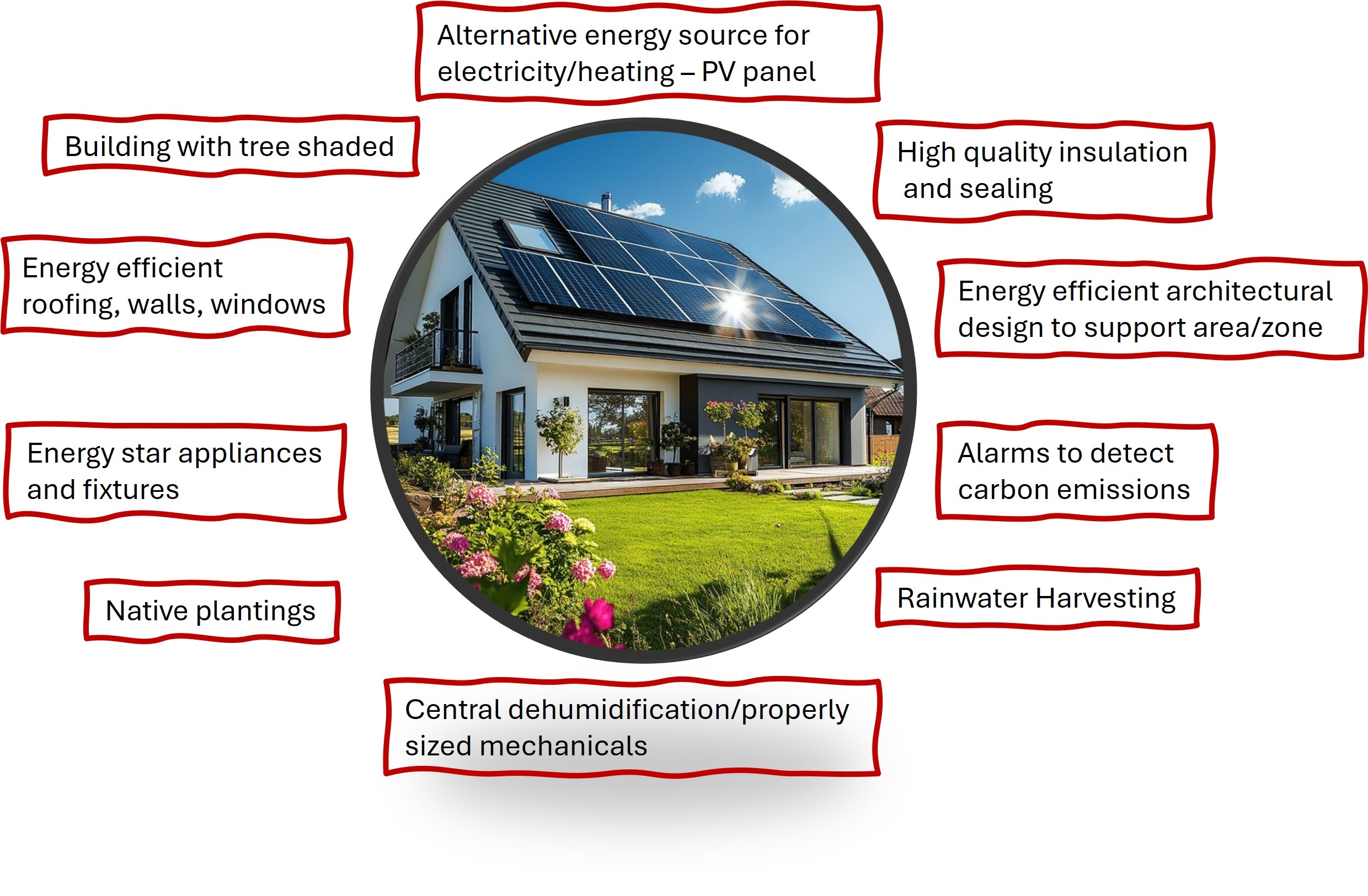
To monitor and optimize resource use, smart meters track electricity, water and fuel consumption in real time, empowering end-users to actively participate in demand-side management. A critical component of this optimization is load scheduling, which aligns the building’s energy requirements with renewable generation and storage availability.
Furthermore, emerging fault-managed direct current power distribution architectures improve safety, reduce conversion losses and enable seamless integration of renewable and storage systems within building-level microgrids. Through the deployment of integrated energy management systems, both residential and commercial buildings can coordinate their demand with distributed generation sources, reducing peak loads, improving grid stability and minimizing costs.
Importantly, the design of energy-efficient smart buildings must account for local climatic and weather conditions, as these factors directly influence demand profiles, renewable generation potential and the overall reliability of the microgrid system.
Sustainable, secure and cost-effective energy systems: The design of a smart microgrid community is centered on achieving sustainability, security and economic efficiency through advanced integration of distributed renewable energy resources. These systems typically combine community-scale solar PV plants, rooftop PV installations, wind turbines and small-scale bioenergy units to supply clean, decentralized power. By generating electricity locally, the microgrid minimizes transmission losses and reduces the carbon footprint associated with centralized fossil-fuel generation.
To address the variable nature of renewable generation, modern smart microgrids incorporate multitiered energy storage systems comprising of lithium-ion batteries, flow batteries and supercapacitors alongside demand response programs and intelligent load management algorithms. These technologies allow excess renewable energy produced during low-demand or high-generation periods to be stored and later dispatched during demand peaks, which traditionally would have required fossil fuel backup. Advanced control systems employ predictive analytics to forecast consumption patterns and weather conditions, ensuring real-time balancing between supply and demand while preventing deep battery discharge and extending storage life.
By enabling flexible load shifting, integrating automated DSM and maintaining reserve capacity through energy storage rather than conventional generators, smart microgrids significantly reduce dependence on fossil fuels. This transition enhances energy security by insulating communities from fuel price volatility and supply disruptions.
Furthermore, the modular design of distributed renewable and storage assets supports scalable deployment, lowers long-term operational costs and promotes resilience during grid outages or natural disasters.
In essence, sustainable smart microgrids represent a paradigm shift from reactive, fossil-dependent power systems to proactive, renewable-driven energy networks that are cleaner, more secure and economically viable for modern communities.
Peer-to-peer energy trading and IoE: One of the defining features of smart microgrid communities is P2P energy trading. Unlike conventional grids where electricity flows unidirectionally from central plants to consumers, smart microgrids allow prosumers to exchange energy with one another. The IoE framework facilitates this trading by linking end-users through digital platforms that match energy supply with demand in real time. P2P trading promotes decentralized market structures, encourages consumer participation and increases renewable energy use within the community.
Furthermore, IoE-enabled platforms allow peak load shifting, where excess demand can be redistributed across users or shifted to nonpeak periods. This mechanism reduces stress on the grid and optimizes cost-efficiency for consumers.
The implementation of P2P energy trading and IoE platforms varies significantly across residential, commercial and industrial settings due to differences in energy usage patterns, infrastructure and regulatory constraints. In residential communities, P2P energy trading empowers homeowners with solar panels or battery storage to sell excess energy to neighbors. IoE platforms facilitate this exchange by matching supply and demand in real time, often through mobile apps or smart meters. These systems promote energy independence, reduce utility costs and encourage community engagement. However, scalability and regulatory approval can be challenging, especially in areas with strict utility monopolies or limited grid flexibility.
Commercial facilities, such as office buildings, shopping centers or campuses typically have higher and more predictable energy demands. P2P trading in these environments can involve coordinated energy sharing between tenants or across multiple buildings owned by the same entity. IoE platforms can optimize load balancing, demand response and peak shaving, especially when integrated with building automation systems. These setups often benefit from economies of scale and more favorable regulatory conditions for energy management.
Industrial sites consume large amounts of energy and often operate critical equipment with strict reliability requirements. P2P trading here may involve exchanging energy between facilities within an industrial park or between production and storage units. IoE platforms can support predictive maintenance, real-time fault detection and dynamic load scheduling. Due to complexity and scale, industrial applications require robust cybersecurity, advanced analytics and close coordination with grid operators to ensure compliance and reliability.
AI for scheduling and control: The complexity of managing DER, dynamic demand and P2P transactions require sophisticated control mechanisms. AI and ML techniques are increasingly adopted to improve scheduling, optimization and predictive maintenance in smart microgrid communities. Distributed AI algorithms enable reliable electricity scheduling by forecasting demand, predicting renewable generation and optimizing storage use.
Reinforcement learning approaches are particularly suited for adaptive control under uncertain and dynamic conditions. Multiagent systems further enhance communitywide optimization by enabling each building or energy node to make autonomous decisions while cooperating with the larger system.
To fully realize the potential of AI and ML in smart microgrid communities, open data sharing is essential. Access to high-quality, real-time data from diverse sources such as energy consumption patterns, weather forecasts, grid performance metrics and DER outputs, enables AI models to learn more accurately, adapt faster and optimize decisions across the network.
Open data frameworks promote interoperability between systems, reduce redundancy and accelerate innovation by allowing researchers, developers and utilities to collaborate on shared datasets. Moreover, transparent data exchange supports community engagement and trust, especially when residents or stakeholders participate in energy markets or demand response programs. As AI becomes more embedded in energy infrastructure, policies and platforms that encourage secure, privacy-conscious data sharing will be critical to building resilient, intelligent and equitable microgrid ecosystems.
Integration of EVs in microgrids: EVs represent both a challenge and an opportunity for smart microgrid communities. On one hand, large-scale EV charging significantly increases demand, potentially destabilizing the system. On the other hand, EVs act as distributed storage devices that can provide grid support through V2G technology.
Uncoordinated EV charging could lead to severe peak loads and compromise grid quality. Therefore, ML-based coordinated charging strategies are essential to optimize charging times, prevent congestion and ensure equitable use of grid resources. Moreover, EVs can be leveraged to store excess renewable energy during periods of surplus generation and discharge it back to the grid during shortages. This dual functionality is known as G2V and V2G, which enhances resilience, reduces peak demand and increases renewable penetration (see Figure 4).
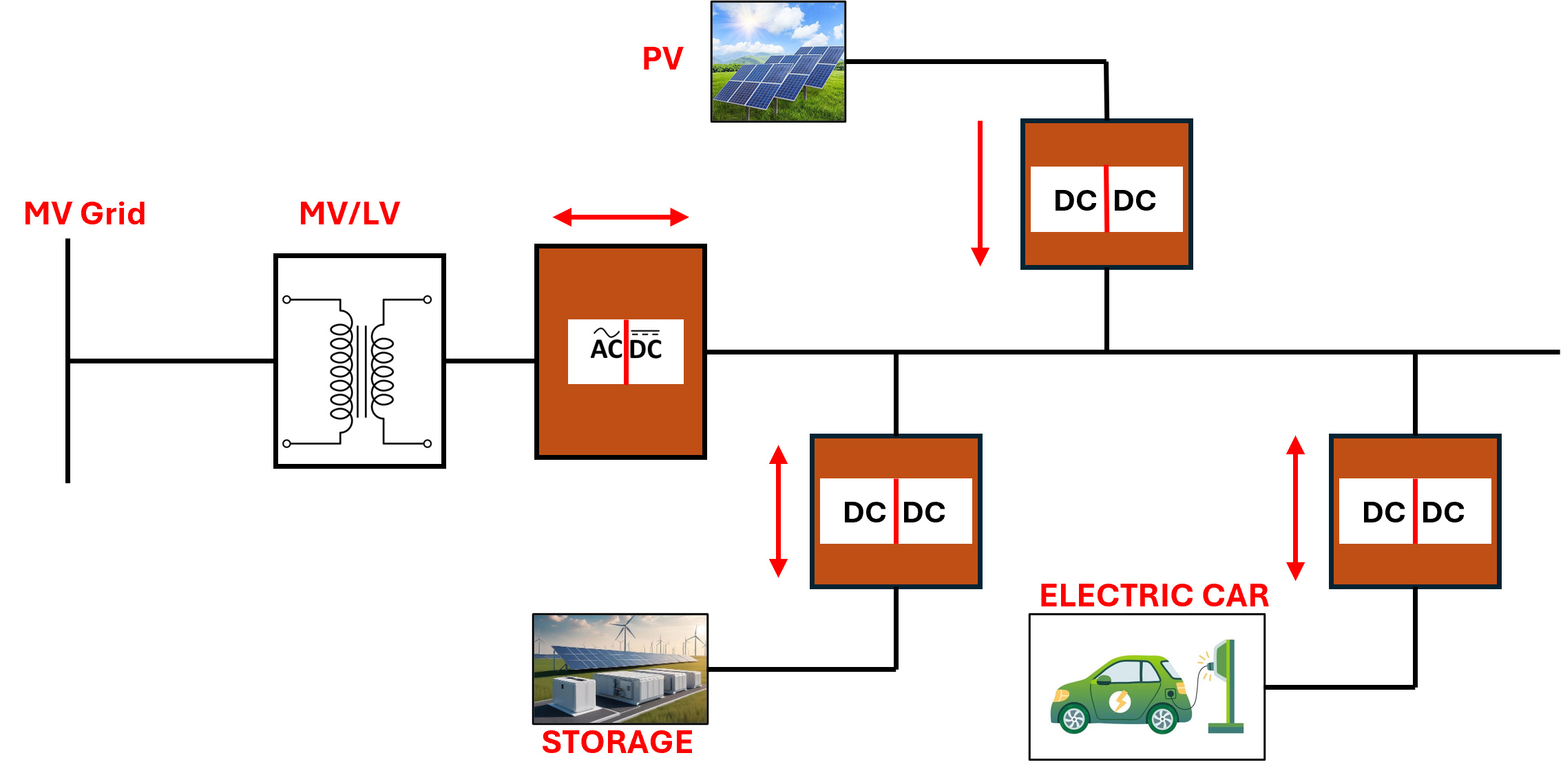
DSM in community microgrids: DSM plays a critical role in ensuring that the community microgrid remains balanced and efficient. DSM strategies include smart appliance scheduling, energy-efficient device deployment and active consumer participation. Residential schedulers act as intermediaries between smart meters and the microgrid central controller, transmitting consumption data and executing optimized load schedules.
DSM not only ensures operational efficiency but also maximizes the benefits of renewable integration by aligning demand with generation patterns. Incentives provided through smart energy cards encourage end-users to adopt energy-saving practices and participate actively in community-level optimization.
Control strategies for system resilience: A resilient smart microgrid relies on a multilayer control architecture that integrates data analytics, AI and user interaction to ensure reliable and efficient energy management. The system operates through four interdependent layers — user interface, energy forecast analytics, energy management controller and operation layer — each contributing to dynamic stability and adaptability (see Figure 5).
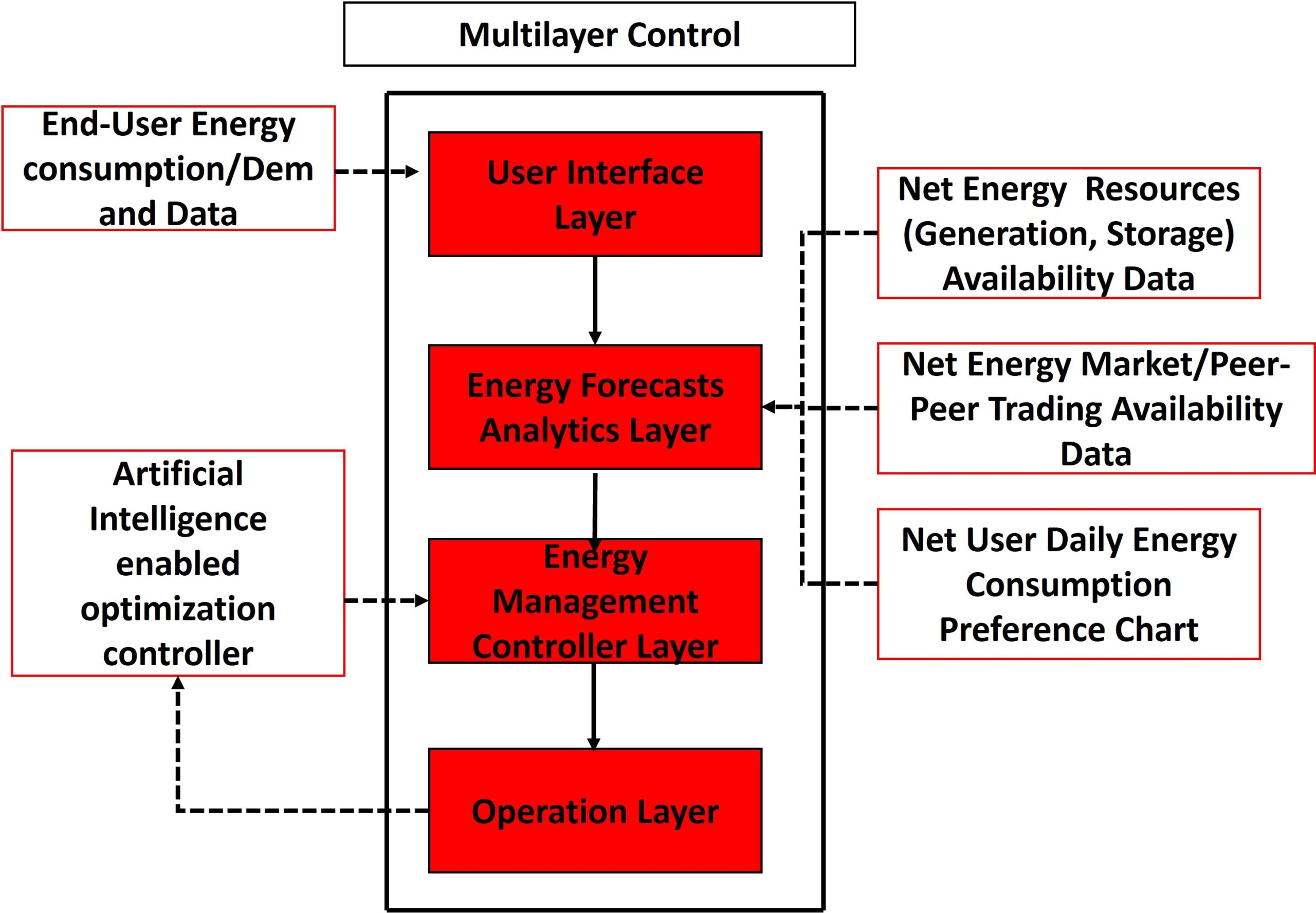
The user interface layer collects end-user energy consumption and demand data, facilitating real-time communication between consumers and the grid. The energy forecast analytics layer processes these inputs along with generation, storage and market availability data to predict demand patterns and renewable generation fluctuations. The energy management controller layer serves as the decision-making core, employing AI-enabled optimization algorithms to balance load, dispatch energy resources and coordinate P2P energy trading.
Finally, the operation layer executes control actions, ensuring continuous system operation even during disturbances or peak demand periods. This multilayer approach enhances grid resilience by enabling predictive control, adaptive load management and seamless integration of renewable resources, minimizing the need for fossil-fuel-based backup systems while maintaining energy reliability and sustainability.
Building codes, standards for smart microgrid communities
Building on these critical attributes, it is important to highlight that, in the United States, there is currently no single unified electrical code specifically dedicated to smart buildings or smart microgrid communities. Instead, the regulatory and technical landscape comprises a combination of established electrical codes, safety standards and interoperability frameworks that collectively govern these emerging technologies.
Smart buildings must comply with NFPA 70: National Electrical Code (NEC), which provides detailed requirements for electrical safety, wiring methods and load management. Key articles include Article 110 explains requirements for electrical installations, Article 300 describes wiring methods, Article 310 covers conductors for general wiring and Article 220 details load calculations. Additionally, Article 645 addresses information technology equipment while Article 760 outlines standards for fire alarm systems.
Complementing these safety standards, International Energy Conservation Code and ASHRAE Standard 90.1: Energy Standard for Buildings Except Low-Rise Residential Buildings establish energy efficiency benchmarks and automation guidelines essential to optimizing smart building performance. Certifications from UL further ensure the reliability and safety of devices within these environments.
Similarly, smart microgrids are regulated through a combination of IEEE 1547: Interconnection and Interoperability of Distributed Energy Resources with Associated Electric Power Systems Interfaces, which standardizes the interconnection of DERs and relevant articles of NEC. These include Article 690, which covers solar PV systems; Article 705, which addresses interconnected power sources; and Article 706, which outlines requirements for energy storage systems.
Equipment must meet rigorous safety standards such as UL 1741 for inverters and UL 9540A for energy storage systems to guarantee safe operation within microgrid architectures. Moreover, oversight by the Federal Energy Regulatory Commission and the North American Electric Reliability Corp. (NERC) ensures that grid-connected microgrids maintain system reliability, stability and compliance with cybersecurity mandates.
State, and local codes and industry standardization efforts: Beyond national standards, smart microgrid communities must also navigate a complex patchwork of state and city codes, which often introduce additional requirements and regulatory nuances. Local building codes, zoning ordinances and permitting processes can vary widely, affecting everything from equipment siting and interconnection protocols to energy storage limits and fire safety compliance.
For example, some cities may require specific setback distances for battery systems or mandate local utility coordination for grid-tied microgrids. These localized rules can complicate deployment and increase project timelines and costs.
To address these challenges, industry groups have initiated efforts to promote standardization and best practices outside of formal codes. Organizations such as the National Association of Regulatory Utility Commissioners and the National Association of State Energy Officials have developed frameworks to guide state-level microgrid policy and regulation.
Similarly, the U.S. EPA has smart growth code library that offers examples of zoning and development codes that support sustainable infrastructure, including smart energy systems. These resources aim to harmonize technical requirements, streamline permitting and encourage consistent adoption of smart grid technologies across jurisdictions.
Given the increasing reliance on interconnected digital control systems, cybersecurity emerges as a foundational consideration. The NIST Cybersecurity Framework provides essential guidance for protecting smart infrastructure from cyber threats, while NERC Critical Infrastructure Protection standards impose mandatory cybersecurity requirements for larger grid-connected systems. Secure communication protocols such as International Electrotechnical Commission 62443 and 61850 facilitate interoperability and safeguard data integrity across devices and control layers within smart buildings and microgrids.
Together, these codes, standards and frameworks create an integrated regulatory foundation that supports the deployment of resilient, efficient and secure smart energy systems. Advancing this foundation through continued research and development is imperative to realize the full potential of smart microgrids and smart buildings, ensuring they contribute meaningfully to a sustainable and flexible energy future.
Microgrid example in Chicago
One of the smart microgrids deployed in the U.S. in the past five years is the Bronzeville Community Microgrid in Chicago, developed by ComEd. This grid-connected system serves more than 1,000 customers, including schools, senior housing and emergency services. It integrates 750 kilowatts (kW) of solar PV, 500 kW/2 megawatt (MW) hours of battery storage and 5 MW of natural gas generation. The microgrid is interoperable with the Illinois Institute of Technology’s microgrid, forming one of the first urban clustered microgrids in the country. Designed for islanding, resilience and predictive control, it sets a benchmark for scalable smart energy communities.
To unlock the full potential of sustainable smart buildings and microgrid communities, it is essential to move beyond isolated innovations and address the broader systemic gaps, especially in regulatory coherence, policy support and scalable business models. While exemplary projects like the Bronzeville Community Microgrid demonstrate the technical feasibility and societal value of such systems, widespread adoption remains constrained by fragmented standards, inconsistent policies and limited public-private collaboration.
The absence of a unified electrical code specific to smart infrastructure further complicates deployment, leading to uncertainty in design, integration and compliance. By implementing critical features ranging from AI-driven energy management and EV integration to P2P trading and resilient control architectures, alongside strong cybersecurity frameworks and streamlined regulatory pathways, the U.S. can accelerate the development of highly efficient, secure and adaptive energy communities. Ultimately, bridging these gaps will not only enhance energy resilience and environmental performance but also pave the way for a truly connected