In this brief Q&A session, engineers discuss some of the most critical fire/life safety protection strategies to keep in mind.
Fire and life safety insights
- Office fire/life safety design is growing more complex, especially in high-rise buildings, as codes increasingly require integrated communication, smoke control and redundant water and power systems.
- Centralized, resilient life-safety systems are gaining traction, helping engineers meet evolving code requirements while improving reliability and maintainability in both new and renovated office buildings.
Respondents:
- Phil Beadle, PE, Senior Mechanical Engineer, HDR, Phoenix
- Niki Fox, PE, LEED AP, Principal, Syska Hennessy Group, New York
What are some of the unique challenges regarding fire/life safety system design that you’ve encountered for office building projects? How have you overcome these challenges?
Niki Fox: Battery design and technology for uninterruptible power supply systems.
What fire, smoke control and security features might you incorporate in these facilities that you wouldn’t see on other projects?
Niki Fox: Auxiliary radio communication systems.
What are the challenges specific to fire protection in high-rise office buildings, and how do you address them when designing fire safety systems for such structures?
Phil Beadle: High-rise office buildings require specialized fire protection and life safety strategies due to their vertical complexity and occupancy demands. Key design parameters include:
• Coordinating fire alarm, emergency voice and firefighter communication systems across multiple zones to support egress and defend-in-place strategies.
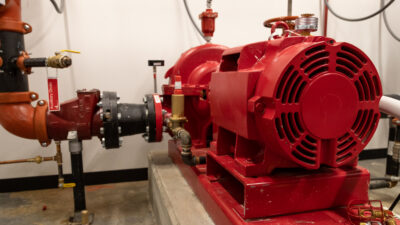
• Ensuring reliable water supply through zoned sprinkler and standpipe systems, pressure-regulating devices and fire pump redundancy.
• Providing an automatic on-site secondary water supply (as required by the International Building Code for certain seismic design categories) to maintain sprinkler and hose system demand.
• Integrating standpipes within stairwells to preserve egress width while maintaining accessibility and architectural intent.
• Managing vertical smoke movement and maintaining pressure differentials across stairwells and shafts to protect means of egress.
• Balancing architectural aesthetics with life-safety requirements, as concealed fire protection components can increase stairwell or shaft footprint and affect layout.
• Maintaining fire alarm wiring survivability to ensure critical circuits and upper floors remain operational during a fire event.
Niki Fox: Communication coverage.
For office renovations, what types of active or passive fire/life safety systems are being requested and specified?
Niki Fox: Emergency lighting with a centralized inverter over battery packs on the light fixtures.
How has the cost and complexity of fire protection systems involved with office buildings changed over the years? How did these changes impact the overall design process?
Niki Fox: More requirements for dedicated devices in the space and for specialized spaces within the built environment.
How has the integration of fire/life safety systems with other building systems changed?
Niki Fox: There have been upgrades to building management system listings for control of fire smoke dampers.