A fire alarm that technically meets code but fails to prompt immediate action can be the difference between a close call and a catastrophe. Here’s why that distinction matters more than you think.
Learning objectives
- Understand fire alarm notification’s role in occupant life safety.
- Review challenges in specifying occupant notification.
- Recognize the relative pros and cons of voice versus temporal alarm tones.
- Examine NFPA 72 and ADA requirements, including ambiguities in sleeping areas, bathrooms and public-use spaces.
- Evaluate recent changes in occupant notification technology.
Fire alarm insights
- Engineers must look beyond prescriptive code compliance and recognize that a fire alarm directly influences how occupants perceive danger, make decisions and respond under life-safety conditions.
- A well-designed fire alarm that accounts for human behavior, alarm fatigue, occupancy type and clear notification is critical to minimizing response delays and ensuring occupants can safely and quickly evacuate.
As engineers, we often focus on prescriptive code requirements when specifying and designing fire alarm systems. However, having a functional and effective fire alarm system directly impacts life safety for the occupants of a building. Because of the life and death stakes involved, having a deeper understanding of the underlying code intent and how building occupants will respond to our design choices is critical.

For example, put yourself in the place of a building occupant during an active alarm condition. The following questions illustrate how occupant perception can alter the effectiveness of a code-compliant design:
- When a fire alarm is activated, what is your first reaction?
- Can you immediately identify/understand that it is a fire alarm?
- Is your first reaction to perform an assessment of your surroundings to determine if it is valid alarm? What information is required to make that assessment?
- If you cannot immediately determine what the source of the danger is, what thoughts go through your head? Is there a chance that you might think that it is a false alarm?
- Does your assessment depend on your location and familiarity with your surroundings?
- Is there a delay in your response? What other factors could cause a delayed response?
- If it is a real alarm, what is the response? Fight, flight or something else?
- If flight is the response, do you know if you can and how to escape the building?
- If your answers to any of these are incorrect, what are the consequences?
Fire statistics and human nature
Fire alarms save lives by detecting fires and quickly notifying the building’s occupants, giving them critical time to evacuate safely. Any delay in evacuation could cause serious injury or death.
Even with a high level of risk to life and safety, many people discount the hazards associated with building fires. The National Fire Incident Reporting System (NFIRS) provides some insight regarding the frequency and results of fires. NFRIS is a voluntary incident reporting system used by fire departments nationwide and has been the federal government’s primary tool for collecting fire incident data since its establishment in 1975. While this system is in the process of being replaced, it is still a treasure trove of information.
Per the NFIRS data, deaths are disproportionately higher in residential fires compared to nonresidential fires, even after accounting for incident counts. In the 2024 data, there were 351,000 residential structure fires versus 119,500 nonresidential structure fires reported to NFIRS (roughly 3:1 ratio). A total of 2,890 residential and 130 nonresidential deaths were reported (22.2:1 ratio). For the same reporting period, 10,400 residential and 1,200 nonresidential injuries resulting from those fires were reported as well (8.7:1 ratio).
When presented with this information, the fundamental question is: Why are the relative number of deaths and injuries so much higher in residential fires compared to nonresidential building fires? The primary reason is that the residential occupants had an insufficient amount of time to escape. But why?
While lack of an automatic emergency sprinkler system is a significant driver (9.57:1 difference in death rate), another surprising reason is “alarm fatigue.” Human nature in response to frequent false alarms is to become complacent and take alarms less seriously. If the danger (smoke, flames, etc.) cannot be immediately identified, occupants may delay their response or ignore an alarm altogether. In some cases, they may even attempt to silence or disconnect the alarm system.
This apathy can be deadly when a real fire occurs. This can add critical, life-threatening minutes to the evacuation process. To illustrate this point, NFPA 101: Life Safety Code defines three levels of evacuation capability: prompt, slow and impractical.
- “Prompt” is typically 3 minutes or less for small single-story buildings.
- “Slow”’ is longer than 3 minutes.
- “Impractical” is longer than 13 minutes.
The “impractical” classification is usually caused by conditions where occupants are unable to reliably move to a point of safety in a timely manner and/or otherwise incapable of self-preservation. This could include the presence of patients with limited mobility such as in a hospital, prisons/correctional facilities, rehabilitation centers, nursing homes, etc. In addition to increased staff assistance requirements, these conditions necessitate more stringent fire safety provisions in the construction of that building. In general, delays in recognition and response can push an otherwise “prompt” egress scenario into “slow” or even “impractical.”
Per NFIRS data, the ratio of real alarms to false alarms is 1:2. NFIRS doesn’t use exactly same criteria as NFPA when classifying false alarms. NFPA 72: National Fire Alarm and Signaling Code defines an “unwanted alarm” as “any alarm that occurs that is not the result of a potentially hazardous condition.”
NFPA further subcategorized this into malicious, nuisance, unintentional or unknown alarms. The vast majority of nuisance alarms are not included in the NFIRS data set. Only those that result in a mobilization response from the fire department are included.
For example, NFIRS does not include information on incidents (such as you burning your dinner) that were not reported to the local fire department. If this expanded NPFA criteria could be applied to the NFIRS data, the quantity of false alarms would skyrocket.
According to a 2004 NFPA study, actual fires caused only 2.8% of residential fire alarm activations. Unfortunately, response to alarms is a learned behavior. Frequent false or nuisance alarms train occupants to ignore signals even when the danger is real. Fire alarms are only effective at their intended function if people know how to respond quickly and appropriately, regardless of the setting.
How fast is fast enough for a fire alarm?
NFPA 72 governs how to design and install a fire alarm system, but it does not dictate when it is required within a building. The code that triggers the requirements for fire alarms are typically either the International Building Code (IBC), the International Fire Code or NFPA 101. These codes recognize that the amount of time required to safely escape a building varies by the size, usage and type of people that occupy that building. A fire alarm system is one part of the code’s multipronged approach to help ensure a building evacuation is as safe and as quick as possible.
Once a fire starts within a building, the total time required to egress a building is determined by three factors:
- Fire alarm detection time. This is the amount of time between the start of the fire and when the fire alarm is activated. This functionality is driven by the requirements of NFPA 72.
- Recognition and response time. The occupants must recognize that the alarm is real, assess the level of danger and decide what to do (fight, flight or ignore).
- Egress time. The amount of time required to walk, run or be carried out of the building. This is affected by the length and configuration of the egress path. This is dictated by the IBC, NFPA 101 or whatever the prevailing building code is within a certain jurisdiction.
Prescriptive code requirements influence the amount of time associated with first and third points. However, the second point is highly variable because human judgment is involved. Fire alarm design can have the most direct influence on this judgment process and how quickly occupants recognize and interpret the signal. If there is excessive delay in deciding to exit a building, the smoke, heat and toxic fumes from a fire could severely compromise the egress path and make it impossible to escape.
Functionality of fire alarm notification versus occupancy type
The IBC classifies buildings primarily on occupancy type (how the building is used) and construction type (the materials used to build it and their associated fire resistance). There are 10 major occupancy groups and numerous special use groups defined within the IBC. Each has specific life safety requirements dictated by the physical building size, quantity/type of occupants, characteristic usage and presence of potential fire hazards.
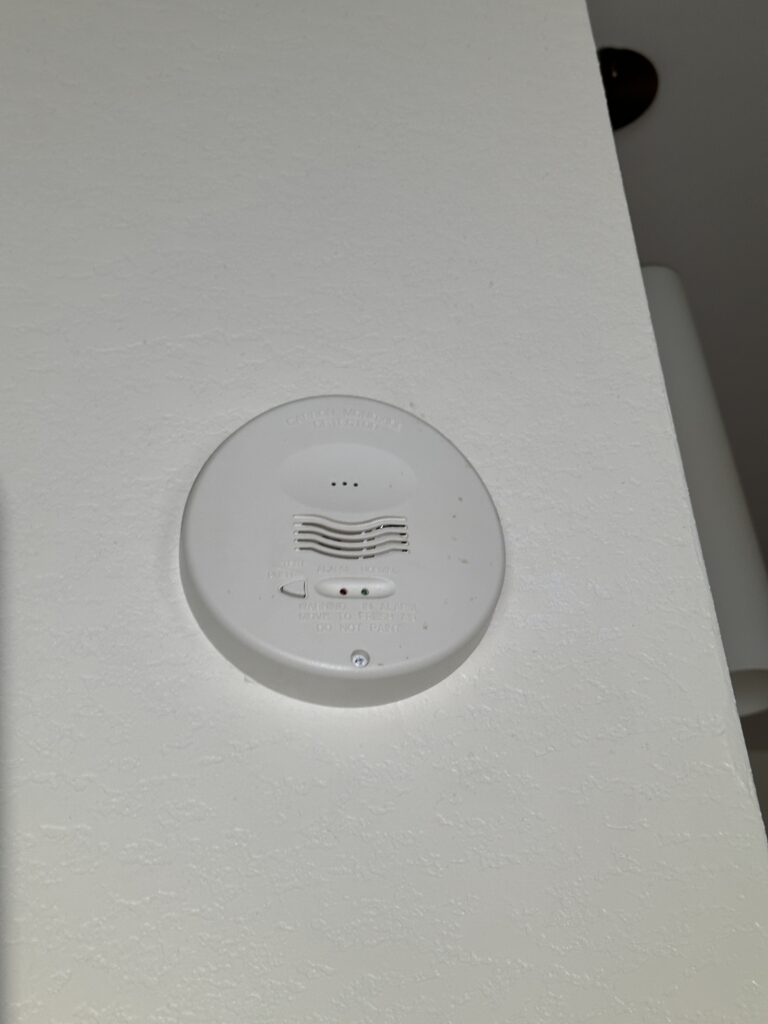
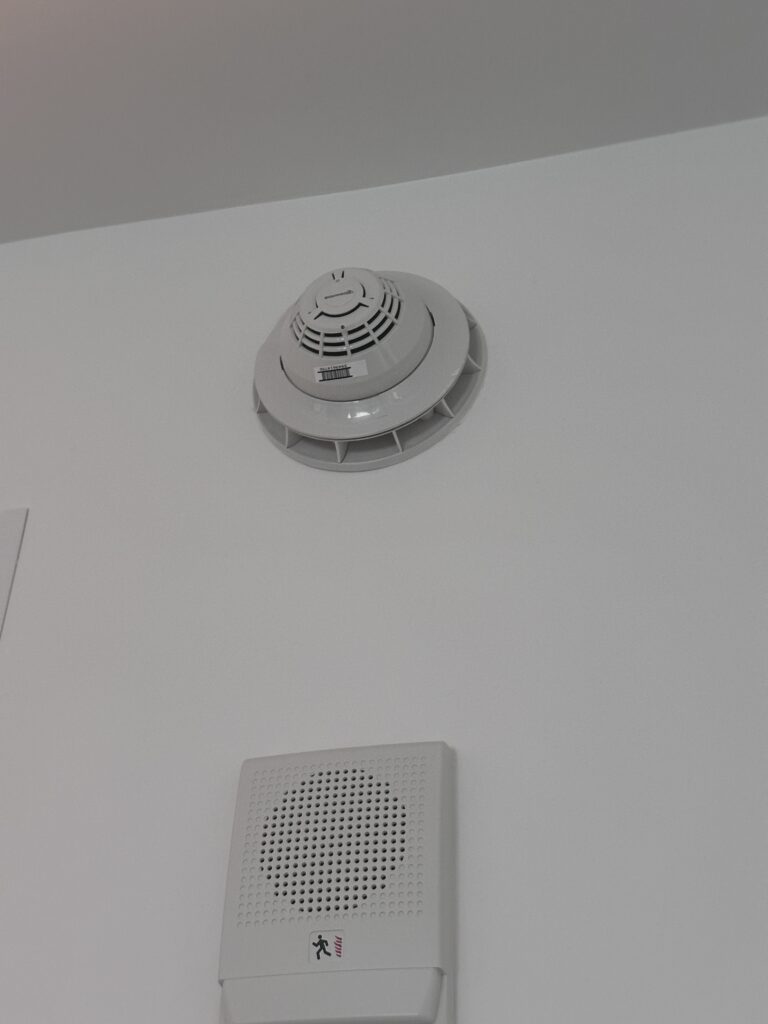
In many jurisdictions, many low-risk building types are not required to have a fire alarm system. For example, 2024 IBC requires that fire alarm systems in Group B business occupancies be provided only if one of the following conditions exist:
- The combined occupant load is 500 people or greater.
- There are more than 100 people above or below the lowest level of exit discharge.
- The fire area contains an ambulatory care facility.
It is generally assumed that the hazards associated with this specific occupancy type are relatively low and that if the building is constructed to the prevailing code, there are minimal obstructions to a quick and safe evacuation. Regardless, some jurisdictions may have local code amendments that supersede this and require that a fire alarm system be installed anyway. Reviewing local code requirements is always advisable.
Certain occupancy types are inherently more difficult to evacuate quickly during an emergency. For example, high rise buildings (building’s taller than 75 feet in height), institutional (hospitals, nursing homes, jails) and assembly (theaters, stadiums) all have significant challenges. In some cases, the physical distance of the egress path to get out the building may be an issue. In other cases, occupants may not be able to effectively preserve themselves due to a limitation in understanding the danger or a physical inability to respond. Examples of these limitations include:
- Inability to quickly understand the danger: Young children, large crowds in an unfamiliar setting or sleeping hotel guests.
- Physical inability to respond: Hospital patients with limited mobility or prisoners confined within a jail cell.
These types of limitations often justify more informative notification systems, such as voice notification.
Hearing and vision
The Americans With Disabilities Act (ADA) is a civil rights law that mandates equal access to people with disabilities. The primary disabilities that impact fire alarm design are visual and hearing impairments. ADA-compliant fire alarm systems must provide people with disabilities an equivalent level of safety to nondisabled people in all public and common use areas (e.g., restrooms, lobbies, hallways, open offices and break rooms). This generally requires that both audible (horns or speaker) and visible alarms (strobes) be provided in these areas.
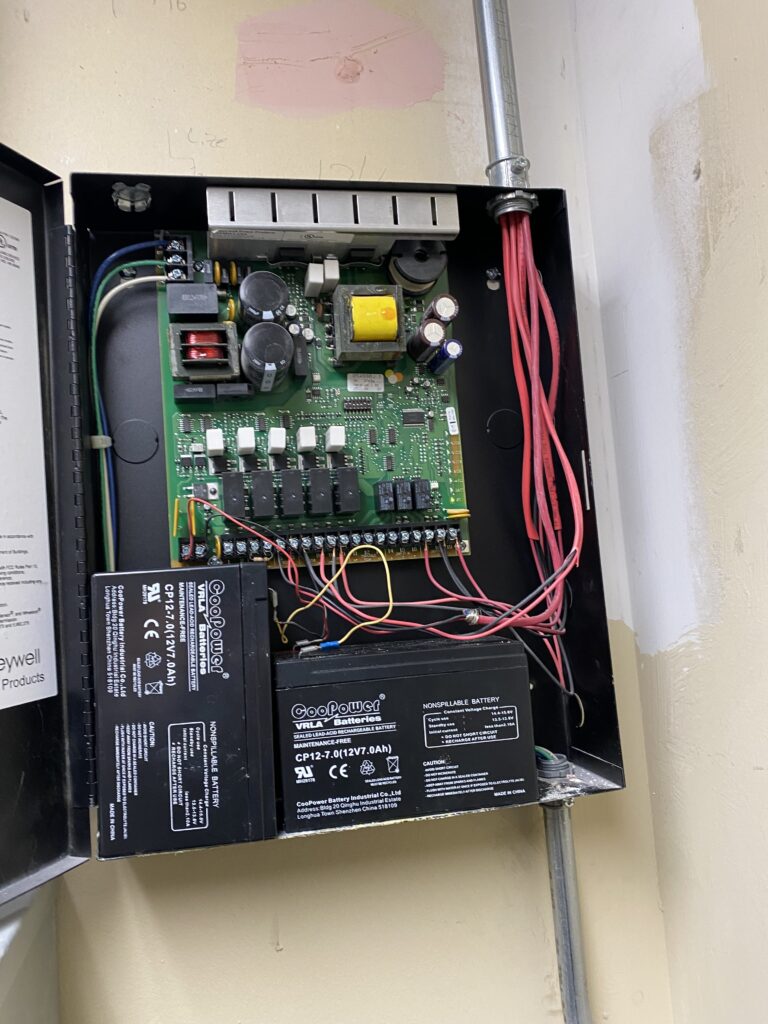
Some local interpretation of ADA may also expand applicable areas to work areas such as private offices. While ADA generally defines where accommodation for people with disabilities must be made, it does not necessarily provide technical guidance on implementation. It instead relies on NFPA 72 as a referenced standard to establish those technical specifications.
The most appropriate notification method varies depending on the occupancy. For audible notification, generic fire alarm horns or bells may not provide sufficiently detailed information about the nature of the emergency. In many cases, occupants may fail to recognize an audible fire alarm signal, mistaking it for something else like a burglar alarm or equipment fault warning. To reduce this potential confusion with other signs, NFPA 72 mandates a specific sound pattern to provide a universally recognizable fire alarm signal.
Since 1996, NFPA 72 has required that Temporal 3 (T3) be provided for all fire alarm systems using horns. The T3 pattern is an international standard for evacuation signals as defined by ANSI/ASA S3.41 — Audible Emergency Evacuation (E2) and Evacuation Signals with Relocation Instructions (ESRI).
T3 is a pulsed audible signal pattern that consists of a repeating sequence of sounds:
- Three short “on” pulses lasting for 0.5 seconds each.
- Two short “off” pauses that separate the “on” pulses by 0.5 seconds.
- One long “off” pause after the third pulse. This pause lasts for 1.5 seconds before the pattern repeats.
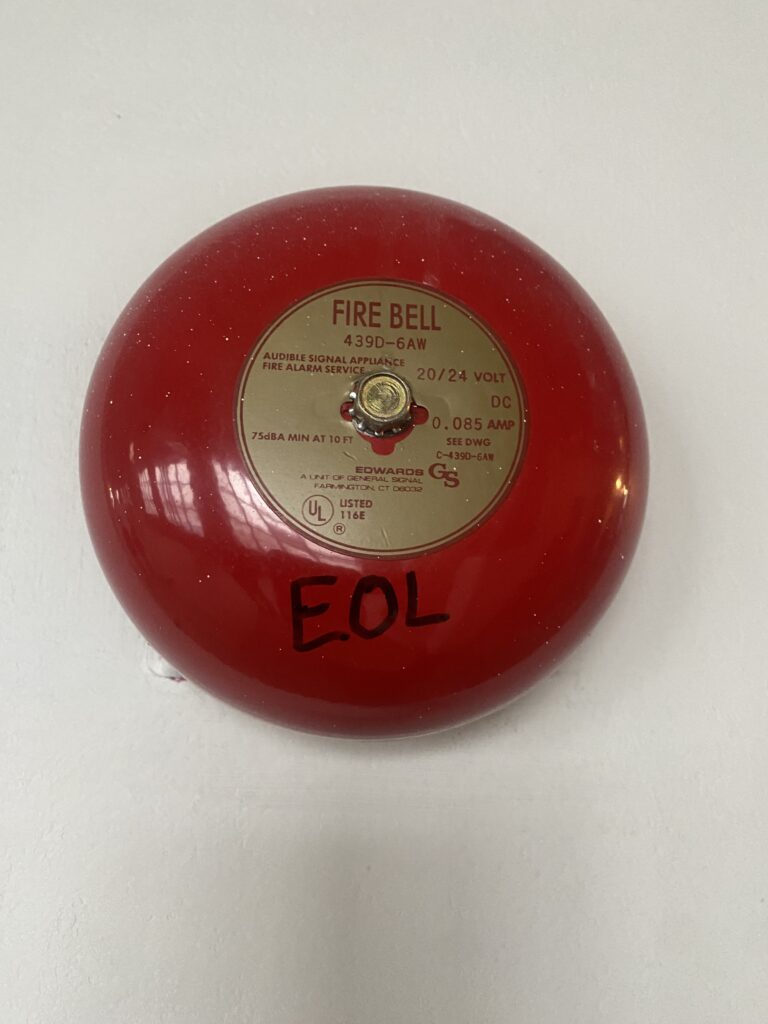
The pattern must repeat for the duration of the alarm condition or a minimum of 180 seconds — whichever is longer. Bells or other similar audible appliances that cannot reproduce the T3 pattern are no longer allowed to be used for occupant notification. Depending on the local jurisdiction’s requirements, use of the T3 pattern may sometimes be retroactive if an existing fire alarm system is significantly modified.
There is also a Temporal 4 (T4) pattern, which is intended to inform occupants of a carbon monoxide emergency. While not intended as an evacuation signal, it is somewhat similar to T3. T4 is also a pulsed audible signal pattern that consists of a repeating sequence of sounds:
- Four short “on” pulses lasting for 0.1 seconds each.
- Each pulse is followed by short “off” pauses that separate the “on” pulses by 0.1 seconds.
- One long “off” pause after the fourth pulse. This pause lasts for 5 seconds before the pattern repeats.
Horn versus voice fire alarms
For an audible alarm signal to be effective, the occupants must be able to hear it above the ambient noise in any given area. NFPA 72 requires that an audible fire alarm be at least 15 dBA louder than the ambient sound or 5 dBA above the peak ambient sound (lasting 60+ seconds), whichever is greater. As a point of reference, 55 dBA is a common ambient sound level in an office environment. The presence of closed doors, certain furnishings and other items may attenuate the fire alarm signal and as such, special consideration should be made regarding audible devices quantities and locations.
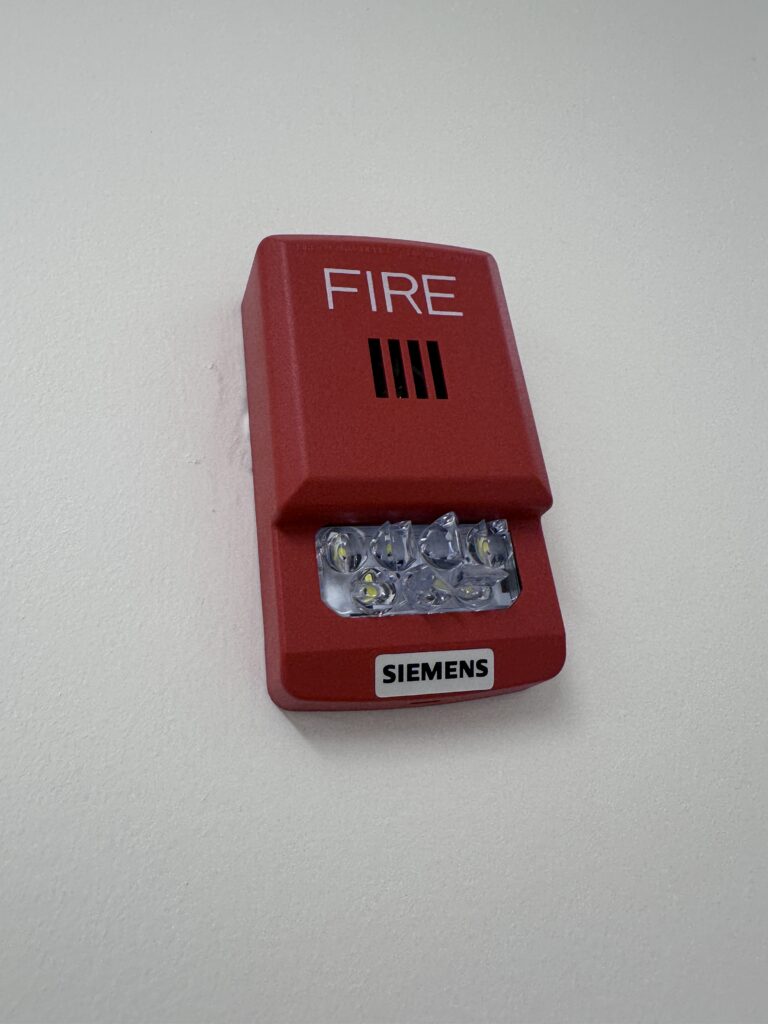
The temptation is to make the alarm so unbearably loud that the occupants won’t be able to ignore it. However, an excessively loud alarm can cause other problems, like inducing disorientation and hearing damage. As such, the upper limit per NFPA 72 is 110 dBA measured 10 feet from the device. In occupancies with high ambient sound levels like industrial facilities, this may be inadequate and visual alarms would instead be required.
In sleeping areas (typically hotels), NFPA 72 now requires 520 hertz (hz) low-frequency audible alarms. Low-frequency alarms still need to comply with the T3 tone requirement. With hearing impaired people, particularly older adults with high-frequency hearing loss, 520 hz has been demonstrated to be more effective at waking sleeping occupants. This requirement was introduced in the 2010 edition but was given a delayed effective date of Jan. 1, 2014. The intent behind the delayed implementation was to allow manufacturers time to develop compliant products.
Even though the requirement has been in effect for more than 10 years, most single station smoke alarms available on the market for small residential occupancies still cannot reproduce a 520 hz signal. Reproducing the signal dramatically increases the power draw requirements beyond what most single station smoke alarms are capable of. Even with hardwired 120-volt smoke alarms, the battery backup still the primary power limitation. If the low-frequency alarm is required, fire alarm sounder bases or speakers connected to a central fire alarm panel are typically used.
As illustrated before, occupants may not know what to do when they hear a fire alarm signal. Even standardized T3 and T4 patterns may not be understood. While occupant training could bridge this gap, it is not always feasible to train building occupants on proper procedures, especially in buildings with transient occupancy.
Voice notification can provide clear, actionable verbal instruction to overcome common issues associated with standard audible fire alarm signals. In many occupancy types, such as high-rise building and large assemblies, voice notification is required by code for this very reason. While prerecorded voice messages are common, most voice fire alarm notification systems also allow a first responder to make live announcements. The ability to customize messages is critical in effectively managing unexpected emergencies in real-time. As opposed to a blaring horn, a calm and authoritative human voice can help reduce panic and confusion in a potentially stressful environment.
There are downsides to voice fire alarm notification. These include higher costs, increased system complexity and difficulties in ensuring that voice messages are intelligible. For example, hard surfaces or certain room shapes/dimensions can cause reverberation or uneven sound distribution that could distort or make it impossible to understand what is being said.
The term “intelligibility” was introduced in the 1999 version of NFPA 72. Section 4-3.1.5 states:
“Emergency voice/alarm communications systems shall be capable of the reproduction of prerecorded, synthesized or live (for example, microphone, telephone handset and radio) messages with voice intelligibility.”
While this intelligibility requirement existed in principle, 1999 NFPA 72 gave inadequate guidance in defining, designing and documenting that the code requirements were met. Nonbinding recommendations were present within the code’s appendix, but not within the actual body of the code. As such, code compliance became a subjective opinion of the authority having jurisdiction (AHJ).
The 2007 edition of NFPA 72 improved the situation by introducing quantitative testing methods, but still, there were barriers to compliance. That code still maintained a “one-size-fits-all” approach and did not acknowledge that different rooms have different acoustic properties where compliance would be difficult, if not impossible. Examples of challenging areas would include loud industrial areas, mechanical rooms, multistory atriums, etc.
Not until the 2010 version of NFPA 72, which introduced the concept of acoustically distinguishable spaces, did intelligibility requirements for emergency voice/alarm communication systems and mass notifications systems recognize real world conditions. This is detailed within Chapter 24, Emergency Communication Systems.
Strobes enhance, not replace, audible alarms
An effective alarm needs to be clear, easily noticeable and informative. Studies of evacuation behavior have found that relying on an audible alarm without sufficient context (i.e., verbal instructions or awareness of an immediate and present danger) is one of the least effective ways to motivate occupants to evacuate a building.
Fire alarm strobes are intended to complement audible notification by also providing a clear, visual warning that quickly grabs your attention. Where deaf people may be present, in noisy environments or where people might be otherwise hearing impaired (i.e., occupants using headphones in an open office), use of visual alarms is critical in minimizing response times. As noted, any delay in evacuating a building during a fire can significantly increase the likelihood of injury or death.
If not properly applied, misapplication of strobes can cause significant issues. Common issues include:
- Excessive quantities or brightness of strobes can cause disorientation.
- If multiple strobes within a given line-of-sight are not flash synchronized, they have the potential to induce seizures in people with photosensitive epilepsy.
- While not code required, strobes that are not synchronized with the T3 audible signals within a given area can also cause confusion.
- Inappropriate strobe locations can draw attention away instead of towards the desired egress path.
- Strobes in sleeping areas that are not bright enough (110 candela for wall-mounted, 177 candela if ceiling-mounted).
- Strobe orientation is incorrect, causing light from it to be distributed in the wrong direction (devices rated for wall installation mounted horizontally on the ceiling).
- Strobes are not properly rated for the environment that they are installed in (i.e., outdoors).
NFPA 72 has required strobe synchronization since the 1996 edition. Given how long this requirement has been in place, compliance might seem be relatively straightforward.
However, technical issues still occur. A key issue is that NFPA 72 does not specify a universal synchronization protocol. As such, the strobe synchronization signals sent on the notification appliance circuit (NAC) are proprietary to specific manufacturers and not compatible with one another. To synchronize strobes on the same NAC, they must use the same protocol — often meaning the strobes must also be from the same manufacturer. In practice, this often leads designers to standardize on one manufacturer for all synchronized visual appliances within a notification zone.
To mitigate these limitations, some manufacturers offer NAC power supplies that can generate multiple distinct synchronization protocols. This feature provides greater flexibility in system design and specification, reducing interoperability issues and simplifying code compliance.
In some jurisdictions, the AHJ may require strobes in areas that traditionally didn’t need them, such as private offices or restrooms. This trend toward adding more strobes can increase power demand and push the limits of existing circuits.
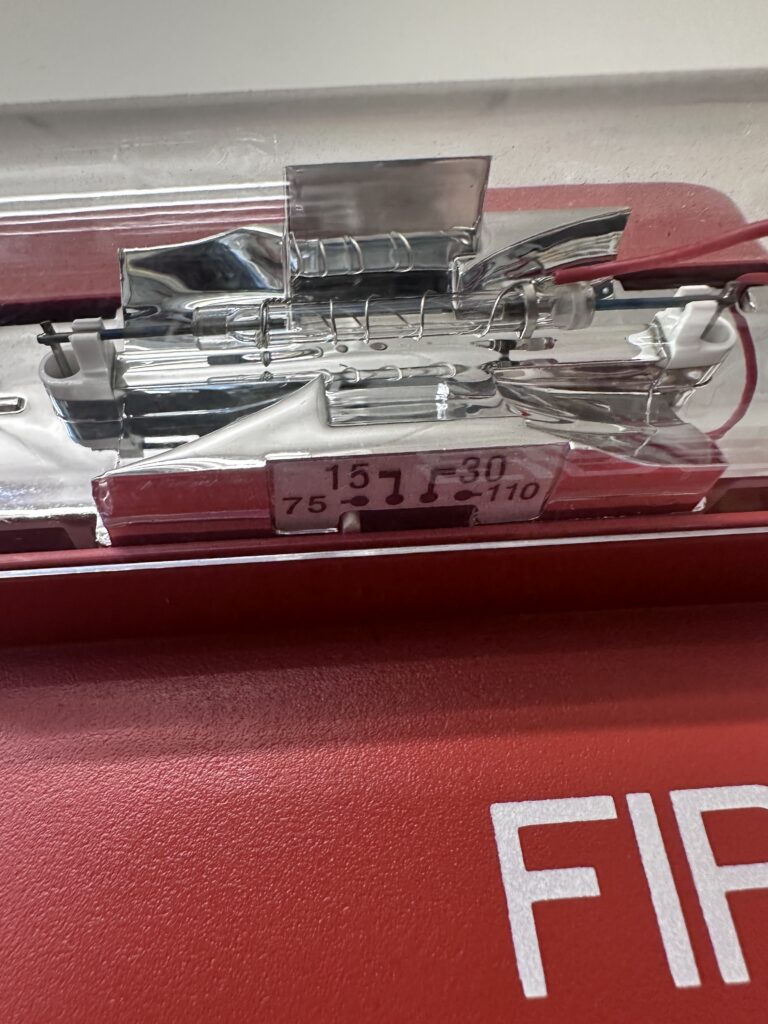
Fortunately, the fire alarm industry is moving away from xenon strobes and adopting LED strobes as the new industry standard. LED strobes generally have a much lower current draw than comparable xenon strobes. This can allow more devices to share the same circuit and minimize the cost associated with other fire alarm upgrades that might be triggered by using xenon strobes.
LED strobes work the same as xenon strobes as long as they’re listed to UL 1971 and, where synchronization is required, verified for compatibility by the manufacturer.
However, there are still a few considerations to keep in mind when specifying LED strobes. While xenon strobe tubes emit light uniformly in all directions (are omni-directional), LEDs depend on the aligned lens to properly distribute light. Even with these lenses, they are more directional than xenon strobes. Because LEDs are more directional, photometric coverage must be carefully considered during fire alarm design to avoid gaps in coverage.