Engineers discuss how evolving codes and resiliency goals are driving more integrated fire and life safety system design in K-12 school buildings.
Fire and life safety insights
- K-12 fire and life safety design is moving beyond code compliance toward integrated systems that support multihazard response, continuity of operations and clear communication during emergencies.
- Early coordination with architects and authorities having jurisdiction is essential to address routing constraints, voice evacuation upgrades, storm shelter requirements and system survivability within tight budgets.
Respondents:
- Grady Henrichs, PE, K-12 Education Engineering Leader, DLR Group, Omaha, Nebraska
- Abdullah Khaliqi, PE, MCPPO, CPQ, Principal, Academic, Fitzemeyer & Tocci Associates Inc., Woburn, Massachusetts
- Amber Lang, LEED AP BD+C, Associate Vice President, CannonDesign, Chicago
- John Mongelli, PE, Senior Associate, Kohler Ronan Engineers, Danbury, Connecticut
What are some of the unique challenges regarding fire/life safety system design that you’ve encountered for K-12 school building projects?
Grady Henrichs: Many jurisdictions require ICC 500-rated shelters that necessitate careful coordination between all disciplines. Ventilation and water supplies must be protected and able to function through a storm event. Emergency power is typically provided by central battery inverters or generators, all of which must also be located within the storm shelter. Structural considerations must be made to protect all openings into the storm shelter.
Abdullah Khaliqi: K-12 fire/life safety design presents unique challenges due to multiple occupancy types, frequent renovations and tight project budgets. Ensuring intelligibility in noisy environments like gyms or cafeterias can be difficult. We also face routing limitations in existing structures when upgrading to meet NFPA 72: National Fire Alarm and Signaling Code or local mass notification requirements. To overcome these, we may use wireless detection in retrofits, zoned speaker systems and advanced coordination with architects and audio-visual consultants. Integrating fire alarm with access control and emergency lighting adds complexity but improves safety. Early planning and collaboration with the authority having jurisdiction (AHJ) are key to balancing code compliance with school-specific needs.
Amber Lang: One unique fire and life safety challenge in K-12 projects is upgrading from traditional horn/strobe systems to voice evacuation systems, which provide clearer instructions during emergencies. This often becomes more complex when a school plans only a partial renovation and does not intend to replace the entire fire alarm system. We address this through careful phasing, compatibility assessments and close coordination with AHJs. By planning upgrades strategically, we can improve safety and communication while minimizing disruption to occupied schools and maintaining system reliability.
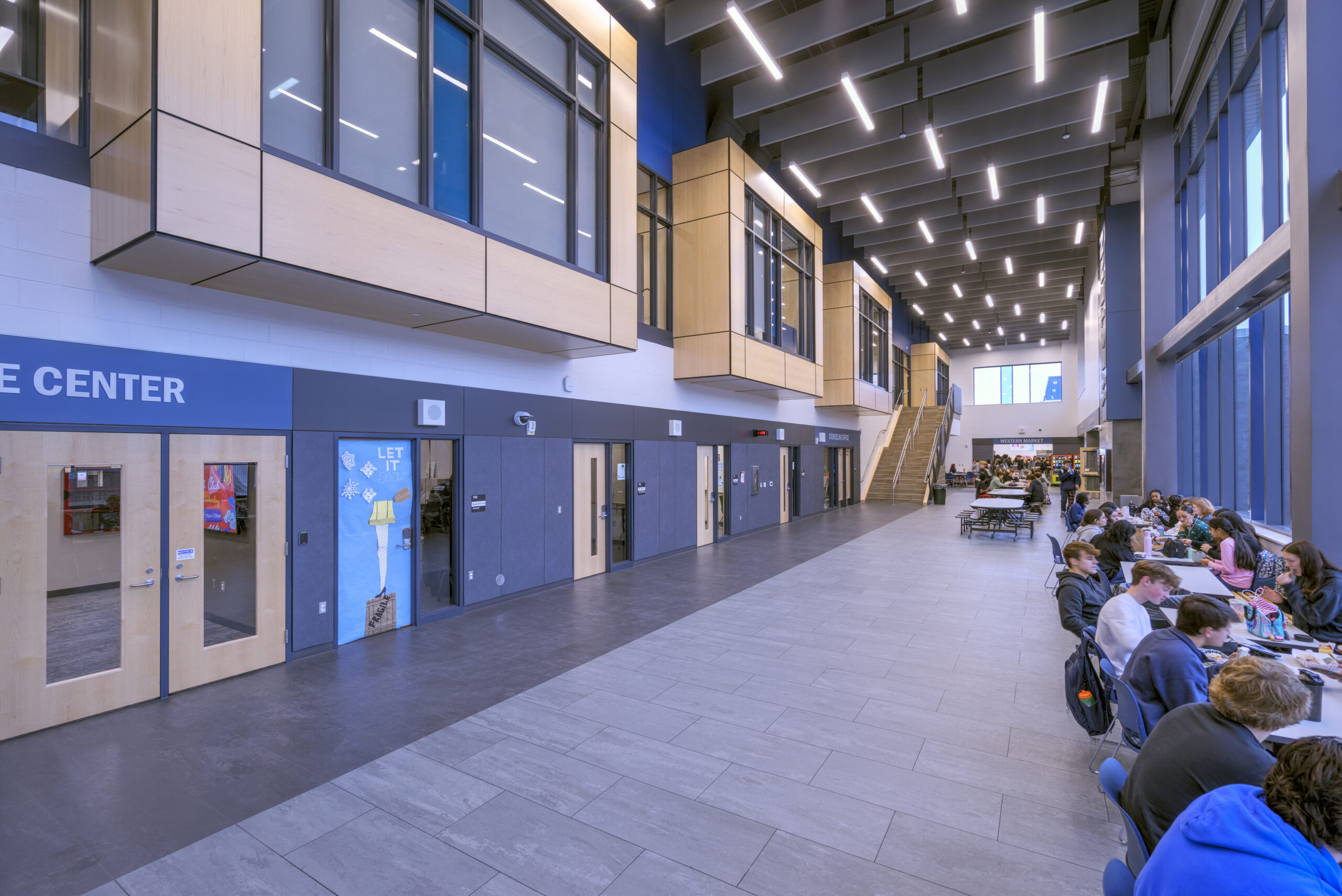
John Mongelli: Architecture is becoming more ornate and open, along with exposed structure. Routing of fire protection piping is now more strategic to maintain a clean appearance and blend into the architecture. Use of “cloud” and wood type ceilings requires additional sprinkler protection and structural consideration.
How have life safety and resiliency issues converged?
Abdullah Khaliqi: Life safety and resiliency have increasingly converged in K-12 school design, especially post-pandemic and in response to natural disasters and active threat scenarios. Systems must now do more than meet code; they must ensure continuity of operations, rapid recovery and protection during extended events. Fire alarm, mass notification and access control are integrated into centralized emergency response platforms, while backup power systems are sized to maintain life safety systems beyond code minimums. Designing with redundancy, survivability (per NFPA 72) and multihazard preparedness in mind ensures schools remain safe, functional and communicative during a range of disruptive events.
Amber Lang: Life safety and resiliency are increasingly intertwined in K-12 projects, particularly because schools often serve as emergency shelters during natural disasters and must respond effectively to lockdowns or other security events. Engineers design integrated systems that combine fire alarms, voice evacuation, access control and emergency power with building automation to provide coordinated, real-time responses. Resilient design strategies such as backup power, redundant systems and robust infrastructure ensure schools can remain operational and safe under a variety of conditions. By aligning life safety with resiliency, we create environments that protect occupants while supporting critical operations and community response when emergencies occur.
How have the trends in fire/life safety changed in K-12 school projects?
Abdullah Khaliqi: Fire/life safety trends in K-12 schools have shifted from basic code compliance to a more integrated, risk-based approach. There is growing emphasis on mass notification, active threat response integration and system survivability, especially with the adoption of updated NFPA 72 and NFPA 101: Life Safety Code requirements. Systems are now expected to support multihazard events, including fire, severe weather and lockdown scenarios. Voice evacuation intelligibility, lockdown-compatible access control and redundant power for life safety systems are becoming standard. These trends require earlier planning, closer coordination with security and information technology teams and smart infrastructure that supports both emergency response and long-term resilience.
John Mongelli: The additional need for voice evacuation and/or in-building, two-way communication coverage for emergency responders must be evaluated early on. Intermediate distribution frame/main distribution frame rooms must be assessed to determine if specialized systems (e.g., preaction sprinklers and/or gaseous systems) are warranted. Many jurisdictions maintain their own design standards for their buildings and these requirements should be referenced and/or clarified early on.
What fire, smoke control, active shooter or security features might you incorporate in these facilities that you wouldn’t see on other projects?
Abdullah Khaliqi: K-12 schools require unique life safety and security features not often seen in other facilities. These include lockdown-integrated fire alarm and access control systems, compartmentalized smoke control to isolate threats and bidirectional amplification to support first responder communications. We often design mass notification systems with programmable messages for fire, weather or active shooter events. Entry vestibules may include forced-entry-resistant glazing and intercom-controlled access. Coordination between fire, security and building automation systems is essential to avoid conflicting responses during emergencies. These integrated designs require early input from district safety teams and compliance with evolving standards like NFPA 3000: Standard for an Active Shooter/Hostile Event Response Program.
Amber Lang: K-12 facilities require specialized safety and security features not typically found in other projects. Fire and smoke control systems are designed to protect large numbers of children with clear evacuation paths, voice evacuation and phased alarm strategies. Security measures often include access control, keyless door hardware and real-time monitoring to manage building entry and lockdown scenarios. Active shooter considerations may involve lockdown-capable doors, emergency communication systems and integration with building automation for alerts and guidance. These features are tailored to ensure rapid, coordinated responses, prioritizing occupant safety while accommodating the unique operational needs of schools.
John Mongelli: Gunshot detection, lockdown systems and video surveillance camera AI analytics can all be integrated into a holistic monitoring system. This system can alert school administration and emergency services in a timely manner to prevent or minimize a safety event on school grounds.
Do you see any future changes/requests to the structural design of these buildings regarding fire/life safety systems?
Abdullah Khaliqi: We anticipate future structural design changes in K-12 schools to further support integrated fire and life safety systems. These may include dedicated smoke control shafts, fire-rated vertical chases and structural accommodations for rooftop fire suppression tanks or mechanical penthouses. As active threat response becomes more prominent, we may also see structural designs that allow for secure zones, reinforced entry vestibules and compartmentalization without compromising egress. Integration of NFPA 72, NFPA 101 and potentially NFPA 3000 will require closer collaboration between structural and mechanical, electrical and plumbing/fire protection engineers to ensure both safety and resilience are structurally supported from the start.
How has the cost and complexity of fire protection systems involved with K-12 school projects changed over the years?
Abdullah Khaliqi: The cost and complexity of fire protection systems in K-12 schools have increased due to expanded code requirements, integrated life safety expectations and greater emphasis on mass notification and threat preparedness. Systems now include voice evacuation, emergency responder radio communication systems and coordination with access control and lockdown procedures, all of which add layers of design, infrastructure and commissioning effort. This has impacted the design process by requiring earlier multidisciplinary coordination, detailed phasing plans and closer engagement with AHJs. Additionally, budget planning must now account for both installation and long-term system integration and maintenance costs.
How have changes to codes, building information modeling (BIM) and wireless devices impacted fire and life safety system design for these buildings?
Abdullah Khaliqi: Changes to codes, BIM and wireless technologies have significantly improved fire and life safety system design in K-12 schools. Updated codes like NFPA 72 now emphasize intelligibility, survivability and mass notification, requiring more detailed planning and integration. BIM tools allow for earlier clash detection, better coordination of device coverage and more accurate space planning for equipment and pathways. Use of wireless devices such as detectors or notification appliances has simplified retrofits and reduced installation labor in existing schools. Together, these advances have improved system performance and reliability but require greater early-phase collaboration across all design disciplines.
John Mongelli: Codes have become more stringent with respect to life safety systems. BIM requires a surgical level of coordination early in the design process. Frequent rework of the piping and modeling of life safety systems during this process can become time consuming. However, fewer issues during construction tend to evolve.