The 2025 edition of NFPA 72 has several changes. These changes can be implemented before the adoption of the code to enhance a fire alarm system or emergency communication system design.
Learning objectives
- Learn the key changes between the 2022 and 2025 editions of NFPA 72: National Fire Alarm and Signaling Code.
- Gain an understanding of changes impacting fire alarm system design.
- Become familiar with the organization of NFPA 72.
Fire alarm insights
- The 2025 edition of NFPA 72 introduces wide-ranging updates that affect fire alarm system design, documentation, cybersecurity, notification and device placement, with some provisions potentially usable before formal adoption if approved by the authority having jurisdiction.
- The article highlights significant fire alarm code changes across multiple chapters, emphasizing new definitions, expanded performance-based requirements and increased attention to cybersecurity, survivability and specialized detection technologies.
The 2025 edition of NFPA 72: National Fire Alarm and Signaling Code has quite a few changes that will impact the design of fire alarm systems.
While the 2025 edition won’t be applied for some time in most jurisdictions, there are several changes to be aware of that could be incorporated into a fire alarm design as the 2025 edition is adopted. If new code requirements are used that could be considered less restrictive than the current code provision, the authority having jurisdiction (AHJ) should be consulted to confirm that they will accept the new provisions. The 2025 edition of NFPA 72 will be referenced in the 2027 edition of the International Building Code.

New code requirements could be accepted under the equivalency provisions of the code. Federal government agencies typically apply the most recently published NFPA standards at the time of contracting for design services. If you are doing federal government work, you may be required to use the 2025 edition of NFPA 72 now.
This article addresses changes believed to be significant. It doesn’t address every change between the 2022 and the 2025 editions of NFPA 72. There are several revisions that revise sections or paragraphs to comply with NFPA’s “Manual of Style.”These paragraphs in the code are indicated with an editorial mark as new, but they do not change the technical requirements of the code.
Fire alarm definitions
There are several revisions to existing definitions and new definitions that have been added. The definitions in NFPA standards and codes have special meaning regarding the application of the standard or code. When applying the code, be aware that if a term is defined in Chapter 3, it may impact the application of the requirements.
The new definitions are paraphrased below. The reader should review the actual definitions in NFPA 72.
- Auxiliary service provider: There are organizations that receive signals from fire alarm systems on various premises and they retransmit these signals to supervising stations. Requirements for these organizations have also been added to the code and will be discussed later.
- Acoustic leak detector: This is a device that detects a leak based on the sound that is emitted. Criteria for design and installation of acoustic leak detectors have been added to Chapter 17.
Chapter 7 — Documentation
Chapter 7 was added to NFPA 72 in the 2013 edition. The intent of Chapter 7 was to consolidate the requirements for documentation into a single chapter. Section 7.2 provides the minimum documentation that is required when an authority having jurisdiction requires documentation. Sections 7.3 9 (Design Documentation), 7.4 (Shop Drawings) and 7.5 (Completion Documentation) are only applicable when required by other laws, codes or standards require them or if required by a specification or other contract documents.
Section 7.3 (Design Documentation) has added a section 7.3.4.7 addressing restricted audible mode operation (RAMO) notification and references Chapter 18 (18.4.8) for the requirements addressing documentation.
A new Section 7.6.7 (Network Connectable Equipment Maintenance Plan) has been added that requires plans documenting all electronic access credentials that could be used in cyberattacks. It also requires the maintenance of access logs and that the owner annually review access logs.
Chapter 10 — Fundamentals
Gateway Reporting System Personnel Qualification: This is a new section that has been added to the code. It provides criteria for qualifying personnel that operate auxiliary reporting systems. Requirements for auxiliary reporting systems have been added to Chapter 26 — Supervising Stations Systems.
Chapter 11 — Cybersecurity
The recommendations that were in Annex J of the 2022 edition of NFPA 72 have been moved into the body of the code to provide requirements intended to protect systems from cyberattacks. The chapter includes requirements for:
- Network connectable equipment, software development and production environments.
- Security levels for network connectable equipment and requirements for conductors based on security level designations.
- Network connectable equipment using shared pathways.
- Unused physical data ports.
- Data connection to external networks.
- Network connectable equipment cybersecurity software updates.
- Evidence of compliance and documentation.
Like many requirements in NFPA 72, many of the requirements related to cybersecurity rely on manufacturers to develop and design products that have features to allow for cybersecurity. This also includes design and production as well as software development.
There is extensive material in Annex A that provides additional explanation, which can assist in applying the requirements.
Chapter 14 — Inspection, testing and maintenance
The new Section 14.1.6 (Inspection and Testing of Existing Systems) notes that testing and maintenance personnel are not required to evaluate the adequacy of the design of an existing previously approved system.
There are numerous decisions that go into the design of a fire alarm system. Testing and maintenance personnel cannot be expected to be aware of the original design intent. However, if there have been modifications to a building that impact the ability of the system to perform (e.g., added partitions or rooms that impact smoke detection spacing), it would be appropriate to identify the condition as an observation to the owner or their representative. The 2022 edition of NFPA 72 added the term “observation” to address potential improvements to a fire alarm system that can be recommended that fall short of being a code deficiency or an impairment.
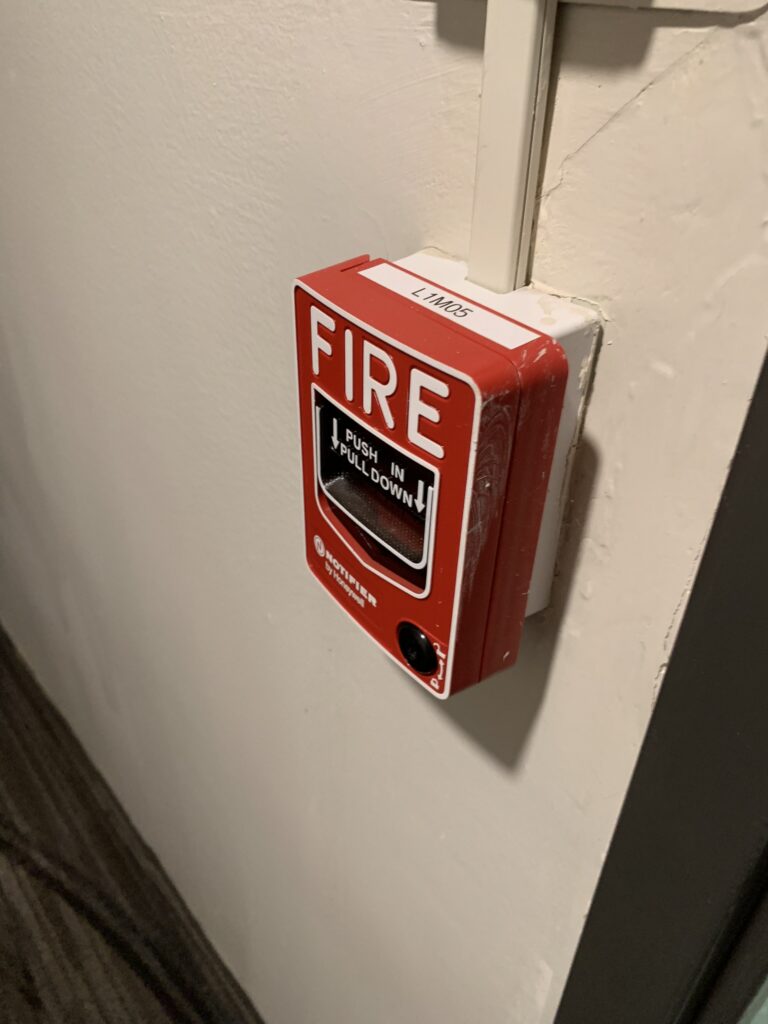
Specific testing of RAMO systems that use restricted audible mode operation have been added. Annual testing is required to include measurement and recording of ambient and maximum sound pressure levels in the area using RAMO and those measurements are required to be compared to the original design criteria. The occupancy of areas using RAMO is required to be reviewed on an annual basis for any changes. See the discussion below in Chapter 18 changes for information on when RAMO can be used.
Chapter 17 — Initiating devices
Girders — Within the sections on placement of heat-sensing and smoke-sensing fire detectors (17.6.3.3.3 and 17.7.4.2.4.2), criteria for when girders need to be considered obstructions has been added. If the top of the girder is within 4 inches of the ceiling, it would be considered as a beam for purposes of detector spacing. A girder is a construction element that supports beams or joists.
Smoke Detection Spacing on Ceilings Exceeding 40 Feet in Height — Section 17.7.4.2.3.1, which provides the prescriptive rules for smoke detector spacing, has been revised to only allow the prescriptive method for ceiling heights up to 40 feet. If spot type smoke detection is to be placed on ceilings exceeding 40 feet in height, a performance analysis and design is required. This is clarified in Annex A (A.17.7.4.2.3.1). This change was supported by a Fire Protection Research Foundation sponsored project and is summarized in the Fire Protection Research Foundation’s report “Smoke Detector Spacing for High Ceiling Spaces — Phase II.”
Clarification on Spacing for Level Ceilings — Where beams are located below the ceiling and there is a space between the beam and ceiling that is at least 15% of the height of the ceiling, smooth ceiling spacing is allowed. This recognizes that the beam does not create an obstruction to smoke flow in this case.
Fuel Gas Detection — Section 17.10 provides requirements for the selection, installation and operation of gas detectors other than carbon monoxide and acoustic leak detectors. Section 17.10.1.1 has been added noting that fuel gas detection shall be installed in accordance with NFPA 715: Standard for the Installation of Fuel Gases Detection and Warning Equipment. NFPA 715 defines fuel gas as,
“Any number of gases that, when combined with an oxidizer (typically air or oxygen), could be burned to produce thermal energy.”
It is important to note that both NFPA 72 and NFPA 715 don’t require gas detection to be provided in a building. They provide the criteria for the design and installation of gas detection systems when they are required by other codes or standards.
Acoustic leak detection — A new section 17.11 has been added to the code. This section provides for the selection, spacing and layout of acoustic leak detectors. The design is required to be based on an engineering evaluation that includes the following factors:
- Potential size of the leak
- Material properties
- Potential area where the leak can occur
- Response required in the event of a leak
- Ambient conditions
Thermal image fire detectors — A new section 17.12 was added to provide requirements for the design and installation of thermal imaging fire detectors. These devices sense a rise in temperature that occurs before the products of combustion from a fire becoming visible. The design of these systems is required to be based on a performance-based approach.
Chapter 18 — Notification appliances
Notification Appliance Circuit Design — Section 18.3.7 has been expanded to provide requirements for the design of direct current power sourced and alternating current power sourced notification appliances. Specific requirements for calculating voltage drop have been added. Criteria for calculating the length of Class A, B and X circuits has also been added. Five pages of annex material have also been added to assist the user in applying the requirements.
RAMO — A new operating mode, RAMO allows for audible notification appliance to be quieter when used in environments where public mode or private mode audibility levels would be detrimental to the population served. These may include early education classrooms or populations with autism spectrum disorder, other neurodiversity or other conditions where public mode notification would be detrimental. Use of RAMO for an area is required to be based on a risk analysis or when required by the AHJ. Audible signals are required to be low-frequency. There is no specific audibility level required. It would need to be documented in the risk assessment or specified by the AHJ.
Visual notification in corridors — The paragraph noting that corridor spacing is required in corridors less than 20 feet in width was deleted. This deleted section contradicted the allowance that either room spacing or corridor spacing is allowed in corridors that are less than 20 feet in width.
Chapter 21 — Emergency control function interfaces
Section 21.2.4.1 (Location of Emergency Control Function Interfaces) has been modified to allow a distance of up to 20 feet between the emergency control function interface and the component controlling the emergency control function when the conductors are installed in metal raceways or metal armored cables.
Chapter 23 — Protected premises alarm and signaling systems
Dedicated Function Fire Alarm Systems — A new paragraph 23.3.5.2.4 has been added that specifically allows a fire suppression system to be connected to a dedicated function fire alarm system when a building fire alarm system is not required. The code does not prohibit this in previous editions.
Survivability for Fire Alarm Systems using Tones for Partial Evacuation or Relocation — Section 23.10.2 has been revised to require systems using tones for partial evacuation or relocation to comply with the requirements in Chapter 24 for survivability (24.3.14.4.2). The requirements for survivability would be the same as for systems using voice messages.
Chapter 26 — Supervising station alarm systems
Auxiliary Service Providers — A new section has been added to provide requirements for auxiliary service providers. These are organizations that receive and retransmit fire alarm system signals from the protected premises to the supervising station. The requirements range from handing of signals to the construction of the facility where equipment is housed. Auxiliary service provider requirements are in the general requirements for supervising stations since they may be involved with central, remote or proprietary supervising station service.
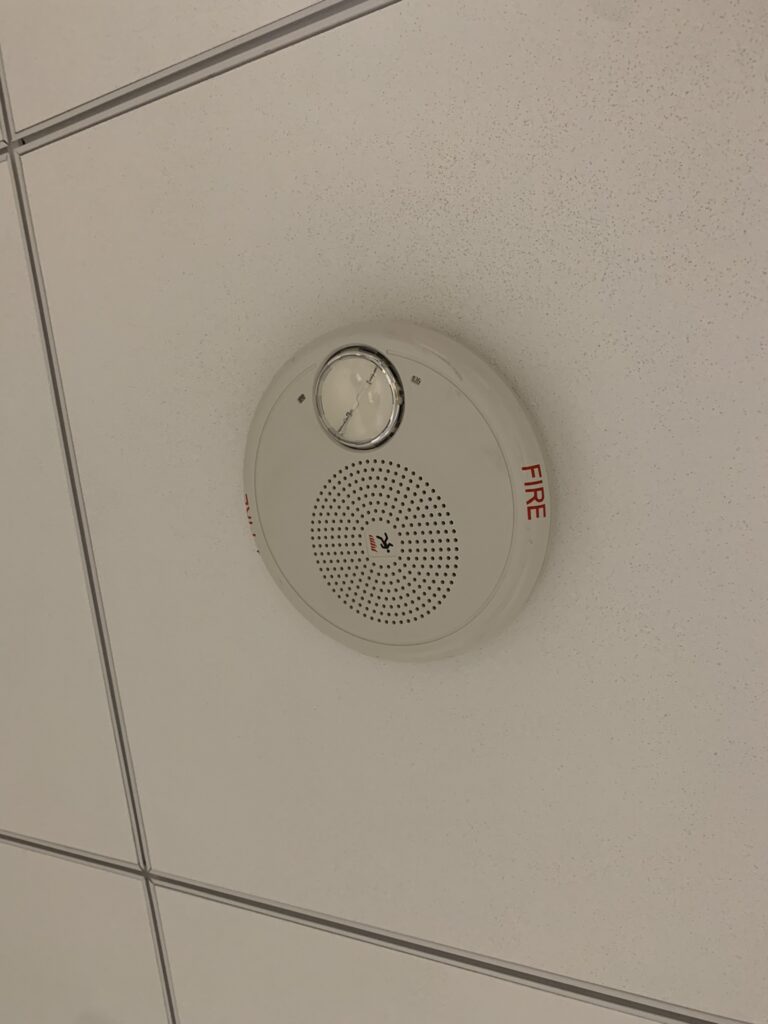
Communications Integrity — Requirements for communication equipment at the protected premises have been added in Section 26.6.3.2 and differentiate between the premises equipment and service providers equipment.
Chapter 29 — Single- and multiple-station alarms and household signaling systems
Fuel Gas Detection — A section has been added to refer the user to NFPA 715 for the installation requirements on fuel gas detection.
Low-Frequency Sounders and Tactile Notification — A section has been added to indicate that when low-frequency sounders or tactile notification appliances are required by other codes or laws, low-frequency sounders are required to provide the 520-hertz signal and tactile appliances are required to comply with Chapter 18.
Smoke Alarm Specific Location Requirements — The specific location requirements for placement of smoke alarms and detectors in Section 29.11.3.4 have been revised to recognize the use of detectors that have been listed for resistance to common nuisance alarms. This allows more flexibility in placement of devices when appropriately listed.
This article identifies key changes that can be considered for implementation in current designs. The Annexes should also be reviewed. Annex A provides explanatory material that can be helpful in applying the code requirements.