Use this basic framework for leveraging artificial intelligence to safely support and enhance the engineering design process under human governance and control.

Learning objectives
- Learn best practices for effectively interacting with artificial intelligence (AI) tools.
- Understand the importance of data quality and governance.
- Know how to incorporate AI to support, not replace, engineering judgment.
AI insights
- The article argues that AI is the latest step in a long evolution of engineering practice and, when used responsibly, can enhance analysis, coordination and efficiency without replacing professional judgment.
- It emphasizes that successful AI adoption depends on strong human oversight and high-quality, well-governed data so AI serves as a force multiplier that improves design confidence, reduces rework and upholds ethical and safety standards.
When speaking about artificial intelligence (AI) at conferences, we often ask our audience two questions: “Who is excited about AI?” “Who is nervous about it?” Most hands in the room go up twice. Both responses are warranted.

AI is the latest in a long line of transformative advancements in the engineering industry, which has evolved from hand drafting and blueprints to computer-aided design, to building information modeling (BIM) and to model-based delivery supported by structured data environments. No doubt the board drafter of the 1960s would never have imagined the integrated 3D models we use today. In the same way, it can be difficult to fully imagine what the future of engineering will look like with AI.
Whether AI has engineering teams excited, worried or both, it is rapidly becoming part of everyday design practice. (In this article, “AI” refers broadly to computational approaches that perform tasks requiring human‑like judgment or search — including algorithmic optimization, constraint‑based generative systems, machine learning and large language models colloquially known as LLMs.) Used correctly, AI serves not as a replacement for engineers but as a set of tools that can enhance how we analyze, coordinate, communicate and solve problems. It offers the potential to improve speed, consistency and insight — but also raises important questions regarding reliability, data quality and professional responsibility.
The role of human oversight in AI
Like many companies, our engineering consulting firm sees AI as an exciting opportunity to enhance what our engineers already do. We also recognize that while AI can analyze patterns, retrieve information and generate technical language at remarkable speed, it does not replace the need for licensed professional judgment; the engineer of record remains responsible for all decisions made, regardless of whether AI assisted in the workflow.
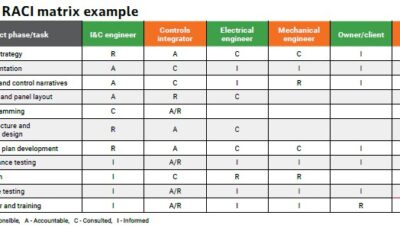
To integrate AI safely and effectively, firms should verify the accuracy, validity and source of AI outputs and restrict final design recommendations and decisions to be made by humans. This approach aligns with National Society of Professional Engineers’ Code of Ethics, which emphasizes competence, responsibility and protecting the public’s health, safety and welfare (see Table 1).
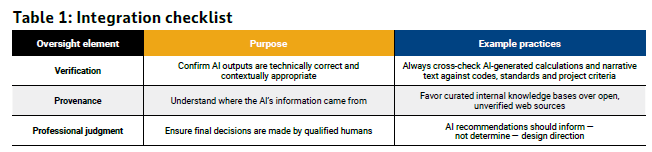
In practice, engineering firms should train their staff to:
- Treat AI as a research and decision-support partner, not as an authority.
- Challenge outputs; do not accept them passively. Confirm and verify the source and accuracy of data and information provided.
- Use AI to accelerate iteration, not to finalize conclusions.
The most effective AI deployments augment the engineer’s capability and capacity by improving comprehension, supporting deeper design reasoning and minimizing redesign.
The critical role of data quality
The effectiveness of AI in engineering design is fundamentally tied to the quality, structure and governance of the data it relies on. In many architecture, engineering and construction (AEC) workflows, project information is manually entered into models, submittals, spreadsheets and internal knowledge libraries. Without intentional management, these data sources can become inconsistent or incomplete, which limits the reliability of AI-driven insights. For AI to enhance decision-making rather than introduce risk, firms must focus first on data integrity.
IMEG addresses this through a combination of curated technical standards, structured project metadata and role-based content stewardship. We also developed an internal AI chatbot that provides a controlled natural language interface enabling engineers to search for firm-approved guidance, past project lessons learned, Autodesk Revit model data and discipline-specific best practices. Unlike open-source generative AI tools, our chatbot only returns information from our firm’s verified internal content libraries. These libraries are maintained by our technical discipline leaders, who serve as data librarians responsible for ongoing review and validation.
This data stewardship model ensures:
- AI-generated recommendations are traceable to authoritative sources.
- Project teams work from a consistent technical baseline.
- Junior engineers receive guidance aligned with firm standards, reducing training variability.
- Senior engineers can validate design reasoning more efficiently.
Our chatbot is integrated into our broader design input/output (I/O) platform, which houses project metadata, model performance metrics and multi-discipline coordination information. It can read live Revit model data, retrieve design criteria and conduct model health checks, enabling engineers to identify documentation gaps and verify system layouts align with project intent. This integration supports:
- Automated model health analysis (e.g., unconnected systems, incorrect families, inconsistent naming).
- Standardized schedule review and completeness checks.
- Cross-discipline coordination review against firm quality analysis/quality control (QC) benchmarks.
- Structured design documentation such as narratives, code compliance notes and calculation summaries.
All this is critical because AI tools amplify whatever data they are given. When that data is structured, validated and traceable, AI becomes a force multiplier that improves design confidence, reduces rework and supports faster interdisciplinary coordination. When data is inconsistent or poorly governed, AI can reinforce ambiguity, potentially increasing the burden on reviewers or creating downstream construction risk.
For this reason, data governance is not an information technology function; it is an engineering quality function. Successful AI adoption in the AEC industry depends on treating digital content, model health and knowledge libraries with the same rigor applied to calculations and sealed drawings.
Practical AI applications across a project life cycle
One of the clearest ways to understand AI’s role in engineering is to examine how it supports decision-making and enhances performance at different phases of a project. The following four examples illustrate how AI-enabled tools can expand design options, minimize extra work, and improve communication — without replacing the engineering judgment that anchors our work.
Capital planning and feasibility: Reducing operating costs through renewable energy modeling
We recently worked with a heavy machinery manufacturer that sought to reduce its annual electrical utility costs by approximately 50%. The facility operated with a variable but energy-intensive load profile and several strategic options were under consideration, including solar photovoltaics, on-site wind and battery energy storage.
The challenge lay not only in evaluating each technology, but in understanding how combinations of these systems would perform under changing production loads, seasonal weather patterns and utility tariff structures.
To support this early planning effort, we used HOMER Energy, which applies AI-assisted optimization to compare hybrid energy system configurations. Our team uploaded:
- The facility’s measured hourly load profile
- Current and projected utility rates
- Available land area and roof area suitable for renewable installations
- Estimated capital and operations and maintenance costs for solar, wind and battery storage
- Performance characteristics based on local climate and wind resource data
HOMER then evaluated hundreds of system configurations — far more than could reasonably be modeled manually — exploring the trade-offs between generation capacity, storage sizing, self-consumption rates and life cycle cost. From these outputs, we identified the top five most technically and economically viable scenarios, which we reviewed with the client. For each option, the following was provided:
- Projected annual utility cost savings
- Capital investment requirements
- Simple and dynamic payback periods
- Estimated carbon reduction impacts
- A recommended phasing path aligning improvements with financial planning cycles
The outputs were summarized in a graphical comparison showing the relationship between capital cost and projected utility savings over time, enabling the client to select the configuration that best balanced initial investment, operational savings and sustainability goals (see Figure 2).
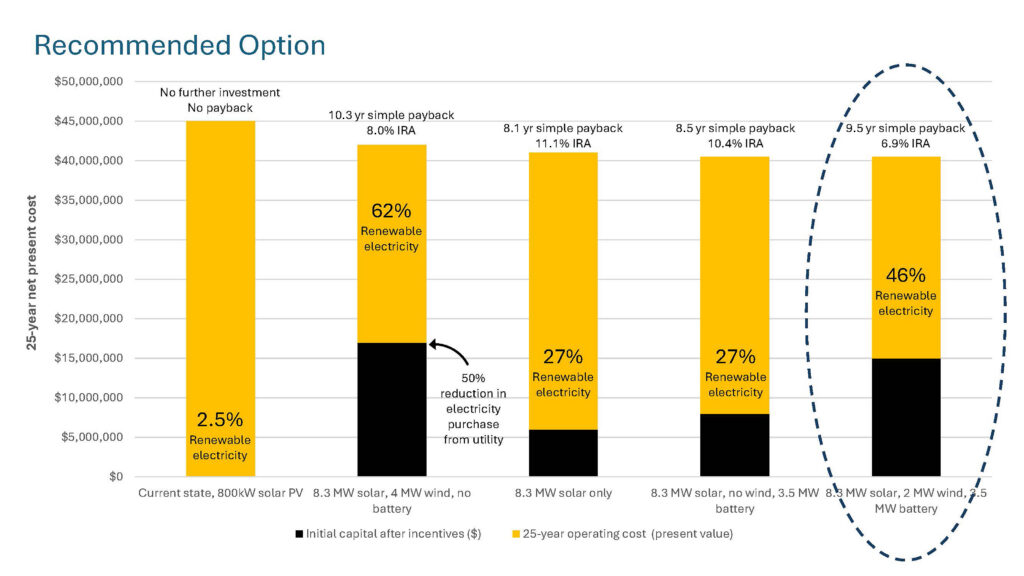
AI did not choose the answer — it broadened the range of viable solutions and enabled the team and client to review more options more quickly and with higher confidence. The final recommendation was grounded in engineering judgment, reliability considerations, operations input from facility managers and the client’s financial strategy. This allowed the client to proceed with a phased renewable implementation plan that is projected to significantly reduce electrical costs while improving long-term energy resilience.
Early design and system layout: Rapid site planning and scenario comparison
This project supported the early planning of a new shingle manufacturing facility, for which the owner had purchased a parcel of land but had not yet finalized building placement, logistics flow or operational adjacencies. The site required careful consideration of rail access, truck circulation, raw material storage and finished product handling — each influencing operational efficiency and long-term expansion potential.
Using TestFit, we entered:
- Site topography and environmental constraints
- Required building sizes and functional adjacencies
- Production line flow paths and maintenance access requirements
- Rail spur geometry and minimum radius limitations
- Truck access, trailer parking and employee vehicle circulation zones
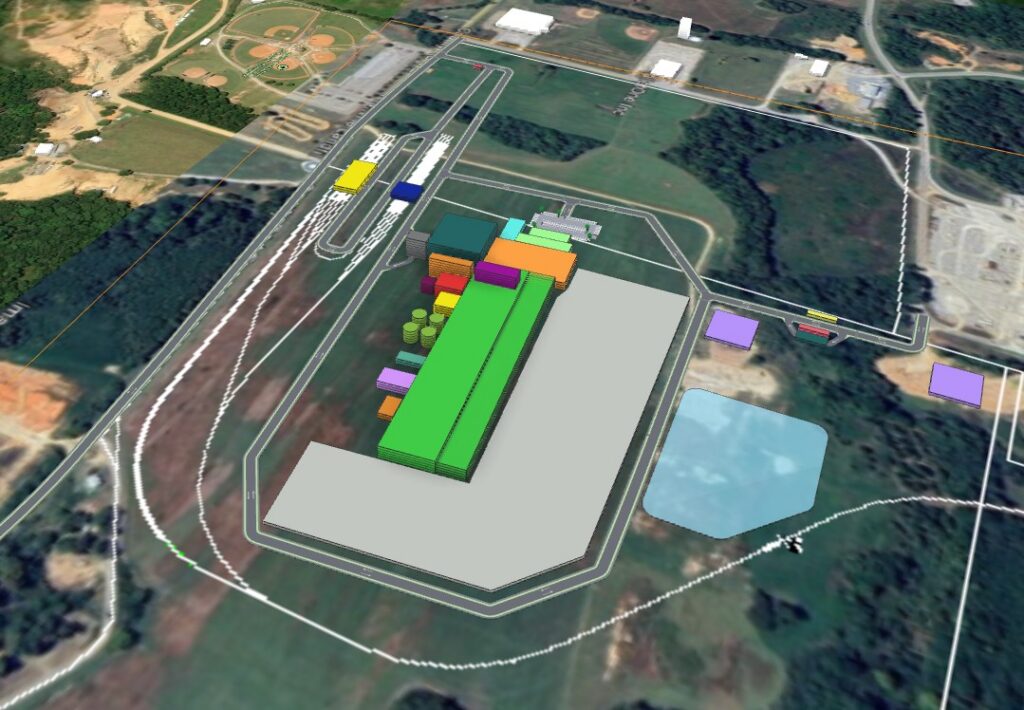
TestFit generated numerous site layout options that satisfied the geometric and operational constraints. Instead of developing one layout at a time, the team was able to compare multiple viable configurations simultaneously. We narrowed the study to a few high-performing layouts, reviewed them collaboratively with the client and then selected one as the basis of design.
From there, we continued detailed refinement with confidence that the final layout had been chosen from a broad and well-validated design space, rather than from a narrow set of manually developed options. This process allowed the project to move into schematic design with a strong, data-supported site concept, reducing the risk of costly revisions later in the process (see Figure 3).
While site layout decisions shape how a facility operates, early structural choices have significant impacts on cost, schedule, foundation requirements and embodied carbon — yet these decisions are often made after architectural planning is largely set. To address this issue, we developed an AI-assisted, in-house parametric analysis tool to shift structural evaluation earlier, when multiple options are still viable and inexpensive to change. The tool allows structural engineers to rapidly analyze and compare variations in bay sizes and column grid spacing, floor thickness and framing types, shear wall or bracing arrangements and material system selection (steel, concrete, hybrid systems).
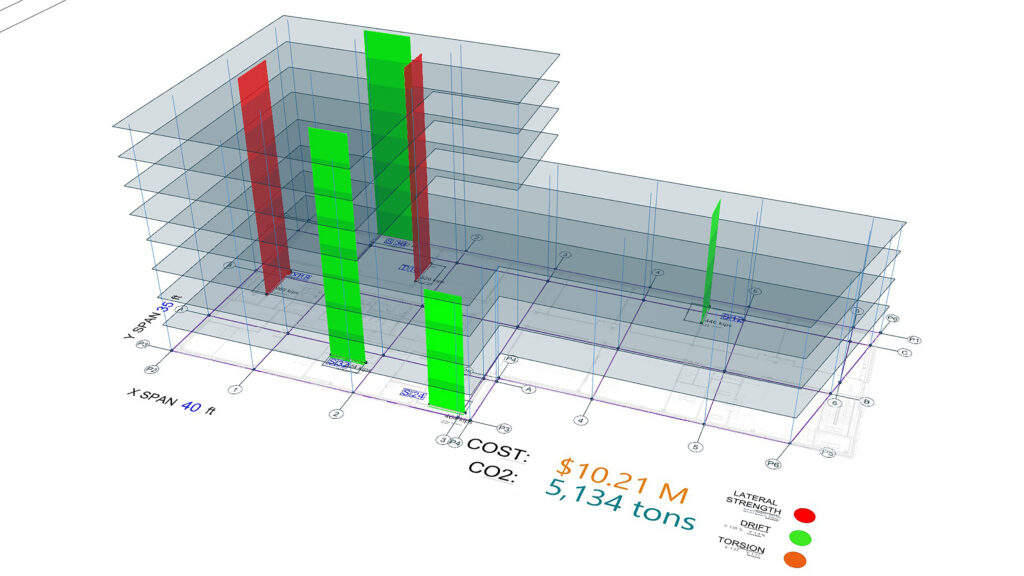
For each configuration, the tool provides outputs for estimated material quantities, embodied carbon impacts by material type, approximate installed cost ranges and structural depth implications affecting architectural clearances. This empowers the design team and client to discuss trade-offs not in abstract terms, but by comparing quantified impacts.
For example, a layout with slightly wider bay spacing may reduce column count and improve interior flexibility but could increase member size and embodied carbon. Another option may optimize carbon intensity but influence roof elevation or crane selection (see Figure 4).
By presenting these comparisons early, before systems are locked in, teams can align structural selection with project priorities such as cost, sustainability, construction speed or equipment integration. The result is a faster path to structural alignment across architecture, operations and cost planning, reducing downstream redesign and supporting clearer communication with cost estimators and contractors.
Design documentation and quality review: Improving model consistency and reducing rework with AI-supported QC
Once a project advances into detailed design, the priority shifts from broad option evaluation to accuracy, coordination and documentation quality. Even in well-managed BIM workflows, information can become inconsistent across models, schedules and sheet sets, especially as multiple disciplines contribute and revisions accelerate near milestone deadlines.
One of the most common issues a team encounters is incomplete or uncoordinated equipment schedules, where information differs between the mechanical, electrical and architectural sheets.
For example, an air handling unit selected early in design may have its airflow, power requirements or connection details updated during coordination but not consistently reflected across all views and schedules. If not identified before bid or procurement, these inconsistencies can lead to construction-phase requests for information, redesign effort or even additional field work.
To address this, we integrate our internal AI platform with the design I/O project data environment to support structured, repeatable quality review workflows. This allows our chatbot to cross-reference Revit model metadata, discipline-specific equipment schedules, design criteria documents and internal standard detail and specification libraries. During design reviews, engineers use the bot to scan schedules for missing or mismatched parameters, such as:
- Airflow listed inconsistently across mechanical schedules and equipment tags
- Electrical loads that do not align with panel schedules
- Equipment dimensions that conflict with architectural clearances
- Connection types that differ from specification language
Rather than replacing the review process, the AI chatbot highlights where attention is needed, allowing engineers to resolve discrepancies earlier and more efficiently. The final review and approval remain the responsibility of the engineer of record, consistent with professional standards and licensure requirements. This approach results in fewer coordination gaps between disciplines, more consistent documentation across sheet sets, reduced time spent on manual data checking and fewer RFIs and change orders in construction.
The value is not in automation for its own sake; it is in reducing rework and improving design certainty, allowing engineers to spend more time on technical problem solving rather than document reconciliation.
Phase: Construction administration: Real-time jobsite observations with AI-assisted field reporting
During construction administration, timely and consistent field documentation is essential for communicating design intent, identifying issues and maintaining project momentum. Traditionally, jobsite observation (JSO) reports have been assembled after returning from the site — requiring engineers to organize photos, transcribe notes and format reports, often outside normal working hours. This delay could slow response time to contractors and increase the risk of miscommunication.
We have adopted InspectMind AI to streamline this workflow by allowing engineers to document as they go during site visits. Using a mobile device or tablet, engineers capture photos, record voice notes and flag observations directly in the field. The platform automatically organizes these inputs and generates a draft report in the firm’s standardized reporting format. This approach provides two key benefits: faster reporting and response time and consistency across reports and teams.
Because documentation occurs in real time, JSO reports are often ready to review shortly after leaving the site, rather than days later. This allows rapid communication with contractors and owners, faster follow-up on corrective actions and reduced backlog of unprocessed field notes. By applying a standardized template and language structure, InspectMind AI ensures that:
- Observations are formatted clearly and professionally
- Multiple engineers produce reports with consistent style and terminology
- Owners and contractors receive documentation that is easier to interpret and act upon
The engineer remains responsible for reviewing, editing and approving the report, maintaining alignment with professional responsibility and sealed document requirements. The AI simply reduces the administrative burden and supports clearer, faster communication during construction. The result is field documentation becomes more timely, more consistent and less time-consuming, allowing engineers to stay focused on resolving issues rather than formatting reports.
Start small and build toward scalable value
The examples demonstrate that AI is not a single technology or one-time initiative, it is a gradual evolution of how engineering work is done. The firms that benefit most from AI are not those that attempt to automate the entire workflow at once, but those that identify small, meaningful starting points, learn from them and expand use with intention.
Adopting AI in design does not mean changing the core of what engineers do. It simply means reducing the time spent searching, reformatting, rechecking and recreating information, so more energy can be directed toward solving problems, coordinating systems and creating safe, functional, high-performance environments.
The most effective way to begin using AI is often starting with:
- One workflow (e.g., equipment schedule verification)
- One repetitive task (e.g., initial narrative drafting)
- One project phase (e.g., early site layout options)
- One team willing to pilot and share lessons learned
From there, a firm should document what works, refine the process, then scale gradually to other projects and teams. This is the approach IMEG took in 2023 when we began to develop our own internal AI chatbot, which draws from our own data, and was rolled out in 2024. Development is a continual process as we add new functions and applications. Designers on all teams are using it on multiple workflows, repetitive tasks and more.
Engineers are uniquely well-positioned to use AI effectively. Our discipline is built on rigor, verification, iteration and accountability — the very qualities required to adopt AI responsibly. Furthermore, the path forward is not about replacing engineering judgment; it is about creating more room for it. AI gives us the opportunity to spend less time clicking and formatting and more time designing, analyzing, coordinating, mentoring, innovating and leading.