The Washington Suburban Sanitary Commission’s laboratory services building in Silver Spring, Maryland, underwent an overhaul.
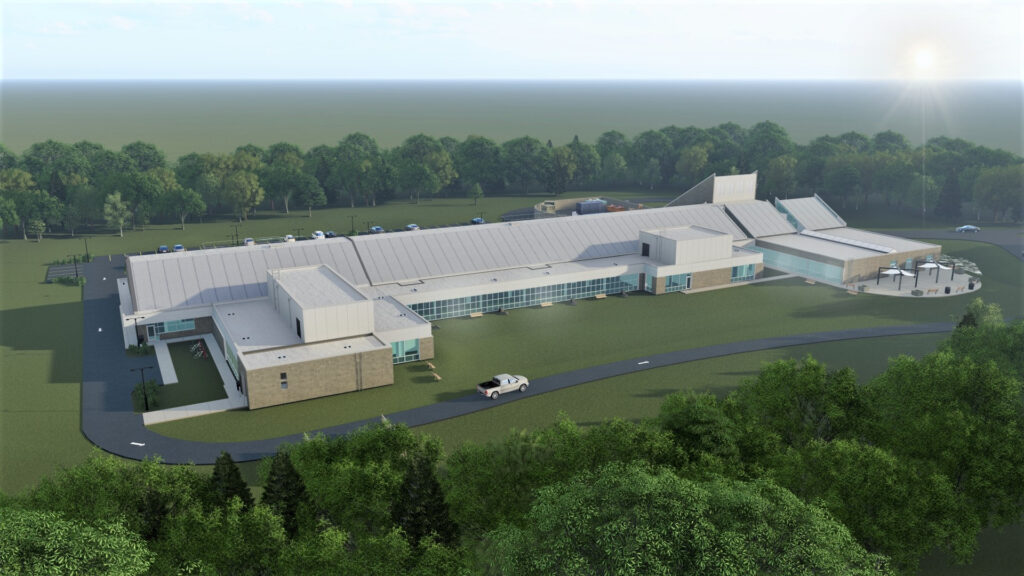
The Washington Suburban Sanitary Commission (WSSC) operates one of the region’s most important environmental laboratories, responsible for monitoring and safeguarding drinking water and wastewater quality for over 1.8 million residents in Maryland. Originally designed in 2000 and constructed in 2001, the consolidated laboratory facility (CLF) in Silver Spring was state-of-the-art for its time. But nearly two decades of growth in testing demand, technology and staffing had outpaced the building’s original capacity.
Annual testing volumes, once 500,000, were projected to exceed 750,000 within the next 20 years. In response, WSSC launched the laboratory services building expansion project — an ambitious 24,000-square-foot addition and modernization effort. CDM Smith, along with its team of specialty consultants, designed a facility that not only added space but embedded best practices for safety, ergonomics, visibility and long-term adaptability.
Laboratory ergonomics and circulation
Designing a safe and efficient laboratory started with understanding how people moved through it. The expansion addressed the challenges of congestion and workflow disruption that had developed over years of incremental growth.
Within the expansion, circulation paths were reimagined to support both technicians and equipment carts. Aisleways were widened to meet best-practice standards of 6 feet of clearance around benchtops, giving technicians room to maneuver safely while reducing the chance of collisions. The design also accounted for mobile instrumentation and anticipated delivery routes, ensuring that routine tasks, such as moving gas cylinders or rolling in new analytical equipment, could happen without disruption to ongoing experiments.
Ergonomic considerations were integrated directly into bench layouts and service connections. Work areas were arranged to minimize repetitive strain, with column-mounted service panels allowing technicians to access power, air, deionized water or gases without reaching or bending into unsafe positions. These circulation and ergonomics improvements translated into a workplace that supports safety and productivity — key for a facility with high-throughput testing requirements.
Visibility and line of sight in a lab
One of the guiding principles of the expansion was improved visibility across laboratory areas. The existing CLF, although efficient, was segmented in a way that limited direct lines of sight. This made supervision and rapid response in emergencies more difficult.
In the expansion, glass doors and partitions and interior windows were strategically introduced. Supervisors could now observe multiple laboratory bays and workstations from circulation corridors, reducing the need to interrupt technicians at work. Technicians also benefited from being able to see colleagues across rooms, creating a collaborative environment while enhancing situational awareness.
This emphasis on transparency was not purely functional — it was cultural. By making laboratory processes more visible, WSSC not only improved safety response times but created a space where knowledge-sharing and mentoring occurred naturally. The design fostered accountability and openness, critical in a regulatory environment where precision and compliance are paramount.
Flexibility in laboratory services
Perhaps the most critical aspect of the WSSC expansion was flexibility. Laboratory science evolves quickly — new technologies, regulations and analytical methods can radically change space and utility requirements. The expansion was designed with this future-proofing in mind.
Overhead snorkel arms, quick-connect utilities and adaptable exhaust systems allowed spaces to be reconfigured with minimal downtime. Laboratory gases, vacuum functions, deionized/reverse osmosis water and power were distributed through a robust infrastructure sized for growth, avoiding the need for costly retrofits. The design also accommodates future automated testing systems, which often require larger floor areas and higher service demands.
Special attention was given to critical support systems, such as the acid neutralization system, upgraded from an undersized 350-gallon passive system to a 650-gallon active one capable of handling modern testing volumes. Heating, ventilation and air conditioning systems were similarly modernized, with custom air‑handling units designed to maintain negative pressurization in laboratory spaces while improving energy efficiency. These upgrades ensured that flexibility did not come at the expense of safety or sustainability.
Lighting and power
The expansion areas of the WSSC were outfitted with a smart lighting system that included fixture-level motion sensing and dimming. This system allows for complete flexibility of the lighting controls, including configurable light levels and schedules. The smart lighting system was also tied into the building automation systems to allow scheduling between the two systems.
Through coordination with WSSC, the initial lighting settings were determined before project completion. These settings included motion detection for each space and a more nuanced approach to always-on lighting. Whereas the original CLF may have had lights or areas that were maintained at full brightness all the time, the new WSSC has automatic dimming of the laboratory spaces based on motion, ensuring minimal energy usage while ensuring workspaces are appropriately lit to spot hazards or problems.
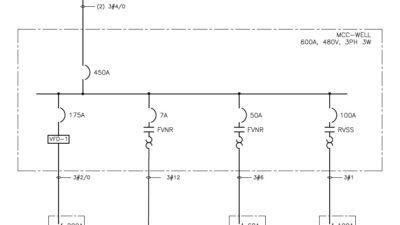
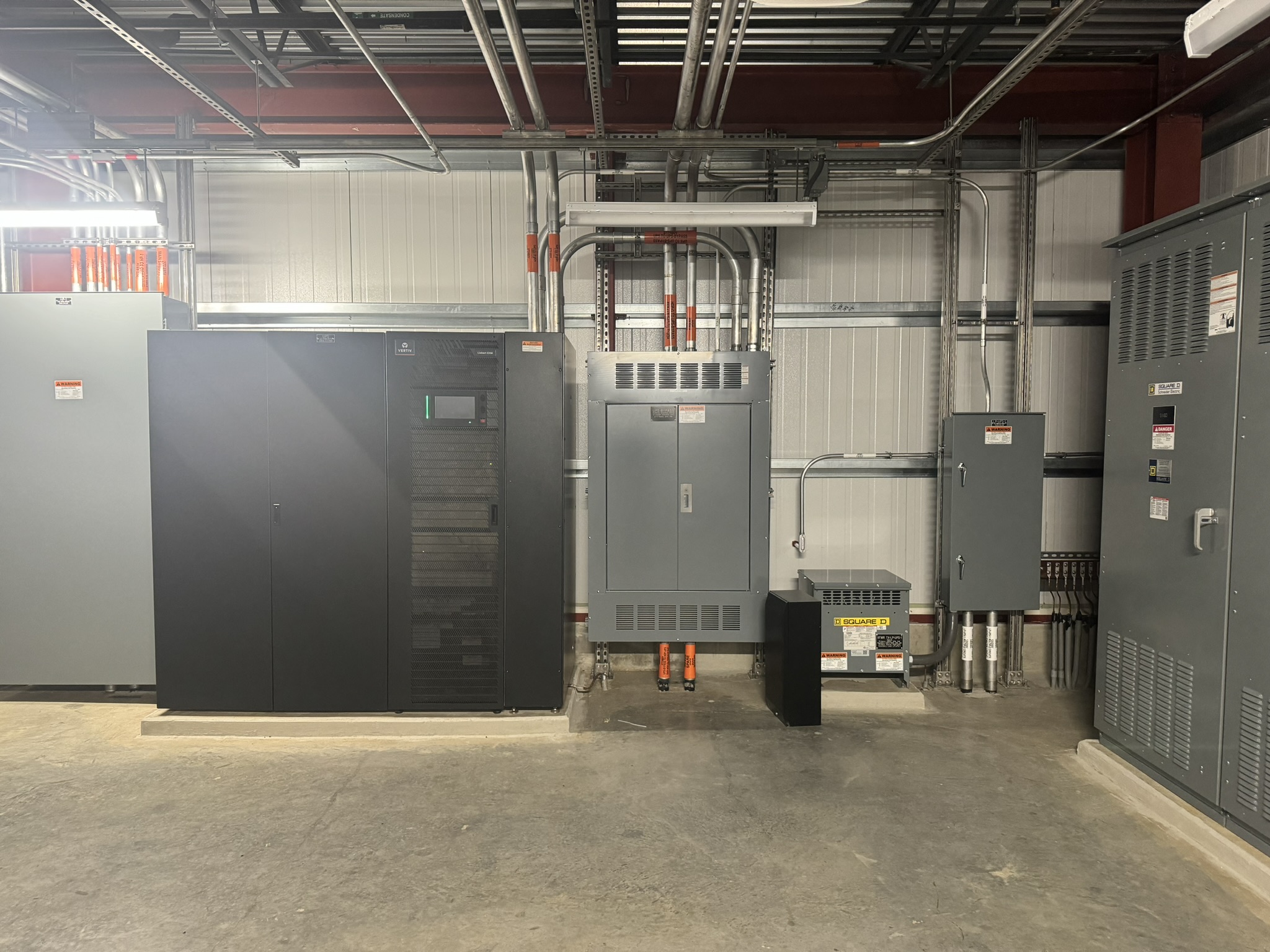
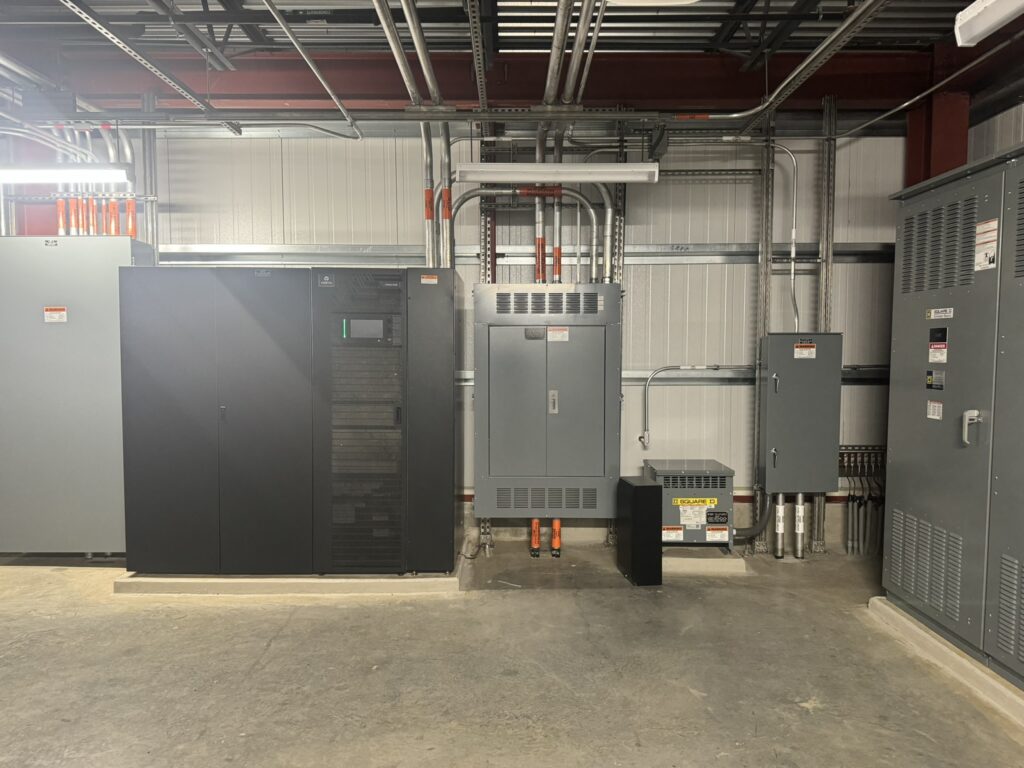
The expansion areas of the WSSC were connected to two redundant power systems: critical lighting and support areas were tied to a standby power system fed by a new diesel generator; and sensitive laboratory loads and equipment were tied to a facility-level uninterruptable power supply (UPS) via a separate electrical distribution system including independent step-down transformers for each laboratory room. This ensures that all laboratory equipment is provided with a stable UPS that is unaffected by outside or inside power disturbances.
Laboratory expansion results and impact
The laboratory services building expansion project positioned WSSC to meet its growing regulatory and operational demands while setting a new benchmark for laboratory safety and efficiency. By aligning ergonomics, visibility and flexibility, the project achieved more than just additional square footage; it delivered a facility that protects its people, supports collaboration and adapts to future science.
With the expansion now complete and fully operational, WSSC can handle over 750,000 tests in-house annually, reducing reliance on subcontract laboratories and ensuring tighter control over critical data. For the staff, it created a workplace that is safer, more collaborative and better suited to the precision their work demands. For the region, it ensured that water quality testing — so vital to public health — remains accurate, timely and resilient for decades to come.