Advertisement
FREE subscription
Email
Print
Reprint
Learn RSS

Controlling Condensation with the Right Insulation

By Geoff Weisenberger, Production/Web Editor -- Consulting-Specifying Engineer, 6/1/2004

Changes in one type of technology often make changes in related technologies necessary.

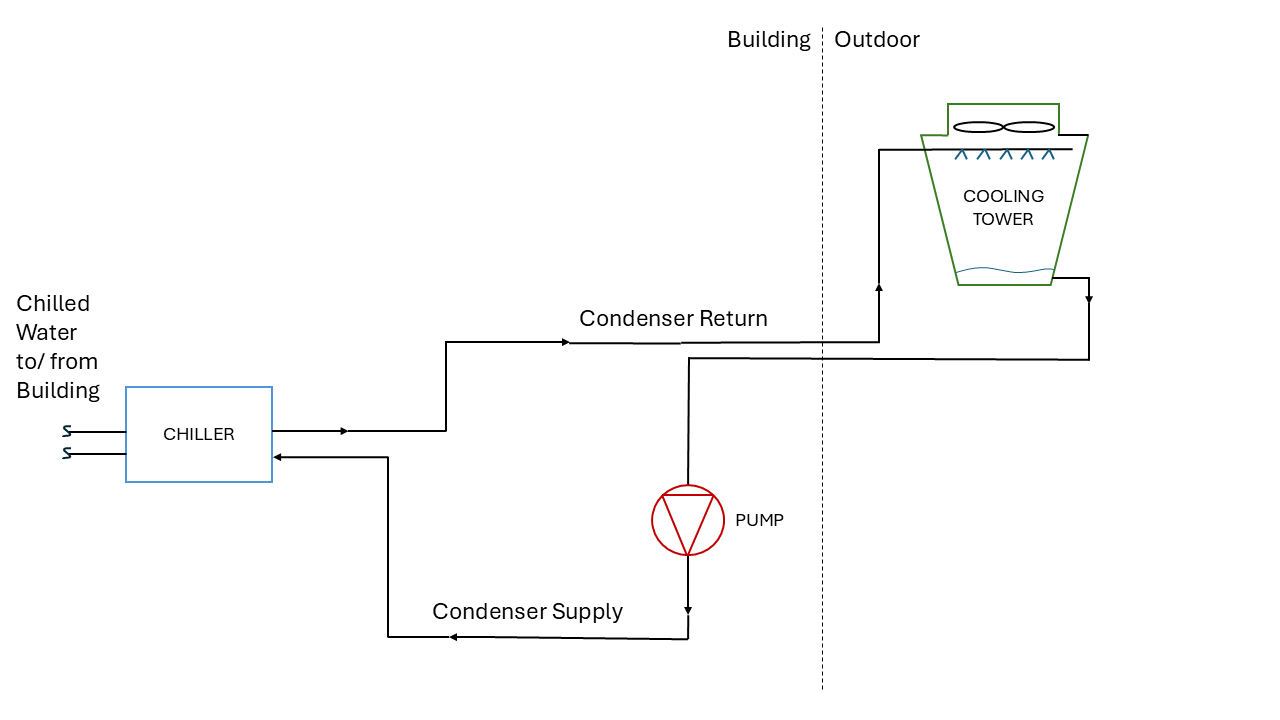
For example, about a half-decade ago, facilities began running their chilled-water systems colder in an effort to reduce piping size and the required pumping power. While many engineers embraced this philosophy, it presented a new problem—condensation, especially in places like the southeastern United States. This condensation can lead to problems such as dripping, saturation of the insulation and mold growth.

Chuck Crim, Toledo, Ohio-based specification manager with Owens Corning, offers several suggestions. First, he stresses the importance of being familiar with the specific design criteria, temperature and relative humidity for the job location. "An engineer has got to know that they can't make assumptions that are incorrect, because if they specify a certain thickness based on an assumption and they're incorrect, they're going to have a problem," he says.

To elaborate, Crim explains that K values vary for different types of insulation. For example, fiberglass insulation has a K value of .23, while cellular glass has a K value of .33. As such, the thermal efficiency of an arbitrary insulation thickness—1.5 in., for example—will vary based on the type of insulation used.

Crim also stresses the need to understand the shortcomings of traditional methodologies, the danger of improperly installed joints and elbows and the possibility of damage to the jacket by other trades. "The insulator can go in there and do his job very well, and then you have a plumber or electrician who comes in and sticks his screwdriver in the insulation as a holder, and he's broken the vapor barrier." he explains.

Yet another issue to consider is whether the chilled-water system will be running prior to installation of the insulation. As insulation needs to be installed when the pipes are completely dry, the system must be shut down to allow any moisture to evaporate. This becomes a problem not only with retrofit projects, but also with new construction, as facility managers will often turn the system on to dry out the building prior to insulating. "And the question is, then, can you afford to shut the system down, dry the piping out, apply the insulation, then turn the system back on? In most cases, they either can't or won't do that," Crim says.

However, Crim points to an Owens Corning technology that can render these last two considerations irrelevant. Because moisture will almost always find some way to permeate insulation, the company developed VaporWick, a breathable, self-drying piping insulation system that allows the moisture to leave the area via a wick and evaporate into the ambient air, thus keeping the piping dry and factoring out condensation. As such, while the insulation uses a traditional fiberglass-based jacket, it doesn't rely on that jacket—or the installer's expertise.


Piping Insulation Suggestions

  • Be mindful of damage to insulation jacket by other trades
  • Familiarize yourself with a project location's design criteria, temperature and relative humidity
  • Don't select an arbitrary thickness; choose insulation thickness based on K value
Email
Print
Reprint
Learn RSS

Talkback

We would love your feedback!

Post a comment

» VIEW ALL TALKBACK THREADS

Related Content

Related Content


By This Author


SPONSORED LINKS

 
Advertisement
Sponsored Links

More Content

  • Blogs

Blogs

  • Michael Ivanovich
    Give and Take

    August 8, 2008
    Rollercoaster Energy Prices vs. Conservation Momentum
    The roller coaster of oil prices did something quite amazing this year: It went up long enough to ca...
    More
  • Michael Ivanovich
    Give and Take

    June 12, 2008
    Useful Green Building Data and Reports
    There have been some good reports released this year on green buildings. Some folks haven't year hea...
    More
  • » VIEW ALL BLOGS RSS
Advertisements


NEWSLETTERS
Plug in and get the latest CSE news, trends and industry updates delivered directly to your inbox!

Green Scene
CSE Codes & Standards
CSE NewsWatch
CSE Fire and Life Safety Solutions
CSE Business of Engineering Management Report
CSE Electrical Solutions
CSE HVAC Solutions
Pure Power
CSE Product Showcase
©2008 Reed Business Information, a division of Reed Elsevier Inc. All rights reserved.
Use of this Web site is subject to its Terms of Use | Privacy Policy
Please visit these other Reed Business sites